
◎ The CCP’s political and legal affairs apparatus continues to oppose the Xi leadership, and the factional struggle intensifies.
On Feb. 22, Chinese state media reported the stunning conclusion to a high-level political and legal affairs investigation—an assistant judge in China’s top court who blew the whistle about illegal court behavior which could potentially implicate the current chief justice ended up confessing to having been behind the illegal behavior in the first place. The assistant judge’s confession implicates himself and another prominent whistleblower whose revelations on Chinese social media have grabbed headlines over the past two months and appear to benefit Xi Jinping’s move to weaken entrenched interests in the Chinese regime.
The “shock turn” in the “Shaanxi 100 Billion Mining Case” (“陝西千億礦權案”, henceforth referred to as the “Shaanxi case”) affirms our recent analysis about Xi’s troubles with the regime’s political and legal affairs apparatus, which has long been swayed by the Jiang Zemin faction which rivals Xi.
We believe that the Jiang faction loyalists in the political and legal affairs apparatus are turning the malicious aspects of the Chinese Communist Party system to their advantage in the Shaanxi case in their efforts to oppose the Xi leadership. The conclusion of the Shaanxi case also signals an intensification in the CCP factional struggle.
The backdrop:
1. The “Shaanxi 100 Billion Mining Case”
In 2006, Zhao Faqi, the owner and legal representative of Shaanxi-based coal mining company Kechley Energy Investment, initiated legal proceedings against the state-owned Xian Institute of Geological and Mineral Exploration over a protracted contract breach.
Based on Zhao’s allegations and other public information that emerged as the Shaanxi case dragged on, it appeared that the Shaanxi provincial government and high court, the Supreme People’s Court, and senior officials in the Central Political and Legal Affairs Commission had all sought to intervene in the case due to personal interests.
Over time, the Shaanxi case became famous and was known as the “Shaanxi 100 Billion Mining Case” because it involved a coalfield with 100 billion yuan worth of extractable resources.
While Zhao Faqi won the case in the Supreme People’s Court in 2017, the final ruling was not implemented even after a year had passed.
2. The Cui Yongyuan allegations and the official investigation
Near the end of December 2018, the Shaanxi case came under the spotlight again after former state television presenter Cui Yongyuan revealed explosive information about the authorities’ handling of the Shaanxi case on his Weibo microblogging account.
Cui, whose earlier exposés about famous Chinese actress Fan Bingbing sparked a celebrity tax evasion scandal, made the following claims in series of Weibo posts on Dec. 26:
- Xi Jinping requests that there must be fair ruling in all legal cases;
- However, Supreme People’s Court chief justice Zhou Qiang played a “leading role” in “sentencing first before holding a trial”;
- Cui claims that important court documents were “stolen” while the Supreme People’s Court was reviewing the Shaanxi case;
- Cui accused Chinese provincial and top judicial officials of pulling stunts to “plunder the populace.”
On Dec. 27, the Supreme People’s Court issued a statement in the media denying that documents had gone “missing” in the Shaanxi case. However, the top court announced an internal investigation two days later after Cui Yongyuan published evidence which showed that some documents pertaining to the Shaanxi case had indeed vanished.
Starting from Dec. 30, Wang Linqing, an assistant judge in the Supreme People’s Court, released a series of videos where he claimed that chief justice Zhou Qiang was the “schemer” behind the “missing” documents and other details. Wang said that he was revealing information about the “missing” documents out of self-protection because he was “afraid of being killed.”
On Jan. 8, the Central Political and Legal Affairs Commission assembled an investigation team to look into the “missing” documents. The investigation team was made up of officials from the PLAC, the Central Commission for Discipline Inspection and the National Supervisory Commission, the Supreme People’s Procuratorate, and the Ministry of Public Security.
On Jan. 15, Zhao Yongzheng, the former governor and Party secretary of Shaanxi Province, was investigated for corruption. Kechley Energy Investment’s Zhao Faqi had previously reported on Zhao Yongzheng over the Shaanxi case.
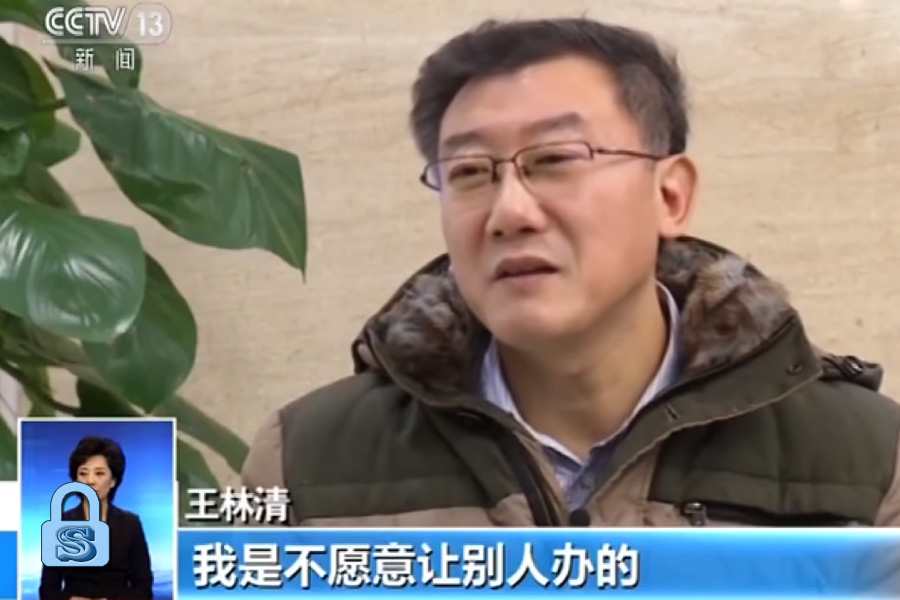
On Feb. 22, the Central Political and Legal Affairs Commission announced that it had concluded its investigation into the “missing” documents case, and found that Supreme People’s Court assistant judge and whistleblower Wang Linqing had stolen the documents because he held a grudge against his superior and the top court. On the same day, Wang made a “confession” on state television which tallied with the investigation team’s findings.
According to state media, Wang Linqing faces charges of “illegally obtaining and leaking state secrets.” While not mentioned in media reporting, Zhao Faqi, the man who initiated the Shaanxi case, and former state television presenter Cui Yongyuan could now face charges of criminal complicity.
The big picture:
China and the United States are in the tail end of a 90-day trade negotiation period. If no deal is reached and America raises tariff rates or adds more tariffs, China’s economy is at risk of tanking. A collapsed economy would in turn imperil the Xi Jinping leadership and the CCP regime.
Our take:
The latest twist in the Shaanxi case is a case study of the Byzantine political logic at play in CCP elite politics. We will focus on unpacking two of the most important points.
1. Wang Linqing’s “confession” is another “Lei Yang Incident”
The common understanding of how power operates in the Chinese regime is that of a “top-down” mechanism where senior cadres, or the paramount leader, has the final say. By that logic, Xi Jinping practically operates in the realm of “do-as-you-please” because he is the “core” leader; Xi ought to be able to pass reform policies with the stroke of a pen because his underlings must obey his supreme authority. And in theory, that is indeed how the regime should work.
Reality, however, is more complex. Bureaucracies in general hate reform, and the CCP bureaucracy is no different. Chinese officials often execute policies properly when it aligns with their interests and stall in other cases, particularly when policies run counter to CCP norms. The presence of factions in the Party further compounds the bureaucratic inertia. The “Lei Yang Incident” is a prominent example of what happens when reforms pumped down from the top meets bureaucratic inertia, the malicious nature of the communist regime, and the CCP factional struggle. (We explained the “Lei Yang Incident” more fully here.)
In 2016, Xi Jinping appeared to use the “Lei Yang Incident” to rectify the political and legal affairs apparatus, which comes under the influence of the Jiang faction, as well as promote his “law-based governance” policy. While the “Lei Yang Incident” was a straightforward case that ought to have seen the domestic security officials responsible prosecuted under Chinese law, the Beijing court did not find them guilty of criminal activity. The conclusion of the “Lei Yang Incident” was a huge setback for the Xi leadership: Many Chinese, and especially the middle-class, were angry that justice was not carried out and were worried that they could be the next Lei Yang under Xi’s rule; the political and legal affairs apparatus continued to operate per the CCP’s malicious characteristics and proved resistant to reform; and Xi’s political rivals managed to embarrass him and undermine his rule.
In a sense, Wang Linqing’s “confession” is an “escalated” version of the “Lei Yang Incident”:
- With events having unfolded the way they did (see “The backdrop”), Wang was almost certainly forced to make a “self-confession” on Feb. 22. A “self-confession” means that the conclusion of the Central Political and Legal Affairs Commission-led investigation team is a miscarriage of justice, just like how the Beijing court refused to prosecute the security officials involved in the “Lei Yang Incident.”
- Cui Yongyuan invokes Xi Jinping’s law-based governance policy in his exposé and directly implicates chief justice Zhou Qiang in the “missing” document scandal. Given Zhou Qiang’s allegiance to the Jiang faction and Cui’s bluntness in calling out the deputy national-level official, Cui’s exposés are highly politically motivated and are connected with the CCP factional struggle. In contrast, the “Lei Yang Incident” started out as a civil case involving commoners, and never escalated to the level of the Party’s elite.
- The political and legal affairs apparatus has virtually shut down the Wang Linqing case, and by extension, further scrutiny into the government’s role and actions in the Shaanxi case, with the Central Political and Legal Affairs Commission-led investigation team’s Feb. 22 conclusion.
- Had Wang Linqing not produced the “self-confession,” Zhou Qiang would almost certainly be implicated and the Jiang faction would lose the Supreme People’s Court. Thus, the Jiang faction has effectively stolen a march on Xi with the current conclusion to the Wang Linqing case.
In sum, Wang Linqing’s “confession” shows that Xi Jinping does not yet fully control the regime’s political and legal affairs apparatus.
2. The CCP factional struggle is presently very intense
In late 2018, we observed that Xi faces a “soft coup” from factional elements inside the Party and has a “political crisis” on hand (see here, here, and here). The Wang Linqing “confession” indicates that the CCP factional struggle has likely escalated since our observation last year, particularly in light of other recent political developments:
- In January 2019, the State Council released new regulations governing political and legal affairs work which weakened the Central Political and Legal Affairs Commission’s influence over local judiciary and strengthened Party Central’s control over the PLAC;
- On Jan. 10, several provincial military commissions held enlarged military meetings;
- On Jan. 21, senior provincial and ministerial-level officials commenced a study session at the Central Party School. During the opening address, Xi Jinping warned that the regime must be on “high alert” for Black Swan and Gray Rhino events;
- On Feb. 16, the Party’s Qiushi Magazine published an article by Xi Jinping on strengthening law-based governance; in the past five years, Xi’s law-based governance policies have not been properly implemented by officials in the political and legal affairs apparatus;
- Starting in the week of Feb. 11, Xinhua began carrying articles which stress his command over the military and exhort officials to follow, and not resist, his policies;
- On Feb. 20, Xinhua announced that a military court had sentenced former Central Military Commission chief of joint staff Fang Fenghui to life in prison.
For the political and legal affairs apparatus to resist Xi despite repeated cautioning and signaling suggests that he is being met with strong opposition from political rivals. The “soft coup” is very much still in play.
What’s next:
1. Based on our research, whenever the Jiang faction attacks, Xi Jinping has always pushed back. The Wang Linqing and Shaanxi cases cannot be overturned (Xi can try to intervene, but he will greatly weaken his and the CCP’s authority), but Xi may find other openings to purge officials in the political and legal affairs apparatus.
Chief justice Zhou Qiang faces very high levels of political risk. Other leading officials in the Supreme People’s Court are at risk of being reshuffled or purged.
2. Xi faces huge domestic resistance to implementing institutional and structural reforms in the Chinese regime. A Sino-U.S. trade deal is doomed to be stillborn, especially with the U.S. prioritizing enforcement.
3. With the political and legal apparatus engaged in a “soft coup” against Xi, Black Swan events loom over the horizon in China.




