
This analysis is from the April 6, 2026 newsletter.
***
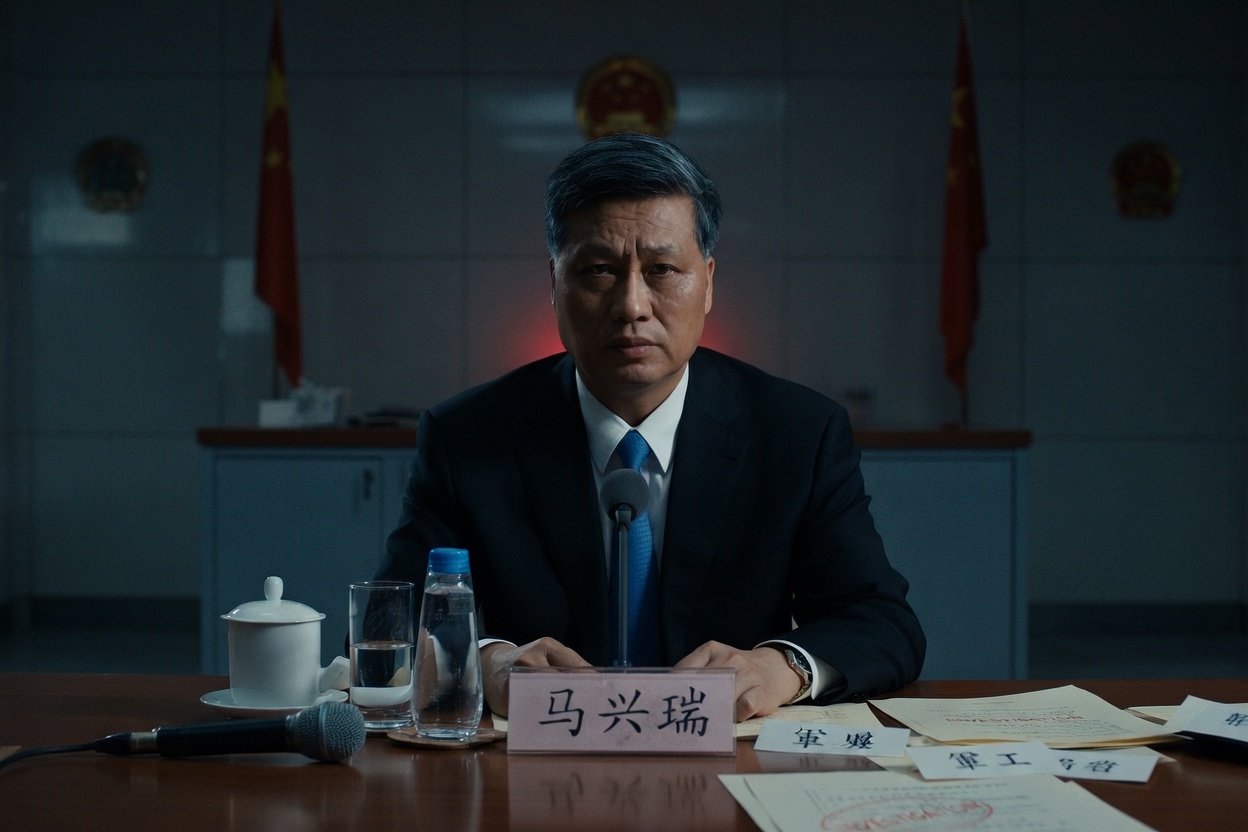
On April 3, state mouthpiece Xinhua reported that Ma Xingrui, a member of the CCP Politburo and deputy head of the Central Rural Work Leading Group, was placed under investigation for “serious violations of discipline and law.”
***
Ma previously served as Party secretary of Xinjiang until he was abruptly reassigned in July 2025. Ma also missed several key meetings since November 2025, including a Politburo session in late November, another Politburo session and the Central Economic Work Conference in December, the annual plenary session of the Central Commission for Discipline Inspection in January 2026, and the 2026 Two Sessions (see here for the implications of Ma’s absences from meetings and our theories about why the Xi leadership might want to investigate him).
Ma is the fourth sitting Politburo member to be investigated since Xi Jinping took office in 2012. The others were former Chongqing Party boss Sun Zhengcai, as well as Central Military Commission vice chairmen He Weidong and Zhang Youxia.
***
Two of Ma Xingrui’s former secretaries vanished from public view in the lead up to the announcement that he was officially being probed:
Ma Xingrui’s downfall has been accompanied by the dismantling of his political base. In China’s elite politics, “secretaries” and “hometown ties” are two core elements in building networks of protection.
- Gao Shiwen, mayor of Nanchang City, has been “missing” since February 2026. A Shandong native like Ma, Gao served as the former’s secretary during his time at China Aerospace Science and Technology Corporation.
- Guo Yonghang, the former vice chairman of the Guangdong provincial Chinese People’s Political Consultative Conference, was removed from office on March 27, 2026. Another Shandong native, Guo served as Ma’s secretary-general when the latter was Party secretary of Shenzhen. Guo’s reassignment to the provincial CPPCC in January 2026 (he was previously Party secretary of Guangzhou) suggests that he was already being sidelined and that the CCP authorities were then in the final stages of building a case against him.
The “disappearance” of Ma’s former secretaries suggests that they were investigated in connection with his case.
Our take
The official announcement of the Ma Xingrui probe affirmed what many observers have suspected ever since he stopped attending key Party meetings in late 2025, namely, that Ma was in political trouble.
Ma’s downfall also confirms a trend that has been building since the People’s Liberation Army Rocket Force and Equipment Department scandal in 2023. During his first two terms, Xi Jinping’s “self-revolution” campaign was semi-rhetorical at best because virtually no Xi loyalist was probed by the anti-corruption authorities. But the “self-revolution” campaign moved beyond rhetoric after Xi began to “turn the knife inward” on his loyalists (or perceived loyalists) following the exposure of serious corruption in the military and defense industry. The official probe of Ma — a former aerospace expert who owed his political career entirely to Xi — underscores the indiscriminate nature of the Xi leadership’s current anti-corruption efforts.
1. Xinhua offered no details on why Ma Xingrui was purged beyond the formulaic charge of “serious violations of discipline and law,” a euphemism for corruption. However, corruption alone is an insufficient charge to justify the removal of a sitting Politburo member. It is likely that Ma will eventually be directly or indirectly accused of several things, including corruption that was so severe that it undermined Xi Jinping’s policy objectives, disloyalty to Xi and Party Central, misgovernance while he was serving in the provinces, and involvement with “cliques and factions.”
We previously indicated that no publicly available evidence suggests Ma’s involvement in factional politics or displays of disloyalty. That being said, Ma had worked under or had interactions with Xi’s factional rivals at various stages in his aerospace industry and public sector careers. Below we examine Ma’s career and isolate areas that could have gotten him into serious political trouble.
Aerospace and military
Born into a family of mine workers, Ma went on to study mechanics in college and eventually earned a doctorate in the subject at Harbin Institute of Technology in 1985. After spending some years in academia, Ma was appointed vice dean of China Academy of Space Technology in 1996 before moving on to China Aerospace Science and Technology Corporation in 1999. Ma would spend the next 14 years at CASC, where he would eventually be promoted to general manager.
When Ma was at CASC, Jiang Mianheng, the elder son of Xi’s chief political nemesis Jiang Zemin, served as vice president of the Chinese Academy of Sciences from 1999 to 2011. The younger Jiang held senior leadership roles in major space projects such as Shenzhou-5, Chang’e-1, and Shenzhou-7, while Ma served as a core executor in these same programs, including as deputy commander of the Lunar Exploration Program (Chang’e Project) and head of the satellite systems technical group. It is unclear whether Jiang Mianheng and Ma Xingrui established a patron-client relationship while they belonged to various scientific programs at the time. That being said, it would not be difficult for anti-corruption investigators to “connect the dots” between the two men and take a page from Stalin’s purges (“show me the man and I’ll show you the crime”) after Ma fell afoul of the Xi leadership.
In contrast, anti-corruption investigators would not have to work very hard to find “evidence” of Ma’s potential gross malfeasance while he was at CASC. China’s aerospace and defense industries were regarded as a “state within a state” during the Jiang Zemin-Hu Jintao era, directly protected by the central leadership (then dominated by the Jiang faction) and operating with a high degree of autonomy. Due to its close ties to national defense, spending, procurement, and technology transfers within these industries long existed in a vacuum of oversight. While he was general manager of CASC, Ma Xingrui would oversee annual R&D and production budgets amounting to hundreds of billions of yuan. Subsequent audits and internal whistleblowing suggested widespread issues during the period when Ma was in charge, including inflated costs, falsified accounting, and collusion with private contractors. These issues would eventually come under scrutiny as the Xi leadership assessed the damage to the military modernization program and sought to discern the extent of corruption in the defense industry in the aftermath of the 2023 PLARF scandal.
It is possible that Ma Xingrui was directly implicated in the PLARF corruption scandal. Ma previously oversaw national military production and R&D when he was vice minister of industry and information technology and director of the State Administration for Science, Technology and Industry for National Defense. Had investigators found that the PLARF’s equipment quality problems originated with the state-owned defense enterprises and not the military units themselves, then it was inevitable that Ma would be held accountable following Beijing’s retroactive investigation into the military and defense industry.
Provincial governments
After transitioning into government, Ma Xingrui would be “parachuted” into the provinces to serve as the number one or number two official in Shenzhen (Party secretary), Guangdong (governor), and Xinjiang (Party secretary).
While in Shenzhen, (2015 to 2016), Ma reportedly had close interactions with China Evergrande’s Hui Ka Yan (Xu Jiayin). There are hints that Ma, whose governing style was described as “pragmatic” and “innovative,” could have acted improperly in favoring Hui and Evergrande while striving to boost his political achievements. After a high-level meeting between Ma and Hui, Evergrande would eventually relocate its headquarters from Guangzhou to Shenzhen during Ma’s tenure in Shenzhen. There were also allegations that Ma strongly backed Evergrande’s acquisition of key land development rights in Shenzhen, as well as its involvement in urban redevelopment projects.
After Hui Ka Yan was placed under “coercive measures” by the CCP authorities in September 2023, rumors began circulating that he implicated multiple Guangdong officials for bribing him. While there is no official confirmation linking Ma directly to the Evergrande case, the fall of Ma’s former secretary Guo Yonghang was widely interpreted as indicating that investigations have extended into Ma’s political-business network during his time in the Guangdong officialdom.
At the end of 2021, Ma replaced hardliner Chen Quanguo as Party secretary of Xinjiang. In Xinjiang, Ma introduced policies aimed at “normalizing” governance in the region as he sought to strike a balance between “stability maintenance” and development. Ma’s “progress” in Xinjiang, however, would take a backseat during the COVID-19 pandemic years. Eventually, the extended COVID lockdown in Urumqi from the second half of 2022 would culminate in the Nov. 24 apartment fire tragedy and help to trigger the nationwide “white paper movement.” But when the governance crisis hit, Ma had already been elevated to the Politburo at the 20th Party Congress and did not appear to suffer any political repercussions at the time.
Some reports in overseas Chinese language media claim that Ma’s family and local enterprises in Xinjiang were involved in “interest transfers” concerning a 3.3 trillion yuan infrastructure development fund that Ma Xingrui oversaw as provincial Party secretary. While this claim is hard to independently verify, the CCDI is known to closely scrutinize the transparency of Xinjiang’s development funds.
2. Several overseas Chinese media outlets and commentators are claiming that the purge of Ma Xingrui is another sign of “Xi losing power.” They argue that Ma is essentially a political “proxy” of the Xi family because Ma and Xi Jinping’s wife Peng Liyuan share the same hometown (Yuncheng City in Shandong Province), and Ma’s downfall suggests that Xi is not powerful enough to protect a close “confidant.”
We find this argument very unconvincing. First, CCP documents, propaganda, and other publicly observable signs indicate that Xi is very much secure in power (see here, here, and here). Given so, there is no question that Xi is leading the current purges in the CCP, rather than being the subject of a purge. Second, the claim that Ma and Peng are from the same hometown does not shed any light on their personal relationship and the relationship between Ma and Xi. Moreover, personal relationships do not necessarily transfer over into political relationships in the CCP.
Hometown networks sometimes do matter in factional politics. However, the core basis for factional formation is the search for career security and protection of power (per the American political scientist Lucian Pye). A study of Xi and Ma’s respective careers shows that while Ma owes his official career progression to Xi and likely became a loyalist later on, they had no prior factional associations. Xi did not have his own faction when he took office in 2012, and given the dominance of the Jiang faction, did not have sufficient control over personnel arrangements in his first term. Meanwhile, Ma moved into government from the aerospace sector in 2012, and was almost immediately “parachuted” into Guangdong the following year.
Ma would continue rising up the ranks after Xi consolidated power in his first term and had greater control over personnel issues. However, this appears to have more to do with Xi’s preference for having so-called “technocrats” (i.e. officials who hailed from the private sector or industry) in key positions because the latter are perceived as lacking clear factional affiliations (in contrast, it is relatively easier to identify the potential factional background of career officials by tracking who was responsible for their promotion and how quickly they were elevated vis-à-vis their performance) rather than factional “favoritism.” At no time also did Ma receive special promotion or treatment during this official career, unlike those who were actually close with Xi such as Li Qiang and Cai Qi.
Xi’s selection of Ma for key roles beyond his first term does place the latter in the Xi camp from at least Xi’s second term on, and suggests that Xi considered Ma to be a loyalist at one point. Therefore, it can be argued that Xi is “depersonalizing” his purges as he strives to boost governing efficiency, eliminate political risks, and consolidate power to higher degrees through the anti-corruption campaign. The “depersonalization” of Xi’s anti-corruption campaign means that factional rivals are no longer the primary targets, but anyone who is deemed not to be “absolutely loyal” to Xi. Going forward, it should not be surprising to see even officials with actual personal ties to Xi and his family, as well as long-time political confidants, get removed if they are considered disloyal to Xi and Party Central, undermined the “CMC Chairman Responsibility System” and jeopardized military modernization goals, or engaged in corruption considered to be severe enough to have shaken regime security (major financial misconduct, selling regime secrets to foreigners, etc.).
3. Ma’s downfall should not be viewed as an isolated incident, but rather examined within the broader context of Xi Jinping’s sweeping personnel reshuffles and power consolidation within the CCP during his third term. Notably, the Fourth Plenum of the 20th Central Committee saw one of the largest political shakeups since the reform and opening-up era: Attendance was around 85 percent; the bulk of the 36 absent Central Committee members were from the military and the defense industry; and 14 full and alternate Central Committee members were expelled. While Ma retained his seat on the Central Committee at the Fourth Plenum, his absence from the meeting suggests that he was already being implicated in the sweeping military and defense industry probe that was underway due to the 2023 PLARF scandal.
Ma’s political career is over, but the ripple effects of his case will likely extend to the CCP’s 21st Party Congress. Other active officials with military or defense industry backgrounds could be closely scrutinized and potentially run into trouble between now and 2027, including Yuan Jiajun (former Zhejiang Party secretary and Politburo member) and Zhang Guoqing (PRC vice premier).
4. The purge of Ma Xingrui signals the failure of Xi Jinping’s experiment with appointing “technocrats” (like Ma, Yuan Jiajun, Li Ganjie, and Chen Jining) to fill key positions in lieu of officials with suspect factional backgrounds who rose up the ranks during the Jiang-Hu era. There are at least three issues with the “technocrat” experiment:
- Homogenization of corruption: “Technocrats” are no less resistant to systemic corruption after they enter government. In sectors like aerospace and defense where oversight is weak, technical expertise can even become a sophisticated tool for disguising corruption and manipulating procurement processes.
- Questions of loyalty: “Technocrats” often have independent career trajectories, and their loyalty to the Party “core” is likely to be more transactional than ideological. When the system faces pressure (such as the “white paper movement” or setbacks in military modernization goals), their “pragmatism” may be interpreted as political opportunism.
- Depletion of political talent: Frequent purges have led to the loss of capable officials. After Ma’s case, the remaining “technocrats” are likely to become more defensive and self-protective, which would in turn weaken their administrative effectiveness. This is likely to carry significant costs for a regime seeking economic and diplomatic stability.
5. From his removal as Xinjiang Party Secretary to the official announcement of his downfall, Ma Xingrui’s case unfolded over roughly nine months. The entire sequence of developments —“reassignment to another post → transition through a nominal position → repeated absences → official announcement of investigation” — could yet become a standardized procedure for Beijing’s handling of Politburo-level officials who have been marked for removal. In theory, the extended marginalization process affords the Xi leadership with a more technical and controlled method for managing high-level purges while minimizing political shocks to the system.
With the removal of figures such as Ma Xingrui, Zhang Youxia, and He Weidong, the composition of the next Politburo and its Standing Committee is likely to tilt further toward so-called “pure politically loyal” figures. Competence and professional background are likely to continue declining in importance in Beijing’s evaluation of cadres for higher promotion. The endless political tests stemming from Xi’s effort to “rebalance” the system are likely to create more rather than fewer dilemmas and inefficiencies in Xi’s and the CCP’s governance of China.




