◎ The PRC and the U.S. have unwittingly stumbled into battle with the CCP devaluing the RMB and the U.S. declaring China a currency manipulator.
China and the United States recently took actions which essentially doom on-going trade negotiations while heightening bilateral tensions.
We believe that both sides have unwittingly stumbled into their “Battle of Waterloo.”
The backdrop:
Additional U.S. tariffs, the yuan falls below the 7 mark, and currency manipulation
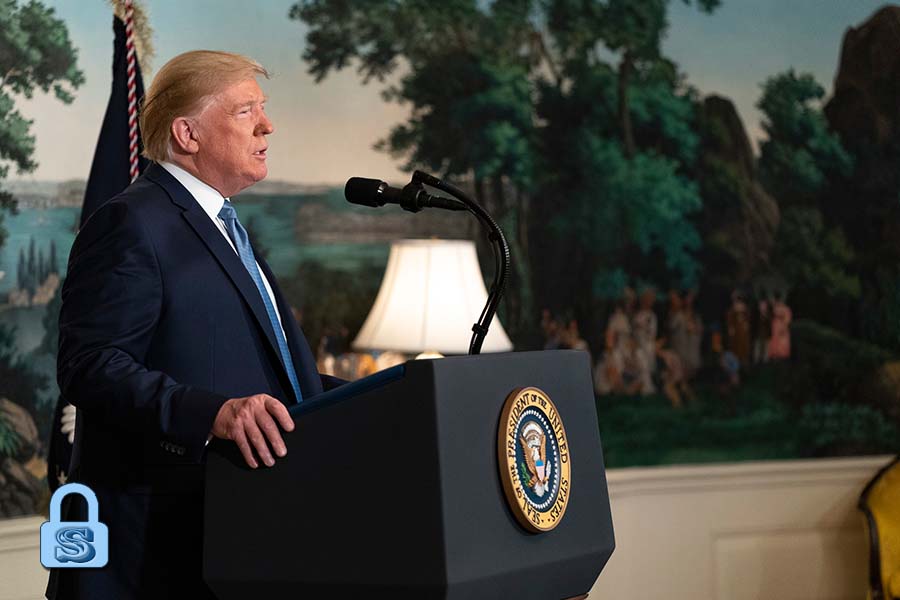
On Aug. 1, U.S. President Donald Trump announced 10 percent tariffs on the remaining $300 billion of Chinese goods entering America, effective Sept. 1, 2019. Trump cited the People’s Republic of China’s failure to follow through on earlier commitments, including a lack of agricultural purchases and stopping the sale of fentanyl to the U.S., as reasons for imposing the new tariffs.
On Aug. 4, the offshore and onshore renminbi exchange rate fell below the key 7 per U.S. dollar mark. Several mainstream newspapers and commentators noted that China was “weaponizing” its currency to deal with U.S. tariffs and the trade war. The next day, the Shanghai Composite Index fell 1.6 percent, the Hang Seng Index fell 0.7 percent, and the Dow Jones fell 2.9 percent.
In the morning of Aug. 5, U.S. President Donald Trump tweeted that “China dropped the price of their currency to an almost historic low. It’s called ‘currency manipulation.’” In the evening, the U.S. Treasury Department designated China as a currency manipulator.
On Aug. 6, the People’s Bank of China denied that China was engaging in currency manipulation and warned that the U.S. decision would “severely damage international financial order and cause chaos in financial markets.” A day earlier, the PRC commerce ministry announced that Chinese companies are stopping purchases of U.S. agricultural products in response to Trump’s latest tariff announcement.
Hong Kong
On July 29, the Hong Kong and Macau Affairs Office of the State Council gave its first press conference on the Hong Kong protests since they began in June. During the press conference, HKMAO spokesperson Yang Guang hinted at possible military intervention. During the week of July 29, rumors also circulated that the Chinese Communist Party was planning to impose martial law in Hong Kong between Aug. 4 to Aug. 6.
On Aug. 3 and Aug. 4, Hong Kong protesters held peaceful rallies before dispersing to various parts of the city to carry out further demonstrations. Police, triad members, and protesters clashed in multiple violent skirmishes across the city. Also, local residents in some districts took to the streets to scold the police for their brutal treatment of protesters.
On Aug. 5, thousands of people, including teachers, aviation workers, and construction workers, carried out a general strike in Hong Kong, the first since 1967. Protesters also besieged and launched projectiles at police stations across the city. The following day, the police announced that it had arrested 148 protesters and fired 800 tear gas rounds on Aug. 5. In comparison, the police had fired 1,000 tear gas rounds in the past two months of demonstrations.
Diplomacy
On Aug. 4, U.S. Secretary of State Mike Pompeo said in Australia that the U.S. was “asleep at the switch as China began to behave in ways that it had not done before,” and cited the PRC’s data theft, militarization of the South China Sea, and “debt-trap diplomacy” as examples of PRC behavior. U.S. Secretary of Defense Mark Esper, who was with Pompeo in Australia, also said that the U.S. is against the PRC’s “destabilizing” behavior in the Indo-Pacific region. The U.S. won’t “stand by idly while any one nation attempts to reshape the region to its favor at the expense of others, and we know our allies and partners will not either,” Esper said.
On Aug. 5, Pompeo met with leaders of three Pacific Island nations and announced that negotiations with those nations have begun to renew a national security agreement that would help the U.S. to counter CCP influence in the region.
Human rights
On Aug. 5, U.S. Vice President Mike Pence and Ambassador for International Religious Freedom Sam Brownback met with a group of religious freedom advocates and persecuted persons during an International Religious Freedom Roundtable. Attendees include Bob Fu, head of the Christian persecution watchdog China Aid, Yang Jiangli, president of the NGO Citizens Power Initiatives for China, Omer Kanat, chairman of the executive committee of the World Uyghur Congress, and Jeff Chen, a representative of the Washington D.C. Falun Gong community. Bob Fu told Axios that the Trump administration is open to using the Global Magnitsky Act to sanction top Chinese officials in Xinjiang and that Pence is planning to give a second speech about China which addresses religious freedom issues in the fall.
On Aug. 6, U.S. House of Representatives Speaker Nancy Pelosi issued a statement in support of Hong Kong protesters. The statement noted that Congress will “begin our work to advance the Hong Kong Human Rights and Democracy Act, and fight to preserve democratic freedoms and the rule of law in Hong Kong” after lawmakers return from their August break.
Our take:
1. From recent developments, we believe that the Hong Kong situation, and not the trade war, is the main reason behind the devaluation of the RMB. Fears of military suppression over the weekend could have triggered capital flight from Hong Kong and the mainland. The capital flight would have placed pressure on China’s foreign exchange reserves and forced the Chinese authorities to take a less bad option of letting the RMB slip just below the 7 to the dollar mark.
The PRC has few incentives to “weaponize” the RMB in the trade war. While Chinese exports benefit and the impact of U.S. tariffs would be lessened by the currency devaluation over the short term, the momentum of capital flight would increase and China would inflict greater economic damage to itself in the long-run. Foreign denominated debt would also become much more expensive and harder for China to finance. Further, the PRC cannot afford to burn through its U.S. dollar reserves in a trade war when it is exporting less to America and finding it difficult to earn dollars.
We believe that the PRC will try to stabilize the yuan at the 7.0 to 7.1 range. While the PRC could sell some of its U.S. Treasury holdings to get more dollars, we do not believe that it will try the so-called “nuclear option” of dumping Treasurys.
2. The labeling of China as a currency manipulator is not just symbolic. While the Omnibus Trade and Competitiveness Act of 1988 only requires the U.S. to negotiate with the country in question either bilaterally or through the International Monetary Fund to resolve the rate of exchange issue, President Trump could use the currency manipulator designation to justify increasing tariff rates on Chinese products. Also, the U.S. Commerce Department could consider the yuan devaluation as a government subsidy and impose countervailing duties under a proposal issued by the Trump administration in May.
3. We previously explained why the CCP would think that the Trump administration has pressed the human rights “nuclear” button with its religious freedom moves in July. The CCP would regard the recent international human rights roundtable attended by Vice President Pence and representatives of prominent persecuted groups in China, including Uyghur Muslims and Falun Gong, as further evidence that the Trump administration is playing the human rights card to trigger the collapse of its regime. (See here and here for our analysis on the CCP and human right.)
4. From the CCP’s perspective, Trump’s tariffs, the labeling of China as a currency manipulator, the Trump administration’s promotion of religious freedom in China, tough comments on China by senior Trump administration officials, Speaker Pelosi’s support of Hong Kong protesters, and escalating protests in Hong Kong are all interconnected and part of a U.S. scheme to undermine the communist regime. The CCP will believe that America has finally shown its “true colors” and will make preparations to play its own “trump cards,” including utilizing conventional and “unrestricted warfare” strategies and tactics to pull off a “Pearl Harbor” against the United States. For instance, the CCP will find ways to disrupt U.S. financial markets, harm Trump’s 2020 re-election chances, and engineer foreign crises to divert America’s attention from China, including encouraging North Korea to carry out missile testing (Pyongyang recently carried out four missile launches in less than two weeks). The Party will also be very opposed to a trade deal based on current U.S. demands.
In analyzing the Trump administration’s moves, we believe that President Trump is still hoping to pressure China into signing a trade agreement and is not trying to wage a “Cold War 2.0” or attempting to bring about regime change on the mainland. Otherwise, Trump would have ordered tariffs to be imposed immediately and at a 25 percent rate instead of announcing 10 percent tariffs a month ahead of planned Sino-U.S. trade talks in September; the delayed tariffs are clearly meant as a pressure tactic and the early announcement appears to be intended to give the markets sufficient time to “acclimatize” to the idea of additional tariffs. We believe that Trump is giving Xi Jinping another chance to reach a trade deal because his administration might have less than ideal solutions to the problems brought about by full-blown confrontation with the PRC, including a currency war, a “hot” war, and a “clash of civilizations.”
Get smart:
We believe that the “Battle of Waterloo” has effectively begun with the CCP devaluing the RMB and the U.S. declaring China a currency manipulator. We expect the “battle” to intensify in the coming weeks and months, but would appear like a “stalemate” to observers until at least 2020.
China-U.S. developments this year are thus far largely in line with what we forecasted in our special report, “2019: A Waterloo Year for China and the United States.” The report offers our take on how the battle may shape out and contains a strategic evaluation of both sides based on Sun Tzu’s Art of War. Businesses, investors, and governments who are looking to avoid risks and uncover real opportunities in the Sino-U.S. showdown can read our report or contact us.
We previously wrote that the “current Sino-U.S. conflict is not just a trade war or a tech war, but a critical battle of ideology, value systems, and morality.” Businesses, investors, and governments must recognize the looming trade and currency war between the U.S. and China is not the main show, and must make plans with the big picture in mind.