◎ The CCP is especially vulnerable to attacks on its human rights record.
The United States made several human rights-related moves in the week of July 8.
July 8
U.S. Secretary of State Mike Pompeo held a press conference to announce the formation of a new human rights commission that would perform an “informed review of the role of human rights in American foreign policy.” The Commission on Unalienable Rights will comprise “human rights experts, philosophers, and activists, Republicans, Democrats, and Independents of varied background and beliefs,” and will advice Pompeo on “human rights grounded in our nation’s founding principles and the principles of the 1948 Universal Declaration of Human Rights.”
July 10
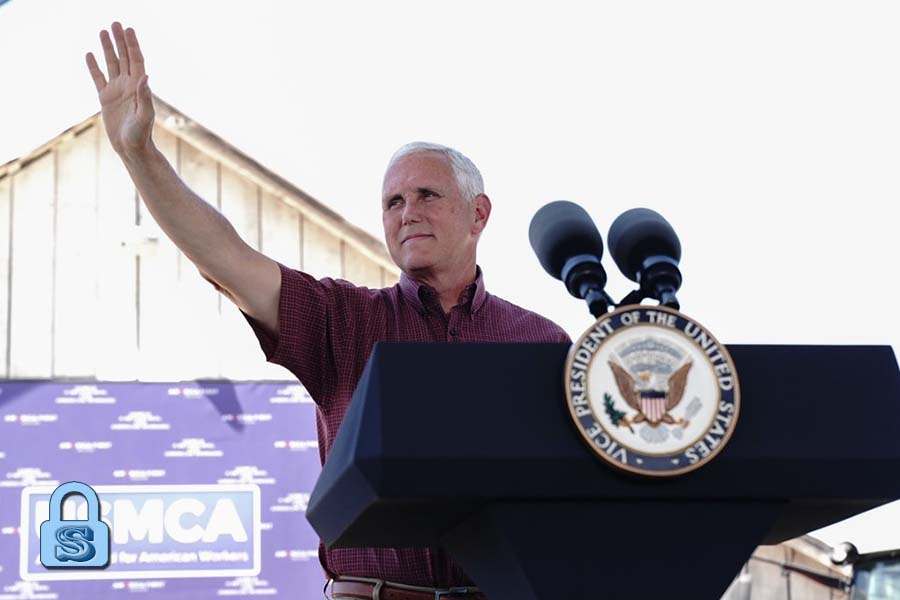
U.S. Vice President Mike Pence spoke to the press while visiting Lemoore, California. When asked by a reporter from the Falun Gong-linked radio station Sound of Hope about the 20th anniversary of the Chinese Communist Party’s crackdown on Falun Gong and the judgment of an independent tribunal on organ harvesting, Pence replied, “America is a beacon of freedom for all the world. And our administration has spoken out on, particularly, about religious liberty around the world. There’ll at another ministerial conference in Washington, D.C. next week. We’ll be addressing these issues in China and, frankly, all over the world.”
Two days later, Chinese foreign ministry spokesman Geng Shuang said at a regular news conference that China opposes “U.S. interference in other countries’ internal affairs under the pretext of religion.” State mouthpiece Xinhua ran a piece on Geng’s remarks.
July 11
Sam Brownback, the U.S. Ambassador-at-Large for International Religious Freedom, gave an overview of the upcoming second Ministerial to Advance Religious Freedom (July 16 to July 18). Brownback said that “over 70 percent of the world lives in a religious-restrictive environment,” and that the U.S. hopes to “start this grassroots movement seriously to push back against it.”
Another noteworthy human rights issue in the week of July 8 is a signed letter by 22 countries on the United Nations Human Rights Council condemning China for the detention of Uyghurs in Xinjiang. Australia, Canada, Britain, France, and Germany are among the 22 countries; the U.S. did not sign the letter because it is not on the U.N. Human Rights Council. Later in the week, 37 countries, including Russia, Saudi Arabia, and several African countries, signed a letter supporting China’s policies in Xinjiang.
Before the G20 meeting in June, several news outlets reported that Vice President Mike Pence had that month postponed several times a speech that is critical of the CCP’s human rights record due to progress in the Sino-U.S. trade talks. Pence was originally scheduled to deliver the speech on June 4, the anniversary of the Tiananmen Square massacre.
The big picture:
U.S. President Donald Trump and Chinese leader Xi Jinping agreed to restart Sino-U.S. trade negotiations at the G20 meeting in Osaka, and the trade representatives from both sides have exchanged phone calls since the G20. However, there are early signs that negotiations are reaching a deadlock. On July 11, Trump tweeted that “China is letting us down in that they have not been buying the agricultural products from our great Farmers that they said they would.” The following day, Chinese foreign ministry spokesman Geng Shuang said that “China and the US should discuss and resolve the issue of trade in agricultural products on the basis of equality and mutual respect.” According to news reports, the Chinese side did not make firm commitments on agriculture purchases at the G20.
Our take:
1. In May 2018, we wrote that the Trump administration could play the human rights card to “consolidate the results of the trade talks” with the CCP regime. We believe that the administration’s latest human rights moves are at least partly intended to pressure the CCP into signing the Sino-U.S. trade deal, which according to U.S. Treasury Secretary Steven Mnuchin in late June, is 90 percent complete.
Observers have criticized the Trump administration for not getting tougher with the CCP regime on prominent human rights issues such as the crackdown on Uyghur Muslims in Xinjiang, the live organ harvesting of prisoners of conscience, and the police brutality in Hong Kong. From a purely strategic point of view, however, it makes sense for the U.S. not to go “all-in” on the human rights issue at this juncture.
A Sino-U.S. trade agreement that meets the Trump administration’s demands on structural reform has the potential to fundamentally change the CCP regime in a gradual manner with fewer shocks to the global economy. Should the regime embark on genuine reform and opening up, then human rights issues in China and Hong Kong would inevitably be resolved in due course (though certainly not as quickly as most observers would like). President Trump could be betting on the scenario we outlined above, and thus delayed Pence’s speech criticizing the PRC’s human rights record and gave Xi Jinping another chance in Osaka to “prove that he can make structural reforms and fundamentally resolve long-standing issues in U.S.-PRC relations.”
Based on the latest Sino-U.S. disagreement over agricultural purchases and the minor reprieve granted to Huawei, however, we believe that neither side is starry-eyed on the prospect of reaching a trade agreement. If anything, the Trump administration’s recent human rights moves suggest that it is readying the “nuclear option” to attack the CCP’s vital points should the current round of trade negotiations fail.
2. The CCP is especially vulnerable to attacks on its human rights record for three reasons. First, the Chinese communist regime has committed unspeakable and indefensible atrocities in its persecution of dissidents and prisoners of conscience. Second, the political legacies of CCP bosses are deeply intertwined with the Party’s human rights record. Third, human rights, like trade, is an issue which galvanizes U.S. allies and partner nations into confronting the CCP alongside America.
An all-out U.S. attack on the CCP’s human rights record and the imposing of sanctions connected with human rights abuses would force a critical showdown in the CCP. Already, the continually escalating factional struggle between the Jiang faction and the Xi camp has triggered a political crisis in the regime. Strong U.S. condemnation of the concentration camps in Xinjiang could provide sufficient ammunition for the Jiang faction to hold the Xi leadership hostage to their demands and survive being completely purged. Meanwhile, strong U.S. condemnation of Jiang Zemin’s genocidal crackdown on Falun Gong and live organ harvesting are severe enough to doom the Jiang faction and imperil the entire communist regime. We believe that Xi Jinping has anticipated the coming confrontation with the U.S. over human rights and is preparing a “way out” for himself by taking the initiative to go after Jiang’s political legacy (see our analysis of military paid services in the July 11 edition of our SinoWeekly Plus newsletter). Nevertheless, we do not believe that the Xi camp or the Jiang faction can prevent the imminent collapse of the CCP regime once the U.S. goes “nuclear” with the human rights card.
Get smart:
One of the things which the CCP fears the most is being confronted over its human rights record. And when the CCP is desperate, it will almost certainly reach for its own “nuclear option,” such as accusing the Trump administration of racism and sparking a “clash of civilizations,” or seeking ways to disrupt U.S. financial markets. The Trump administration must consider novel solutions to counter the “clash of civilizations” accusation and prevent global economic turmoil.
We previously wrote that “the current Sino-U.S. conflict is not just a trade war or a tech war, but a critical battle of ideology, value systems, and morality.” The Trump administration’s recent moves on human rights suggest that Sino-U.S. relations are heading in the direction which we identified. Businesses, investors, and governments must be prepared for the coming shift in the zeitgeist.