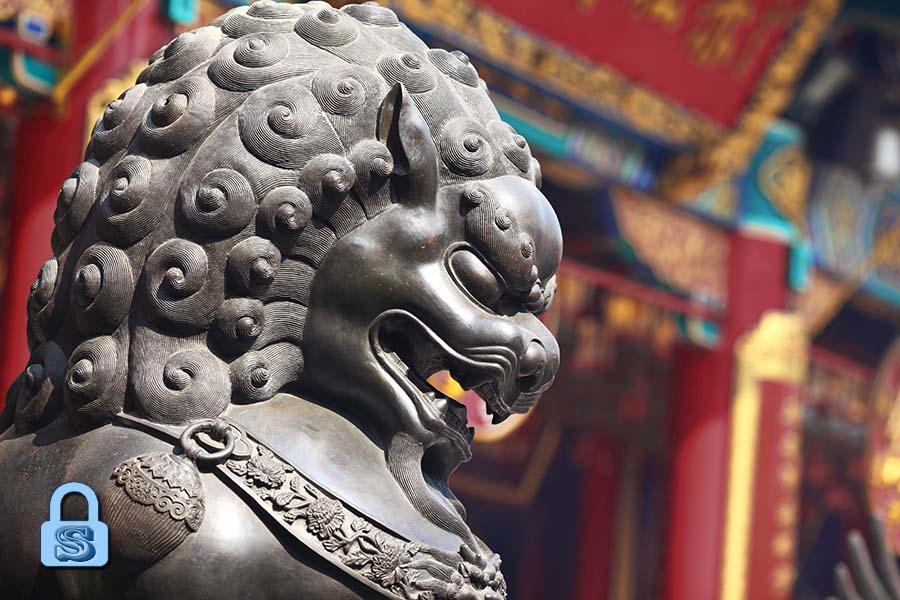
◎ The Hong Kong protesters and the CCP are on course for a disastrous collision.
Western mainstream media and commentators have heavily criticized U.S. President Donald Trump for emboldening the CCP by sending mixed signals on Hong Kong, as well as for unnecessarily complicating the trade talks with his “vague and vacillating” statements on China.
We believe that Trump’s remarks do have an impact on how the CCP approaches Hong Kong and the trade war, but are nowhere near as critical as mainstream commentary would have it. By now, the Chinese Communist Party would have understood how Trump’s “Art of the Deal”-style negotiation works and would unlikely be too surprised by his rhetoric and dealing strategy. Rather, CCP orthodoxy and the Jiang-Xi factional struggle are Beijing and Washington’s biggest obstacles in reaching a trade agreement and averting a Tiananmen-style incident in Hong Kong.
What Washington wants
We previously analyzed that President Trump’s priority with China is getting the People’s Republic of China to sign a tough, enforceable trade deal. While the U.S. government and Congress are getting tougher on the PRC, Trump appears to have signaled with his attitude towards Hong Kong that he can “settle for less” by not going full “Cold War 2.0” on the CCP if it signs the trade deal that Trump wants. We believe that Washington is looking to “settle” for a trade deal because it very likely has less than ideal solutions to handle the fallout of a “maximum pressure” campaign on the PRC.
Several factors could yet force Trump to change his China priorities.
A steep escalation in the Hong Kong situation, including a Tiananmen or near Tiananmen-style incident, would force Trump and Congress to re-evaluate Hong Kong’s autonomous status and increase the level of “strategic competition” with the PRC. In this scenario, public opinion would be hostile to a trade deal and in favor of taking strong action to sanction China. And in considering the coming 2020 presidential election, Trump would almost certainly opt to go with public opinion.
Another factor that would compel Trump to shift his current stance on China is his perception of whether or not the PRC is serious about signing a trade deal. The trade deal is doomed when Trump finally decides that the PRC has been playing him for a fool all along.
What Beijing wants
From our analysis, we believe that the Xi leadership wishes to calm things in Hong Kong without resorting to bloodshed and would prefer to avoid additional U.S. tariffs while de-escalating Sino-U.S. tensions.
From Xi Jinping’s perspective, working towards a Sino-U.S. trade deal does more help than harm to his survival odds. By dangling the prospect of committing to a trade deal, Beijing could “stop” Trump from imposing additional tariffs and even drag out negotiations to a point where it becomes unfavorable for Trump’s 2020 presidential reelection bid. And in the event that Beijing has no choice but to go ahead and sign the deal, Xi can use propaganda spin to restore market confidence, boost China’s rapidly weakening economy, relieve some external pressure from the U.S., and buy the communist regime more time to prepare for heightened “strategic competition” with America.
On the flipside, working towards a trade deal greatly increases Xi’s personal political risk and that of his faction since the structural reforms that the PRC will be committed to making represents a direct threat to the Communist Party’s survival, and Xi’s political rivals will not hesitate to use the trade deal to justify challenging his authority in the name of defending Party orthodoxy. However, if Xi does not prevent additional tariffs or resolve Sino-U.S. tensions, he will be held responsible for the PRC’s financial and economic woes, for worsening Sino-U.S. relations, and for all the problems that will surface as a result of a full-blown “Cold War 2.0” with the United States. In sum, Xi has no good solutions to resolving the trade war, only less bad options. And the least bad option at present is working towards a Sino-U.S. trade agreement.
As for Hong Kong, the “advancing to retreat” strategy which we previously wrote about is most in line with preserving Xi’s interests. By “advancing to retreat,” the Xi leadership has a chance at calming things down in Hong Kong before the 70th anniversary of the founding of the PRC on Oct. 1, as well as show the Trump administration that Beijing will handle Hong Kong “humanely” per Trump’s request and build confidence in Washington that a good faith trade deal is still possible. We believe that the softer messaging on Hong Kong that has emerged in recent days from Hong Kong pro-establishment figures and in some CCP propaganda, as well as “leaked” information that Xi wants the Carrie Lam government to “pick up its own mess” and his “warning” to Jiang faction officials in charge of Hong Kong, are representative of Beijing’s current stance on Hong Kong.
Readers should not mistake Beijing’s strategy on Hong Kong and the Sino-U.S. trade war as an indication that the Xi leadership is somehow acting against Party orthodoxy. On the contrary, unless Xi Jinping is truly “signaling left to turn right,” his making “concessions” to America and on Hong Kong seem like moves taken straight out of CCP’s revolutionary playbook. Meanwhile, a Sino-U.S. trade deal can be justified as another “Long March” or “Second United Front” against a currently more formidable foe. Once the PRC has regained its footing economically and politically, the Xi leadership can easily find various reasons to call off the trade deal or renegotiate one that is more in the PRC’s favor. As for Hong Kong, Beijing will look blame the protests entirely on the Carrie Lam government and sacrifice key persons in a manner which allows the PRC to deny that it has made any concessions to the protesters.
Constraints of Party orthodoxy
Party orthodoxy is one of two huge obstacles preventing Beijing from getting what it wants with Hong Kong and the trade deal.
We previously explained that “CCP officials will always ‘prefer left rather than right’ (寧左勿右) and default to Party orthodoxy in implementing policies from Party central” as a sure-fire method of self-preservation. Even the CCP elite must default to Party orthodoxy on key issues or risk being criticized and challenged.
The need to adhere to Party orthodoxy appears to be the underlying logic behind two recent developments which go against Beijing’s strategy for handling Hong Kong and the trade war.
The PRC’s move on Aug. 23 to slap tariffs on $75 billion worth of U.S. goods is undoubtedly motivated by the Party’s “knee-jerk” need to preserve face and retaliate whenever it is “attacked.” Indeed, Xi Jinping would be exposing himself to immense internal pressure if he did not approve the retaliatory tariffs.
Meanwhile, Party orthodoxy appeared to be a factor in three recent articles in Party and state media:
- Two Wechat accounts belonging to the People’s Daily republished an article, “Deng Xiaoping Abolished Lifetime Tenure for Leadership Positions” (邓小平废除领导职务终身制) on Aug. 22, the 115th anniversary of Deng’s birthday. The articles were later quickly deleted. We believe that both Party orthodoxy and the CCP factional struggle were factors behind the article’s publication.
- On Aug. 25, the People’s Daily ran an article on Xi Jinping titled, “The People’s Leader Loves the People” (人民领袖爱人民) on its front page. One explanation for the publication of an article glorifying Xi despite instructions in 2018 to tone down the “cult of personality” is that overzealous propaganda workers are “preferring left rather than right.” The article’s inflated praise of Xi suggests that Xi’s factional rivals could again be carrying out “advanced blackening” (高級黑) against him.
- On Aug. 27, Xinhua columnist “Xin Shiping” published an article titled “Lies Always Collapse in Front of the Facts” (谎言在事实面前总是不攻自破) which criticized America for vacillating on implementing tariffs. We believe that the article was published to meet the demands of Party orthodoxy.
If Beijing cannot explain Party orthodoxy to Washington, both sides are bound to have further misunderstandings that would jeopardize the trade talks. Xi Jinping also needs to convince the Party that he is not actually breaking away from Party orthodoxy and endangering the regime by working towards a trade agreement.
Meanwhile, the need to be “politically correct” all the time prevents the Xi leadership from resolving the Hong Kong protests through dialogue and compromise. Party orthodoxy constraints the CCP to hardline responses. Given that the Hong Kong protesters do not look like they will stop if their demands are not met, both the protesters and the CCP are on course for a disastrous collision.
Factional struggle
In 2018, we look at how the Jiang faction has been challenging the Xi camp on the trade war with America. To date, the Jiang faction appears to have attempted at least one “soft” coup against the Xi leadership and has forced Xi to purge one of his allies for policy failure. The Jiang faction-controlled CCP intelligence apparatus has also pushed back against Xi; we have reason to believe that some of Beijing’s missteps on Hong Kong and the trade war are the result of the Xi leadership acting on misinformation or disinformation provided by the intelligence apparatus.
We also previously explained how the factional struggle between the Jiang faction and the Xi camp is playing out in Hong Kong (see here and here). Based on our observation, the Jiang faction has not deviated from its tactic of using Party orthodoxy against the Xi camp in Hong Kong. The Jiang faction would ideally hope to cause enough chaos in Hong Kong to force Xi to order a Tiananmen-style crackdown; because factional struggles are “you die, I live” affairs, the Jiang faction is fully capable of sacrificing Party interests in Hong Kong in favor of factional interests to wrestle power away from Xi and regain full control over the regime.
We believe that Hong Kong leader Carrie Lam, a pro-establishment civil servant with ties to the Jiang faction, recently hardened her stance on the protests partly due to the factional struggle and partly out of self-preservation. On Aug. 28, Lam said at a press conference that “all laws in Hong Kong – if they can provide a legal means to stop violence and chaos – the SAR government is responsible for looking into them.” If Lam uses sweeping emergency powers to deal with the protests, she could end up imposing a form of martial law in the city, and the situation would not be much different from the CCP deploying troops into Hong Kong. At this stage, Lam is probably gambling that going hard is the only way to go to protect herself from being “sacrificed” when Beijing’s “advancing to retreat” plan is brought to its logical conclusion. Threatening tougher action in Hong Kong, including the possibility of imposing martial law, could also trigger the sort of chaos that the Jiang faction needs to force Xi Jinping into ordering a bloody crackdown to suppress the Hong Kong protests.
Going forward, we believe that the CCP factional struggle will keep on escalating until a critical point as the Jiang faction continues to undermine the Xi leadership on the Sino-U.S. trade deal and on Hong Kong. To make progress on either front, Xi Jinping’s only option is to gain an edge in the factional struggle by purging senior Jiang faction officials in his administration. Should Xi decide to “kill the chicken to scare the monkey” (殺雞儆猴), officials like Hong Kong and Macau Affairs Office head Zhang Xiaoming are at high risk of being purged.
Get smart
Businesses, investors, and governments must account for the CCP factional struggle and how Party orthodoxy dictates the behavior of CCP officials to accurately gauge the prospects of a Sino-U.S. trade deal and how the Hong Kong situation will unfold.
SinoInsider can help you become more robust to trade war and Hong Kong developments and prepare for Black Swans in China.