
1 Continued purge of Xi camp members and unusual deployments spotlight Xi’s personnel woes
Minister of agriculture and rural affairs probed
May 18
The Central Commission for Discipline Inspection announced on its website that Tang Renjian, the Party secretary and minister of the Ministry of Agriculture and Rural Affairs, is under investigation.
Tang is the third ministerial-level official to be investigated in 2024. The other two officials are:
- Li Yuefeng, executive vice chairman of the central committee of the Taiwan Democratic Self-Government League, was officially probed in March 2024.
- Tang Yijun, former justice minister and chairman of the Jiangxi provincial Chinese People’s Political Consultative Conference, was officially probed in April 2024.
Tang is also the fourth member of the 20th Central Committee to be publicly investigated. The other three members are:
- Qin Gang, former foreign affairs minister, was officially probed in July 2023.
- Li Yuchao, former commander of the People’s Liberation Army Rocket Force, was officially probed in September 2023.
- Li Shangfu, former defense minister, was officially probed in October 2023.
Officials from the Ministry of Agriculture and Rural Affairs who were investigated in recent years include:
- Lu Gui, former director of the farmland construction management department of the Ministry of Agriculture and Rural Affairs, was officially probed in September 2019.
- Wang Weiyou, former deputy director of the policies and regulations department of the Ministry of Agriculture and Rural Affairs, was officially probed in March 2023.
- Liu Yingjie, former deputy director of the human resources and labor department of the Ministry of Agriculture and Rural Affairs, was investigated in October 2023.
Liu Jianchao rumored to make Japan visit
May 18
Kyodo News reported that Liu Jianchao, head of the CCP International Liaison Department, is expected to visit Japan as early as on May 27, citing multiple sources. Discussions about Liu’s trip are currently underway, and if it proceeds, would be Liu’s first visit to Japan since he came to his position in 2022.
Liu is expected to hold talks with leaders from various Japanese political parties and engage in inter-party exchanges while in Japan. Sources told Kyodo News that Liu has inquired about meeting with Toshimitsu Motegi, the secretary-general of the Liberal Democratic Party; Natsuo Yamaguchi, leader of the Komeito Party; and Kenta Izumi, leader of the Constitutional Democratic Party. Also, coordination is ongoing regarding a potential meeting between Liu and Japanese foreign minister Yoko Kamikawa.
In another Kyodo News report, Japanese government sources learned that the PRC customs authorities had halted the registration validity of all processing and storage facilities of Japanese seafood export companies since May. Japanese companies cannot export to China without registration.
***
Liu Jianchao has been tipped to be the PRC’s next foreign minister since the start of the year, especially after he traveled to the United States in January and met with U.S. Secretary of State Antony Blinken and other officials, as well as former officials and representatives from the finance and business community in New York.
Our take
1. The investigation of Tang Renjian underscores the endemic nature of corruption in the CCP regime, as well as Xi Jinping’s continued troubles with grooming personnel and growing his power base.
Tang’s career progression marks him as a member of the Xi camp. Tang spent his formative years in the Ministry of Agriculture (the agency that preceded the Ministry of Agriculture and Rural Affairs), eventually rising to the position of deputy director of the ministry’s industrial policy and regulations department. In 1998, Tang was transferred to the Office of the Central Leading Group for Financial and Economic Affairs where he worked on agriculture and poverty alleviation for 16 years and eventually became a deputy director. Tang also worked with Xi’s close associate Liu He while the latter was at the Central Leading Group for Financial and Economic Affairs (from 2003 to 2014).
Tang Renjian being colleagues with Liu He and possibly his lack of factional ties during the Jiang Zemin-Hu Jintao era were likely factors behind the Xi leadership grooming him for higher office by rotating him to various central and local government positions. During Xi’s first term in April 2014, Tang was appointed executive vice chairman of the Guangxi Autonomous Region. In 2016, Tang returned to the central government where he was promoted to the ministerial rank and served as deputy head and office director of the Central Rural Work Leading Group. Less than a year later, Tang was “parachuted” out to Gansu to serve as provincial deputy Party secretary and governor. In November 2020, Tang was transferred back to the central government to serve as a member of the Central Rural Work Leading Group and secretary of the Party leadership group of the Ministry of Agriculture and Rural Affairs, and was appointed minister of agriculture and rural affairs a month later.
Several of Tang’s former colleagues from Guangxi, Gansu, and the Ministry of Agriculture have been investigated. It is currently unclear what led to Tang being probed. However, Tang would have ample opportunities for corruption in his line of rural and agricultural work. The CCP’s prioritization of the “Three Rural Issues (agriculture, rural areas, and farmers) meant that substantial funding would go to those projects annually, and Tang’s return to the central government in late 2020 coincided with Xi Jinping’s declaration of “complete victory in the fight against eradicating extreme poverty” in China.
Tang Renjian’s downfall could be the result of factional struggles within the CCP elite, as we analyzed was possibly the case with the investigations into Xi camp members Qin Gang and Li Shangfu. Regardless, the purge of Tang will likely deepen paranoia within the officialdom and reinforce the perception among members of the CCP elite that Xi has not been astute in appointing personnel and his one-man dictatorship is not superior to the “collective leadership.”
2. News that Liu Jianchao might take on diplomatic tasks beyond inter-party exchanges in a trip to Japan will reinforce the view that he is being groomed to serve as the next PRC foreign minister. If Liu is indeed a foreign minister candidate, then the Xi leadership will likely add members to the Central Committee at the Third Plenum in July and promote some diplomatic officials to higher office so that personnel adjustments can be made within the PRC diplomatic corps and the International Liaison Department.
Alternatively, Liu Jianchao could merely be serving as a special envoy of Xi Jinping in carrying out certain diplomatic responsibilities outside of the scope of his work. Thus, Liu possibly performing certain diplomatic duties in Japan would be him taking on part of current foreign minister and Central Committee Foreign Affairs Commission Office director Wang Yi’s workload in a temporary arrangement until Wang can hand off the foreign minister portfolio to someone else.
Both of the possible scenarios above suggest that Xi Jinping does not have many trusted officials from which to appoint to important positions or assign key tasks within the PRC’s diplomatic corps. We have long observed that the PRC diplomatic corps was previously under the sway of the Jiang faction and Xi always had difficulties in selecting key diplomatic personnel given that officials from outside the apparatus cannot simply be “parachuted” in as they lack the required professional training and experience.
3. Xi Jinping’s anti-corruption efforts are increasingly showing their limitations.
It is becoming clear that corruption in the CCP regime, which was deeply entrenched during the Jiang era, is impossible to eradicate or “rectify” through the anti-corruption campaign or other measures. There is also clearly no shortage of so-called “two-faced” personnel even within the Xi camp.
Meanwhile, the trend of investigations into members of the Xi camp is weakening Xi’s “quan wei” and his justification of perpetual “self-revolution” within the Party. The undermining of Xi’s “self-revolution” effort also weakens his hand to use the anti-corruption to consolidate power and purge factional rivals.
2 Beijing warns of intertwined risks in real estate, local government debt, and local small financial institutions
Beijing stresses strict prevention of financial risks
May 21
State mouthpieces reported that the State Council held a national meeting of local Party Committee financial office directors in Beijing. Li Qiang, the PRC premier and head of the Central Financial Commission, issued directives on doing a good job with local financial work. He Lifeng, PRC vice premier and director of the Office of the Central Financial Commission, also attended the meeting and delivered a speech.
He Lifeng stressed that key work in the financial sector should be anchored in the long-term goal of building a strong financial nation and in the short-to-medium-term goal of firmly preventing systemic risks. He added the regime needed to confront the risks and hidden dangers present in the financial system, and carry out the main line of work of risk prevention, strengthening regulation, and promoting development. He also said that at present, it is essential to comprehensively manage and strictly control the intertwined risks in the real estate sector, local government debt, and local small and medium-sized financial institutions, as well as crack down on illegal financial activities.
China’s fiscal revenue shrinks
May 20
The PRC Ministry of Finance released China’s fiscal data for April and the first four months of the year.
General public budget revenue
- The national general public budget revenue decreased by 2.7 percent year-on-year during the January to April period to reach 8.0926 trillion yuan. Comparable growth was 2 percent after excluding the impact of “special factors” such as the high base and tax cut policies in 2023.
- National tax revenue decreased by 4.9 percent year-on-year during the January to April period to reach 6.6938 trillion yuan. Comparable growth was about 0.5 percent after excluding the impact of “special factors.”
- Non-tax revenue increased by 9.4 percent year-on-year during the January to April period to reach 1.3988 trillion yuan.
- Domestic value-added tax decreased by 7.6 percent year-on-year during the January to April period to reach 2.5787 trillion yuan.
- Corporate income tax increased by 0.9 percent year-on-year during the January to April period to reach 1.7898 trillion yuan.
- Individual income tax decreased by 7 percent year-on-year during the January to April period to reach 500.7 billion yuan.
- Stamp duty decreased by 17.1 percent year-on-year during the January to April period to reach 135.8 billion yuan. Stamp duty on securities transactions decreased by 52.7 percent year-on-year to reach 33.9 billion yuan.
General public budget expenditure
- The national general public budget expenditure increased by 3.5 percent year-on-year during the January to April period to reach 8.9483 trillion yuan.
- Expenditure on social security and employment increased by 3.8 percent year-on-year to reach 1.5702 trillion yuan.
- Expenditure on healthcare decreased by 9.4 percent year-on-year to reach 719.9 billion yuan.
- Interest payments on debt increased by 6.8 percent year-on-year to reach 362.3 billion yuan.
National government fund budget revenue and expenditure
- Revenue from the transfer of state-owned land use rights decreased by 10.4 percent year-on-year during the January to April period to reach 1.0536 trillion yuan.
- Expenditure related to the transfer of state-owned land use rights decreased by 7.5 percent year-on-year during the January to April period to reach 1.4894 trillion yuan.
Big picture
1. China’s official economic data for April and the first four months of the year showed shrinking exports and investment, weak consumption, and a credit plunge.
2. The PRC authorities rolled out several key real estate policies, including lowering interest rates on individual housing provident fund loans, removing the lower limit on interest rates for commercial individual housing loans for first and second-time homebuyers, and lowering the minimum down payment ratio for first-home and second-home loans.
Our take
1. The State Council’s meeting on intertwined risks in the real estate sector, local government debt, and small and medium-sized financial institutions indirectly indicates that China’s economic situation is worse now than it was in 2023, while various risks are accumulating and erupting.
The PRC authorities’ call to “comprehensively manage” and “strictly control” risks in the three aforementioned areas also signals that trouble is the most pronounced there and the central government wants local officials to focus their efforts at defusing risks in those particular areas. This contrasts with Xi Jinping’s vague warning to senior officials in early 2023 that “various risks and dangers are highly correlated, strongly linked, and rapidly transmitted,” and how they should not “let small risks become big risks, let individual risks become comprehensive risks, let local risks become regional or systemic risks, let economic risks become social and political risks, and let international risks become domestic risks.”
2. The PRC finance ministry’s announcement of negative fiscal revenue during the January to April 2024 period corroborates our observations about the actual state of the Chinese economy. The PRC authorities’ claim that China’s fiscal revenue saw a “comparable growth” of 2 percent due to “special factors” is unconvincing as we previously explained in examining the official fiscal data for the first quarter of the year. Negative fiscal revenue growth also aligns with the various poor economic indicators that have been released thus far (see here, here, here, and here).
Another sign that the Chinese economy is doing worse now than it was last year after Beijing ended the “zero-COVID” policy is the growth in the fiscal deficit. Going by calculations based on the official data, China’s fiscal deficit for the first four months of 2024 grew by 163.5 percent year-on-year to reach 855.7 billion yuan.
Meanwhile, the reduction in government tax revenue and increased expenditure makes it difficult for the PRC authorities to resolve local debt troubles. The increase in debt interest payments during the January to April period indicates the local governments have been expanding their debt (i.e. “borrowing new to repay old”) to sustain government operations and avoid public defaults. Concurrently, local governments are taking in less revenue from land sales while expenditures related to land transfers have exceeded revenue by 40 percent. Decreasing local government fiscal revenue and deteriorating economic conditions are almost certainly part of the reason why the central government recently announced the sale of the first tranche of its 1 trillion yuan of special sovereign bonds.
3. Growing real estate risks are spreading financial contagion and impacting China’s financial system.
A sign of expanding property risks is the continued decline of home prices in April. National Bureau of Statistics data released on May 17 about the national real estate market for the first four months of 2024 shows that the average transaction price for new homes in April was 10,656 yuan per square meter, or a 14.5 percent decrease from the peak of 12,469 yuan per square meter in April 2023. Meanwhile, the down payment ratio for first homes in restricted purchase areas was mostly 30 percent and dropped to 20 percent in some unrestricted purchase areas around April 2023. Should home prices in China decline by another 5 to 15 percent, many properties that were sold last year and after the down payment ratio was lowered to 15 percent on May 17 could become negative assets.
Mainland media and social media reports indicate that prices for second-hand homes in China have fallen even more sharply. For example, the transaction prices of some second-hand homes in Shenzhen’s Bao’an District dropped by 60 percent from their peak in 2021. And in Beijing, home prices on the whole have declined by about 15 to 20 percent from their peak at the beginning of 2023.
China’s banking sector is being hit hard by real estate woes as the latter is a major source of credit for the former. Chinese banks will see a contraction in real estate loans and an increase in bad debts as continuously falling home prices put off homebuyers from making purchases and exacerbate the debt crisis of property developers.
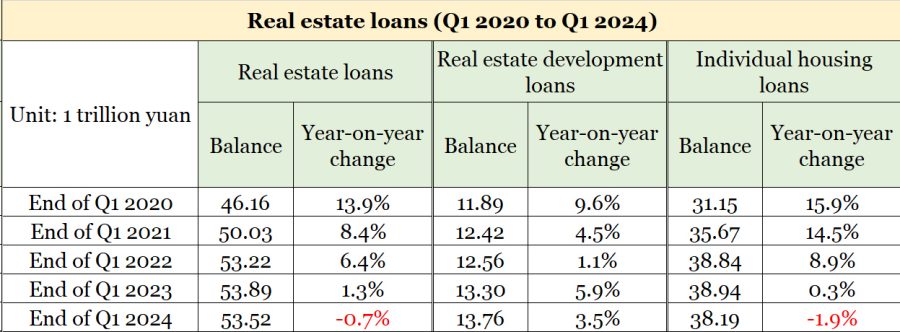
Table 1 (Source: People’s Bank of China)
Table 1 shows that individual housing loans were still growing at double-digit rates when the COVID-19 pandemic broke out in 2020. However, individual housing loans began to shrink after China Evergrande’s debt crisis broke out in the second half of 2021. Individual home loans saw weak growth following the end of “zero-COVID” and finally became negative in the first quarter of 2024 with a reduction of 750 billion yuan compared to the same period from a year ago.
Mainland media reported that the net profit of 42 listed banks in China fell by 0.81 percent from a year earlier in the first quarter of 2024 while their operating income decreased by 1.73 percent year-on-year, citing a report by Ernst & Young dated May 14. Mainland media cited another Ernst & Young report showing that the total non-performing loan balance of all 58 listed banks in China amounted to 2.16 trillion yuan at the end of 2023, an increase of 149.095 billion yuan compared to the end of 2022. Also, the weighted average non-performing loan ratio for loans to the public real estate sector increased by 0.26 percent from a year ago to 3.8 percent.
A May 6 report by mainland media Yicai found that 34 of 41 listed Chinese banks (excluding Chengdu Bank due to a lack of data) continued to see narrowing interest margins, citing data from Wind. Thirty-one of the 34 banks had interest margins below the 1.8 percent warning line, with the interest margins of Xiamen Bank, Nanjing Bank, and Shanghai Bank almost down to 1 percent.
Finally, a list of banking institutions released by the National Financial Regulatory Administration showed that the number of institutions fell from 4,602 at the end of 2021 to 4,490 at the end of 2023, or a reduction of 112 institutions. There were 77 reductions alone in 2023, likely due to several small and medium-sized banks entering “technical bankruptcy” and being merged with bigger institutions.
4. We believe that the PRC will find it very difficult to achieve its expected growth target for the year if credit and social financing remain weak in May and China’s international situation does not improve. As the Chinese economy continues to deteriorate, negative growth persists, and life gets tougher for the Chinese people, “economic risks will become social and political risks” for the CCP regime as Xi Jinping has cautioned.




