
1 Beijing moves to rectify the capital market and early setback
State Council issues capital market guidance
April 12
1. The PRC State Council issued a document on “strengthening supervision, preventing risks, and promoting the high-quality development of the capital market” (關於加強監管防範風險推動資本市場高質量發展的若干意見). The document, known colloquially as the “new nine provisions” (新國九條), comes a decade after the last guidance on the capital market issued by the State Council.
Noteworthy content in the “new nine provisions” include:
1. General requirements
- The capital market must be guided by Xi Jinping Thought on Socialism with Chinese Characteristics for a New Era.
- The capital market must adhere to the political and people-oriented nature of work in the capital market.
- The capital market must adhere to and strengthen the Party’s leadership.
- Officials must comprehensively strengthen supervision over the capital market, effectively prevent and defuse risks, and ensure that regulations come with “teeth and thorns” (長牙帶刺, i.e. must be strict and have substance) and with clear edges and corners (有棱有角, i.e. enforce the law rigorously and strictly).
- A general framework for the high-quality development of the capital market will be established over the next five years. By 2035, a capital market with high adaptability, competitiveness, and inclusiveness will be basically established. By the middle of this century, a high-quality capital market matching that of a financial power will be developed.
2. Strictly control access to issuance and listing
- Further improve the issuance and listing system.
- Expand on-site inspection of companies under review and related intermediary institutions.
- Clearly disclose dividend policies at the time of listing.
- Include aggressive, pre-listing “clearance-style” dividends and similar situations in the negative list for issuance and listing.
- Strictly regulate the supervision of spin-off listings.
- Strengthen responsibility throughout the entire process of issuance and listing.
- Implement strict oversight over refinancing.
- Establish a mechanism for retrospective accountability and tracing responsibilities in audits.
- Further solidify the primary responsibility of issuers and the gatekeeping responsibility of intermediary institutions, and establish a “blacklist” system for intermediary institutions.
- Adhere to the principle of “declaring means taking responsibility” and strictly investigate issues such as fraudulent issuance and other illegal activities.
- Strengthen the regulation and oversight of underwriting and issuance.
- Rectify market irregularities such as overpricing and excessive fundraising, as well as concerted actions to suppress prices.
- Crack down severely on illegal nominee shareholding, speculative stock purchases at abnormal prices, behaviors involving the transfer of benefits, and other violations.
3. Strictly and continuously supervise listed companies.
- Enhance information disclosure and corporate governance supervision.
- Construct a comprehensive anti-counterfeiting and anti-fraud system in the capital market, and crack down on key areas of illegal activities such as financial fraud and fund misappropriation.
- Comprehensively improve the system of share reduction rules.
- Strictly regulate the reduction of major shareholders, especially controlling shareholders and actual controllers, and resolutely prevent various forms of indirect share reductions based on the principle of substance over form.
- Order the entities in violation of rules to repurchase the shares reduced in violation and pay the price difference.
- Crack down severely on various forms of illegal share reduction.
- Strengthen supervision over cash dividends by listed companies.
- For companies that have not distributed dividends for many years or have low dividend ratios, restrict the reduction of shares by major shareholders and implement risk warnings.
- Promote listed companies to enhance their investment value.
- Strictly crack down on illegal activities such as market manipulation and insider trading under the guise of market value management.
4. Strengthen the intensity of supervising delistings
- Deepen delisting system reform and accelerate the establishment of a delisting pattern where companies that should be delisted are promptly removed from the market.
- Scientifically define the scope of major illegal activities that lead to delisting. Tighten financial based delisting criteria. Improve market value-based delisting criteria.
- Further reduce the value of “shell” resources.
- Strengthen regulation of mergers and acquisitions, intensify regulatory efforts against “backdoor listings,” and precisely target various illegal “shell preservation” behaviors.
- Strictly enforce delisting procedures and crack down severely on illegal acts such as financial fraud and market manipulation aimed at evading delisting.
- Establish a comprehensive investor compensation and relief mechanism during the delisting process. Hold controlling shareholders, actual controllers, directors, and senior executives responsible for major illegal delisting to compensate investors for their losses in accordance with the law.
5. Strengthen supervision of securities and fund institutions.
- Improve the regulatory system for key businesses such as derivatives and margin trading.
- Improve the compensation management system in the securities and fund industry that is aligned with operational performance, business nature, contribution levels, compliance and risk control, and social and cultural considerations.
- Resolutely combat money-worshiping, extravagant indulgence, the pursuit of immediate gains, and flaunting wealth and other undesirable practices.
6. Strengthen trading supervision
- Promote stable market operations
- Enhance comprehensive risk assessment of the stock market.
- Strengthen the reserve of strategic forces and the construction of stability mechanisms.
- >Focus on addressing prominent risks and hidden dangers in the private equity fund sector.
- Improve the market-oriented, rule-of-law-based, and diversified mechanism for handling bond default risks, and resolutely crack down on debt evasion behaviors.
- Intensify trading supervision
- Enhance regulatory standards targeting abnormal trading and market manipulation.
- Introduce regulations on algorithmic trading supervision and strengthen supervision over high-frequency quantitative trading.
- Develop rules for the operation of private securities funds.
- Strengthen bottom-line thinking and improve measures to deal with extreme situations.
- Seriously investigate and punish illegal activities such as market manipulation and malicious short-selling, and strengthen deterrence and warnings.
7. Vigorously promote the entry of medium and long-term funds into the market.
- Build a policy framework that supports “long-term money and long-term investment.”
- Promote the vigorous development of equity mutual funds and significantly increase the proportion of equity funds.
- Establish a fast-track approval process for exchange-traded funds (ETFs) to promote the development of index-based investments.
8. Further comprehensively deepen reform and opening up.
- Promote the registration-based system for stock issuance.
- Increase support for equity and bond financing for enterprises that align with national industrial policies and are focused on breakthroughs in key core technologies.
- Intensify reforms in mergers and acquisitions.
- Promote the steady and orderly development of the futures and derivatives markets.
- Adhere to a coordinated approach to high-level institutional opening up and security in the capital market.
9. Promote the formation of a concerted effort to facilitate the high-quality development of the capital market.
- Promote the development of the rule of law in the capital market and significantly increase the cost of illegal activities.
- Strengthen joint efforts to combat illegal activities in securities and futures crimes.
- Deepen coordination and linkages between central and local authorities and among different ministries and departments.
- Build a regulatory team that is politically reliable, competent, and disciplined.
- Resolutely eliminate erroneous ideas such as “exceptionalism,” “elitism,” and “special treatment.”
- Strictly and rigorously improve the management of departing personnel, rectify issues related to “shadow shareholders” (影子股東), improper shareholding, the revolving door between government and business, and the practice of resigning to evade responsibilities (逃逸式辭職).
- Eradicate the environment and conditions that breed corruption.
- Resolutely punish corruption intertwined with risks, collusion between capital and power, and other corrupt practices, so as to foster a clean and upright political environment.
2. The China Securities Regulatory Commission published several supporting opinions and regulatory rules related to the “new nine provisions,” including:
- An opinion on “strictly implementing the delisting system” (關於嚴格執行退市製度的意見) was issued to various agencies of the CSRC, exchanges, subordinate units, associations, and internal departments within the commission.
- Revised a guideline for evaluating “science and technology attributes” (科創屬性評估指引 [試行]) and the commission’s random inspection checklist (中國證監會隨機抽查事項清單).
- Formulated measures for shareholder reduction of listed companies (上市公司股東減持股份管理辦法) and revised rules for the management of shares held by directors, supervisors, and senior management of listed companies (上市公司董事、監事及高級管理人員所持本公司股份及其變動管理規則).
- Revised regulations on strengthening the supervision of listed securities companies (關於加強上市證券公司監理的規定).
- Developed trial measures for regulating programmatic trading in the securities market (證券市場程序化交易管理規定 [試行]).
- Have the Shanghai, Shenzhen, and Beijing stock exchanges publicly solicit opinions on 19 specific business rules, including rules for the review of stock issuance (股票發行上市審核規則) and listing and stock listing rules (股票上市規則).
3. Wu Qing, the chairman and Party secretary of the CSRC, gave an exclusive interview to mainland reporters on the implementation of the State Council’s “new nine provisions.”
Wu said that the “new nine provisions” have three main characteristics:
- The provisions fully embody the political and people-oriented nature of the capital market.
- The provisions highlight the main theme of strong regulation, risk prevention, and the promotion of high-quality development.
- The provisions fully reflect goal-oriented and problem-oriented approaches.
Wu said that the provisions particularly address prominent institutional mechanisms and regulatory enforcement issues exposed by stock market volatility that began in August 2023. He added that timely measures are being taken to address shortcomings, strengthen weaknesses, respond to investor concerns, and resolve deep-seated contradictions accumulated in the capital market over the long term.
Two leading securities firms probed for trading violations
April 12
CITIC Securities and Haitong Securities separately announced that “related entities” of theirs are suspected of violating restrictive regulations during the transfer of non-publicly issued shares of CNNC Hua Yuan Titanium Dioxide Co. Ltd. in 2023, prompting an investigation by the CSRC.
On the same day, CNNC Hua Yuan disclosed that they received a notice of filing from the CSRC indicating that the regulator decided on March 13, 2024 to investigate the company’s actual controller Wang Zelong.
***
Mainland media reported that CNNC Hua Yuan privately issued A-shares to specific entities in March 2023, and raised a total of 5.288 billion yuan with an issuance price of 5.92 yuan per share. CITIC Securities was the sponsoring institution for the issuance while Haitong Securities was one of 16 subscribers. The lock-up period for the subscribed shares was six months (March 9, 2023 to September 8, 2023). Prior to this, CNNC Hua Yan had privately issued 460 million shares to Wang Zelong at the price of 3.46 yuan per share, with a lock-up period of 36 months from the listing date of the new shares (September 30, 2020 to September 29, 2023).
Mainland media added that there were abnormal fluctuations in CNNC Hua Yan’s margin financing around the time that the company listed additional shares and during the lock-up period. Industry insiders told mainland media that the fluctuations were very similar to an arbitrage strategy known as “subscribed shares plus short selling” (定增認購股票+做空).
Industry insiders explained that subscribers who participated in CNNC Hua Yan’s private placement of shares also borrowed shares from securities firms for short selling (sold at market price) during the subscription period. Those subscribers then used the discounted privately placed shares to make payment on the borrowed shares from the securities firms after the lock-up period expired. The unlocking period for the privately placed shares coincided roughly with the contract time of the margin financing cycle, providing operational space for the deployment of the “subscribed shares plus short selling” strategy.
Funds and securities executives take pay cut
April 11
1. Mainland media Yicai cited data from Wind as showing that Chinese bank managers saw an average salary reduction of 13 percent in 2023, with some senior executives hit with pay cuts of up to 40 percent. Employees at the leading securities firm CICC Securities saw the largest salary reduction, with employee average annual salaries shrinking by nearly 120,000 yuan and the annual salaries of executives falling from tens of millions of yuan to less than 3 million yuan.
2. Mainland media 21st Century Business Herald cited market sources saying that “restrictions on salaries for funds and securities firms have begun.” The sources added that a salary ceiling of 3 million yuan has been imposed, with Bosera Asset Management and China Merchants Securities having already issued official notices about the move.
An industry insider told 21st Century Business Herald that the rumored 3-million yuan salary cap includes an employee’s base salary, year-end bonuses, and other components, and is applicable to everyone in the industry. Most fund professionals do not earn up to 3 million yuan, but senior executives and top-tier “star” fund managers who used to earn annual salaries in the tens of millions of yuan would be significantly impacted.
Chinese small-cap stocks see sell-off
Chinese small-cap stocks experienced declines as traders reacted to the State Council’s “new nine provisions”:
- April 15: The Shanghai Composite Index closed up 1.26 percent at 3,057.38, but fell below 3,000 points during intra-day trading to reach 2,995.54 at the lowest. The CSI 2000 Index also fell by 4.07 percent, reflecting the overall price movement of small-cap stocks in the A-shares market.
- April 16: The Shanghai index fell by 1.65 percent to close at 3,007.07 points, while the Shenzhen index fell by 2.29 percent to close at 9,155.07. The CSI 2000 Index fell by 7.16 percent.
Traders appeared to be reacting to the State Council’s “new nine provisions” and concerns that the PRC authorities’ effort to strengthen stock listing criteria and improve dividend payouts could lead to delistings. Some Chinese commentators dubbed the sell-off in small-cap stocks a “bull market crash.”
April 16
Guo Ruiming, the director of the CSRC’s listed companies supervision department, made clarifications and responses to issues regarding dividends and delistings.
Guo said that the CSRC would issue risk warnings (ST) if a company fails to meet dividend standards. The CSRC would also focus on companies capable of paying dividends but have not done so for a long time or have a low dividend payout ratio.
Guo further explained that a company that receives an ST designation is not an indication that they are at risk of being delisted. Rather, the designation mainly serves to alert investors to the company’s risks. Guo added that a company will not be delisted solely because of an ST designation due to dividend issues.
Guo said that the adjustment of delisting criteria under the “new nine provisions” is a strengthening of efforts to clear out “zombie shell companies” and “bad actors,” and is not an attempt to go after small-cap stocks. He added that views in the market that strengthening delisting criteria mainly targets small-cap stocks is “purely a misinterpretation” of what the authorities are doing.
Our take
1. The State Council’s “new nine provisions” is the Xi Jinping leadership’s latest effort to further rectify the financial sector. The contents of the provisions also hint at Xi’s political agenda and objectives.
i) The general requirements section of the “new nine provisions” calls for the capital market to be guided by “Xi Jinping Thought,” to adhere to the “political and people-oriented nature of work” in the capital market, and for the capital market to adhere to and strengthen the Party’s leadership. These requirements reflect Xi’s ongoing efforts to consolidate power and resolve long-standing problems inherited from his predecessors.
The Jiang Zemin faction’s era of dominance (1997 to 2012) saw the deepening and entrenching of corruption in the regime. Corruption extended to the financial sector, and the Party elites often exploited the capital market as their personal “cash machine.” The Jiang faction and other “anti-Xi” forces launched a “financial coup” against the Xi leadership during Xi’s first term; CITIC Securities, whose vice chairman at the time was Jiang faction member Liu Yunshan’s son Liu Lefei, appeared to have been involved in shorting the market and channeling benefits to companies with vested interests as part of the “national team’s” market rescue effort.
Xi gradually took action to cut the CCP elites off their “cash machine” and influence over the financial sector after he consolidated control over the military and increasingly centralized power. Starting 2017, Beijing investigated Tomorrow Group’s Xiao Jianhua, CEFC China Energy’s Ye Jianming, and Anbang’s Wu Xiaohui, or moves against the “white gloves” and “money bags” of the Jiang faction and other elites. The Xi leadership’s targeting of Jack Ma and his companies (Alibaba, Ant, etc.), as well as tech giants like Didi Chuxing, were also partly aimed at addressing factional struggle issues and solidifying the Party’s control over capital.
More notably, the Xi leadership focused the anti-corruption campaign on the financial sector and system starting from the 19th Party Congress. In “sounding the bugle” on corruption and promoting “self-rectification,” CCP propaganda would frequently call for exposing “hidden corruption,” punishing official-business collusion, and preventing interest groups and power cliques from “infiltrating the political sphere.” Party propaganda also urged the “rectification of corruption in areas where power is concentrated, capital is intensive, and resources are rich, such as finance, state-owned enterprises, energy, tobacco, medicine, infrastructure projects, and bidding.”
Certain provisions in the “new nine provisions” hint at further crackdowns and Xi’s effort to forestall “financial coups.” For instance, the provision on “strictly controlling access to issuance and listing” foreshadows a move by the PRC authorities to weed out listed companies that engage in falsification and fraud. Also, the provisions on trading supervision, assessing stock market risks, strengthening the reserve of strategic forces and the construction of stability mechanisms, improving response measures for extreme situations, and seriously dealing with market manipulation and malicious short-selling are likely partly aimed at preventing Xi’s political adversaries from orchestrating financial means to undermine the Xi leadership.
Beijing’s latest effort to clean up the financial sector through the “new nine provisions” further confirms our analysis that factional struggle is still ongoing in the CCP elite and Xi Jinping continues to rectify the problems left behind by his predecessors. In contrast, many Chinese commentators believed after the 20th Party Congress that Xi would effectively halt anti-corruption and rectification efforts because Xi’s cronies occupied top positions and Xi was virtually unchallenged in the regime.
ii) The proposal in the “new nine provisions” for capital market work to be “people-oriented” is in line with Xi Jinping’s “common prosperity” agenda. The Xi leadership is likely looking to win the support of the masses as he encroaches on the interests of the business and political elites in the CCP in cleaning up the financial sector.
By selling to the public the idea that Beijing’s capital market work is going to benefit the masses and actually taking some actions in that regard, the Xi leadership could potentially address widening social contradictions under CCP rule and use class conflict to its advantage. In Xi’s ideal scenario, his financial sector rectification and efforts to resolve wealth disparities would also resolve some of his political problems by boosting his “quan wei” and turning him into an actual “people’s leader.”
iii) The proposal in the “new nine provisions” for a “general framework for high-quality development of the capital market” to be established over the next five years hints at Xi Jinping’s desire to serve at least another term in office and see through his ambitious project of regime rectification and revival. It is also noteworthy that Xi’s 2035 and 2050 markers and goals for the capital market are aligned with his goals and markers for “Chinese-style modernization” and military modernization.
2. The serious deficiencies of the CCP authoritarian system are likely to impede the Xi leadership’s latest attempt to rectify the capital market and could potentially even exacerbate existing problems to create a greater political crisis for Beijing.
The CCP and its admirers have often claimed that one of the advantages of the CCP authoritarian system is its ability to so-called “pool resources to get big things done” (集中精力辦大事). However, there are hard limits to what this mentality can accomplish in the face of overwhelming adversity for which multifaceted and nuanced approaches are necessary to resolve. For instance, China’s stock indexes, and in particular the Shanghai index, have been spiraling downward since August 2023 in the wake of falling investor confidence given China’s economic decline, growing authoritarianism at home, and rising geopolitical pressures abroad. The CCP authorities tapped its “national team” to prop up the markets with state funds and managed to pull the Shanghai index above 3,000 points (up from a low of the 2,700 points territory) on Feb. 29 ahead of the Two Sessions. Despite state efforts, there were three days during the past two weeks where the Shanghai index fell below 3,000 points during intra-day trading and closed below 3,050 points daily on average.
The CCP’s latest effort to “pool resources to get big things done” via the “new nine provisions” has already met with a setback in the form of a sell-off in small-cap stocks. While the CSRC quickly clarified what the authorities had in mind concerning delistings and dividends, it remains to be seen whether Beijing can convince investors and elite interest groups to refrain from panic selling in the near future as they anticipate a harsh clampdown. It cannot be ruled out that the actual rectification resulting from the implementation of the “new nine provisions” could be much smaller in scale and less impactful than the current text of the guidance suggests should there be a mass sell-off and a wider crisis because of it.
Xi Jinping risks courting more political trouble if the CSRC’s rectification of the capital market leads to significant losses and badly harms the interests of the Party elites. The “anti-Xi coalition” could compel Xi to sacrifice CSRC head Wu Qing and other allies, as well as pressure him to scale back the scope of the campaign to clean up the market. Increased elite pressure on Xi and more controversial personnel removals will heighten political instability in the CCP elite and negatively impact the regime at a time when it is rocked by crises.
3. The investigation into CITIC Securities, Haitong Securities, and CNNC Hua Yuan over short-selling and financial arbitrage hints at the seriousness of issues in the PRC’s capital market. However, the CSRC’s probe into the matter may only result in symbolic warnings and punishment, and the true scope of the matter could be covered up lest it affects the prestige of state-owned securities companies.
2 China’s GDP likely declined, not grew, in Q1
April 12
1. The PRC General Administration of Customs released China’s trade data for March and the first three months of the year (in U.S. dollars):
March
- Total trade: $500.8 billion, down 5.1 percent year-on-year. (Total trade was down 7.8 percent year-on-year when compared with official PRC data from 2023.)
- Exports: $279.7 billion, down 7.5 percent year-on-year. (Exports were down 11.4 percent when compared with official PRC data from 2023.)
- Imports: $221.1 billion, down 1.9 percent year-on-year. (Imports were down 2.8 percent when compared with official PRC data from 2023.)
- Trade surplus: $585.5 million. (The trade surplus was down 33.6 percent when compared with official PRC data from 2023.)
January to March
- Total trade: $1.4313 trillion, up 1.5 percent year-on-year. (Total trade was down 0.5 percent when compared with official PRC data from 2023.)
- Exports: $807.5 billion, up 1.5 percent year-on-year. (Exports were down 1.7 percent when compared with official PRC data from 2023.)
- Imports: $623.8 billion, up 1.5 percent year-on-year. (Imports were up 1.1 percent when compared with official PRC data from 2023.)
- Trade surplus: $183.7 billion. (The trade surplus was down 10.3 percent when compared with official PRC data from 2023.)
April 16
1. The PRC National Bureau of Statistics released economic data for the first quarter of 2024.
GDP
- China’s GDP was 29.630 trillion yuan in Q1 2024 calculated at constant prices, an increase of 5.3 percent year-on-year and a quarter-on-quarter increase of 1.6 percent.
National fixed asset investment
- National fixed asset investment (excluding rural households) in Q1 2024 increased by 4.5 percent year-on-year to 10.004 trillion yuan (calculated on a comparable caliber). Private fixed asset investment increased by 0.5 percent year-on-year to 5.160 trillion yuan.
- Compared with official PRC data from 2023, national fixed asset investment (10.728 trillion yuan) and private fixed asset investment (5.853 trillion yuan) decreased by 6.75 percent and 11.85 percent respectively.
Retail sales of consumer goods
- In March, total retail sales of consumer goods increased by 3.1 percent year-on-year to reach 3.902 trillion yuan.
- From January to March, total retail sales of consumer goods increased by 4.7 percent year-on-year to reach 12.033 trillion yuan.
- Compared with official PRC data from 2023, retail sales for March (3.786 trillion yuan) and the January to March period (11.492 trillion yuan) increased by 3.08 percent and 4.7 percent respectively.
National consumer price index
- The national CPI grew 1.3 percent from the previous quarter during the January to March period (no change in the growth rate when compared to Q1 2023).
National producer price index for industrial products
- The national PPI for industrial products fell 2.7 percent from the previous quarter during the January to March period.
National real estate market
- National real estate development investment in Q1 2024 decreased by 9.5 percent year-on-year (calculated on a comparable caliber) to 2.208 trillion yuan. Residential investment decreased 10.5 percent year-on-year to 1.659 trillion yuan.
- Area of new housing under construction in Q1 2024 decreased by 27.8 percent year-on-year to 172.83 million square meters. Residential housing under construction decreased by 28.7 percent year-on-year to 125.34 million square meters.
- Sales area of new commercial housing decreased by 19.4 percent year-on-year to 226.68 million square meters. Sales area of residential housing decreased by 23.4 percent year-on-year to 189.42 million square meters.
- Sales of new commercial housing decreased by 27.6 percent year-on-year to 21.355 trillion yuan. Sales of residential housing decreased by 30.7 percent to 1.852 trillion yuan.
- Compared with official PRC data from 2023:
- National real estate development investment decreased by 15 percent in Q1 2024, of which residential investment decreased by 16.1 percent.
- Area of new housing under construction decreased by 28.3 percent in Q1 2024, of which residential area decreased by 29.3 percent.
- Sales area of new commercial housing decreased by 24.3 percent, of which residential sales area decreased by 27.8 percent.
- Sales of new commercial housing decreased by 30.1 percent, of which residential sales decreased by 33 percent.
2. NBS deputy director Sheng Laiyun said at a press conference that China’s economy achieved a “good start” in the first quarter of the year. He said that domestic demand contributed to 85.5 percent of GDP growth in Q1, with consumption making up 73.7 percent of domestic demand. Sheng added that the Q1 GDP growth of 5.3 percent was “realistic” and that it exceeded the “about 5 percent” growth target set in the 2024 government work report.
GAC deputy director Wang Lingjun said that the trade growth rate in the first quarter reached a new high in six quarters. Wang expected China’s trade to continue improving in the second quarter and the momentum of growth will be maintained in the first half of the year.
3. State mouthpiece Xinhua reported that Wall Street banks raised their forecast for China’s full-year GDP growth based on the “strong performance” of China’s manufacturing sector:
- Goldman Sachs raised its projection of China’s 2024 GDP growth from 4.8 percent to 5.0 percent.
- Citigroup raised its China 2024 GDP growth projection from 4.6 percent to 5 percent.
- Morgan Stanley raised its China 2024 GDP growth projection from 4.2 percent to 4.8 percent.
Xinhua also cited an earlier Foreign Affairs article titled, “China is Still Rising” which argued that the “peak China theory” underestimates the resilience of the Chinese economy. Xinhua added that China is expected to continue contributing about a third of the global economic growth.
Our take
1. The PRC’s official data and propaganda indicate that China’s economy improved in the first quarter of 2024. However, comparing the recent data with the CCP’s own data for the same period in 2023 tells a different story.
Of China’s “troika” of growth drivers, only consumption saw slight growth while exports and investment decreased:
- Exports were up slightly in the first two months of 2024, but saw a double-digit decline in March with the trade surplus dropping by over a third.
- Private investment saw a double-digit decline, which indicates a reluctance of private enterprises to invest. This aligns with data released by the People’s Bank of China in March showing that broad money (M2) increased by 8.3 percent year-on-year to 304.8 trillion yuan while narrow money (M1) was only up by 1.1 percent year-on-year to 68.58 trillion yuan. A low M1 growth rate indicates that residents and enterprises are unwilling to invest and consume, and funds continue to idle in the financial system.
If China’s economy really grew at 5.3 percent and rebounded in the first quarter of 2024, then the aforementioned growth drivers should have seen significant improvement. Instead, the growth drivers under performed when compared to the CCP’s own numbers from last year. The situation looks even bleaker in considering the low base of economic indicators in the first quarter of 2023 and that China is more than a year out from the end of the “zero-COVID” regime.
Also, if we assume that NBS deputy director Sheng Laiyun’s observation that domestic demand contributed to 85.5 percent of GDP growth in Q1 and consumption made up 73.7 percent of domestic demand, then the total retail sales of consumer goods would need to grow by at least double-digits for the official GDP figure to be reasonable given the contraction in exports and investment (when comparing the official 2023 and 2024 figures).
2. We previously estimated China’s GDP growth in 2023 to be negative 4.7 percent using the PRC authorities’ method for calculating the real GDP growth. In using the same method, we estimate China’s actual GDP growth in the first quarter of 2024 to be negative 1.1 percent.
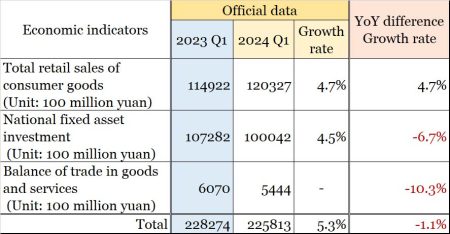
Table 1 (Sources: National Bureau of Statistics and the State Administration of Foreign Exchange)
Because the State Administration of Foreign Exchange has only released trade data for the first two months of 2024, we assumed a year-on-year growth rate of the balance of trade in goods and services that is identical to the year-on-year growth rate of the trade surplus for the same period (negative 10.3 percent; the actual figure could be even lower) in estimating China’s actual Q1 GDP growth in Table 1.
The CCP’s significant manipulations of China’s official economic data will be consequential in affecting the economic policies it chooses to next pursue and what it feels comfortable in at home and abroad. Fraudulent figures could also prove double-edged for Beijing in the current geopolitical climate; the U.S. and its allies could latch on to China’s “glowing” economic figures to pressure the PRC into reining in its excess capacity and be a more responsible global power, which would in turn further negatively impact the rapidly deteriorating Chinese economy.




