
1 Beijing’s announcement of 5.2% GDP growth met with skepticism
Li Qiang’s speech at Davos
PRC premier Li Qiang attended the annual meeting of the World Economic Forum and delivered a speech at the opening ceremony.
Li made the following noteworthy remarks about China’s economic development:
- China’s economy is moving steadily forward and will continue to provide strong impetus for world economic development.
- In the process of promoting economic development, China will adhere to avoiding strong stimulus measures and will not trade short-term growth for the accumulation of long-term risks.
- China’s economy will generally recover in 2023, with an expected GDP growth of 5.2 percent.
- Even if the Chinese economy runs into some ups and downs, its overall trend of long-term improvement will not change.
- China’s “demographic dividend” is improving as it becomes a “talent dividend.”
- China has a super-large market and is in a phase of rapid demand release.
- There are over 400 million people in China’s middle-income group and the number will reach 800 million in the next decade or so.
- There is plenty of room in the next phase of urban renewal for the upgrading of transportation, telecommunications, and other infrastructure. Urban renewal, coupled with the rapid urbanization of nearly 300 million migrant workers, will create huge demand in housing, education, healthcare, pensions, and other areas.
- China has massive “incremental development” opportunities in various “green” areas.
- China will continue to expand its scale of importing high-quality products and services from around the world, and increase the influx of foreign investments in mid-to-high-end manufacturing, biomedicine, and other fields.
- China is unwavering in opening up (to other countries) and will continue to create favorable conditions for the world to share in China’s opportunities.
- The rate of return on foreign direct investment in China over the past five years has been about 9 percent, or a relatively high level internationally.
- Choosing the Chinese market is not a risk, but an opportunity.
- China openly welcomes enterprises from all over the world to continue investing in the country, and will continue to work hard to create a first-class business environment that is market-oriented, rule of law-oriented, and internationalized.
- China is studying and formulating policies in response to issues concerning multinationals such as cross-border data flow and equal participation in government procurement.
Official data dump
Jan. 17 to Jan. 18.
The National Bureau of Statistics released China’s economic and population data for 2023. China’s official full-year GDP growth for 2023 was 5.2 percent, or exactly the same figure as announced by Li Qiang days earlier in Davos.
1. The PRC authorities claim that the 2023 data cannot be directly compared with its data reported in 2022 due to factors including “problematic data discovered during statistical law enforcement inspections.” However, such a comparison reveals that the PRC authorities made significant adjustments to the 2023 data and lowers the credibility of the official figures.
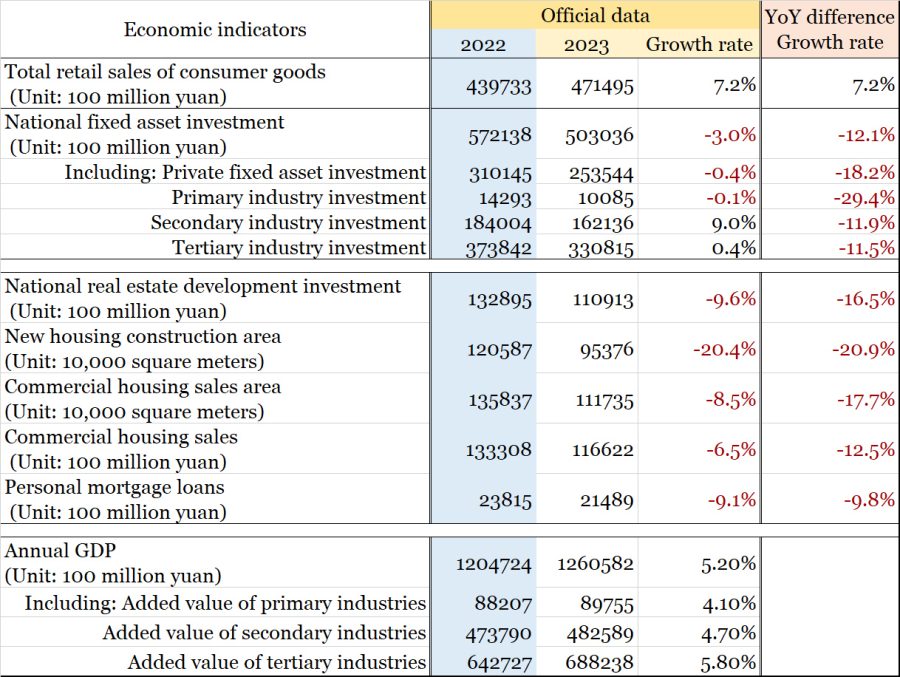
Table 1 (Source: National Bureau of Statistics)
2. China’s population officially decreased by 2.08 million people to 1.409 billion in 2023, or more than twice the decline of 850,000 people in 2022. China’s births in 2023 also fell to 9.02 million, as compared to 9.56 million in 2022. Total deaths were 11.1 million, compared with 10.41 million in 2022.
3. NBS director Kang Yi said during a press conference on Jan. 17 that China “withstood external pressure and overcame internal difficulties,” the Chinese economy “rebounded for the better and high-quality development was solidly advanced,” and “the main expected goals were successfully achieved.”
Kang also described China’s economic performance in 2023 as “recovering for the better, full of quality, performing brilliantly, and not easy to achieve.”
***
Many observers have expressed skepticism towards the PRC authorities’ official economic data for 2023.
Chinese netizens took to the comments section under propaganda pieces that exaggerate China’s economic performance to cast doubt upon and mock the official data. For instance, a video by the state-run Economic Daily contained nearly 90,000 comments, including the following:
- “(Chinese) Stocks are soaring today and I plan to buy 2,000 buildings tonight.”
- “I sold refrigerators in northeast China in 2023 and generated a huge profit of 5 billion yuan.”
- “I run an online car-hailing service and my monthly income is just 200,000 yuan.”
- “I work in Yancheng and save 50 million yuan a year. I’m very happy.”
Bloomberg News cited Logan Wright, a director at Rhodium Group, in a Jan. 18 article as saying that China’s real GDP growth in 2023 was likely around 1.5 percent. Bloomberg also reported economists at Pantheon Macroeconomics calling the PRC authorities’ adjustment of the fixed asset investment growth number for 2023 as “staggering” in considering that it implied a downward revision of 7 trillion yuan, or 17 percent of total investment from the amount announced in 2022. Bloomberg added that Pantheon Macroeconomics said China’s real GDP grew about 4.9 percent in 2023 while TS Lombard estimated 3.6 percent using its own adjustment formula.
Meanwhile, Reuters published a piece on Jan. 17 about how many in China feel that the economy is in recession rather than growing at the official 5.2 percent.
Our take
1. In assessing the ground sentiment in China and taking a closer look at the PRC authorities’ official data, the Chinese economy almost certainly did not grow at the official rate of 5.2 percent, nor did it rapidly rebound after the end of “zero-COVID” lockdowns. We previously analyzed that China more likely saw negative growth in 2022 and 2023.
Table 1 and the assessment of economists at Pantheon Macroeconomics suggest that the PRC authorities heavily manipulated China’s official economic data for 2023. The authorities’ insistence that its 2023 data cannot be directly compared with its 2022 data due to “problematic data discovered during statistical law enforcement inspections” throws into doubt the reliability of both sets of figures and indicates that the Chinese economy did far more poorly in 2022 than the authorities reported at the time.
Meanwhile, the official data for 2023 alone shows that the Chinese economy was in constant deflation and points to economic contraction rather than growth:
- The consumer price index saw a negative growth rate for four months and grew at the highest rate of 2.1 percent in January and 1 percent in February immediately after the end of “zero-COVID.” Most of the months saw the CPI grow by less than 0.3 percent. In contrast, the CPI grew 0.9 percent in just two months in 2022, was around 1.5 percent for three months, and was higher than 2.1 percent for seven months.
- The growth rate of the producer price index was negative throughout the year, with a low of negative 5.4 percent in June. In contrast, the PPI growth rate reached as high as 9.1 percent in January 2022, but continued to shrink throughout the year until turning negative in December 2022.
- The manufacturing purchasing managers index was very sluggish for most of the year and was above the 50 point mark for just three months (January, March, September) during the year. The employment PMI was also in a state of contraction for all months except for February, which indicates a decrease in manufacturing orders and rising unemployment.
- The NBS noted that China’s real estate industry (accounting for 5.8 percent of China’s GDP) only contracted by 1.3 percent in 2023. This contrasts with economic indicators that hint at sharp declines. For instance, the area of new housing construction in 2023 (953.7 million square meters) was lower than the 954 million square meters in 2007. Meanwhile, the sales area of commercial housing in 2023 (1.17 billion square meters) was slightly higher than the 1.11 billion square meters in 2012 by lower than the 1.3 billion square meters in 2013.
Finally, the PRC authorities’ admission that China’s population had declined substantially in 2023 as compared to 2022 hints at what is likely to be an important factor behind weak consumption in 2023 and lackluster economic recovery despite Beijing’s efforts at stimulus. We believe that China’s death toll from the three pandemic years is likely far higher than what the authorities have claimed, and natural disasters (floods in Hebei, etc.) and the spread of diseases in China in 2023 likely contributed to the steep population decline.
2. An estimation of China’s actual GDP for 2023 using the PRC authorities’ method for calculating the real GDP yields a negative figure.
The NBS calculates expenditure GDP using the formula of GDP as the addition of final consumption expenditure (最終消費支出, i.e.: household consumption expenditure plus government consumption expenditure) plus gross capital formation (資本形成總額) plus net exports of goods and services (貨物和服務淨出口). Chinese economic research institutions typically use data for total retail sales of consumer goods and fixed asset investment as substitutes for household consumption expenditure and gross capital formation respectively due to the correlation in growth rate between those economic indicators. Using the above GDP formula and data substitutes, we estimate that the Chinese economy declined by 5 trillion yuan for a GDP growth rate of negative 4.7 percent.
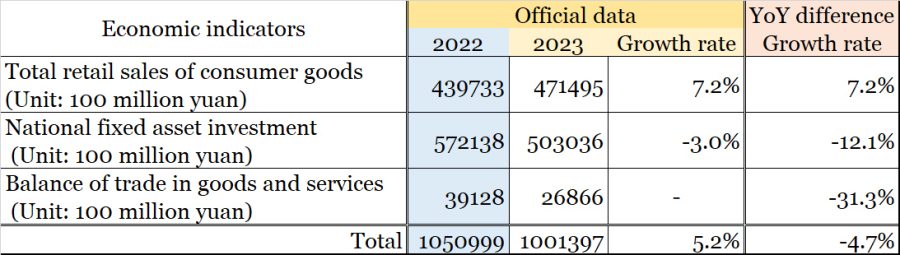
Table 2 (Sources: National Bureau of Statistics and State Administration of Foreign Exchange)
The State Administration of Foreign Exchange has only released data for China’s trade in goods and services for the first 11 months of 2023. In Table 2, we assumed that the month-on-month growth in China’s trade in goods and services was the same in December 2023 as during the previous year (up 15.3 percent) in estimating the full year figure (2.6866 trillion yuan).
3. The CCP authorities’ likely substantial fudging of its economic figures for 2023 is in line with the Party’s constant need to project itself as “great, glorious, correct” and safeguard its political legitimacy. Xi Jinping also has to show economic “achievements” and “spin tragedy into victory” to preserve his “quan wei” (authority and prestige) and justify the continuation of his measures to rescue the economy.
Both Xi and the CCP need to keep up the fiction that the Chinese economy is growing “healthily” to keep China attractive to foreign investments. This is likely a reason why premier Li Qiang “divulged” the exact official figure for China’s GDP growth in 2023 at the annual World Economic Forum meeting at Davos days before the NBS released the data, and why he talked up China’s “super-large market” and demand before the PRC authorities acknowledged that the population had shrunk more in 2023 than in 2022.
4. The CCP authorities’ data manipulation is not without consequences.
For one, the “glowing” economic figures for 2023 will impact how the CCP authorities at all levels approach economic work in 2024. Officials and executives at state-owned enterprises who blindly heed the official data are likely to be misguided in their decision-making and not urgently implement the Xi leadership’s economic rescue policies. This will exacerbate the PRC’s economic woes and further reduce Beijing’s ability to arrest and reverse economic decline.
Unreliable official data will also affect public confidence in the economy and the government. For instance, people may believe that the central government is not likely to implement strong stimulus and will therefore become pessimistic about China’s growth prospects. They may also become more inclined to adopt conservative investment strategies and save up more instead of spending, affecting demand. Meanwhile, people who are feeling the effects of rapid economic deterioration and believe that China is in a recession despite what is otherwise stated in propaganda will come to distrust the CCP even more; the result is the CCP authorities falling deeper into the “Tacitus trap.” Foreign investors could increasingly come to believe that the PRC government has no credibility and is untrustworthy, and would become more inclined to invest less or pull funds out of China.
Finally, the international community could become more willing to stand up to the CCP regime as foreign governments reassess the risk-reward equation of investing in and working with the PRC. “Anti-Xi” forces inside and outside China could also be more inclined to capitalize on the PRC’s economic frailties and Xi’s rising political risks to take actions (including playing up the Taiwan issue) that would contribute to the further destabilization of the political situation in the PRC.




