
◎ The timing of the plunge and other odd developments suggest that CCP factional politics could be a factor influencing the recent sell-offs.
After rallying for weeks, Chinese stocks abruptly plummeted on March 8. The Shanghai Composite Index lost 4.4 percent and closed below the key 3,000 point level. Meanwhile, the Shenzhen Component Index lost 3.25 percent. Over 200 stocks in both A-shares markets hit limit down.
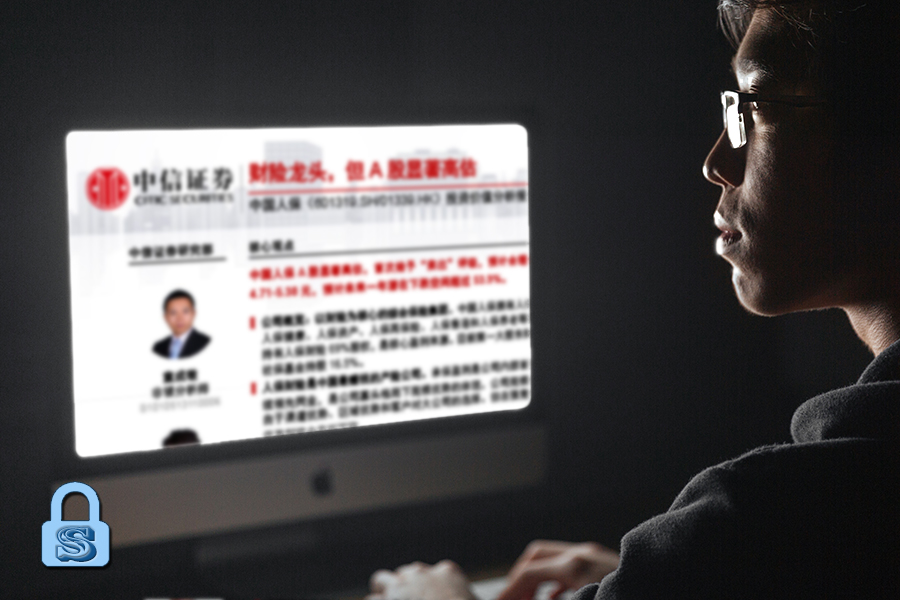
A major reason for the tumbling shares were unusual calls by domestic brokerages to “sell” the shares of People’s Insurance Company (Group) of China Ltd. and China Securities Co., Ltd.
The sudden plunge of Chinese stocks could be due to the highly speculative and volatile nature of the current technical “bull market.” Yet the timing of the plunge and other odd developments suggest that Chinese Communist Party factional politics could be a factor influencing the recent sell-offs.
The backdrop:
1. On March 7, the Shanghai index closed at 3106.42 points, growing 665.51 points from a low of 2440.91 on Jan. 4. In the week of March 4, the accumulative trading amount of the Shanghai and Shenzhen stock exchanges reached 5.4 trillion yuan ($802.89 billion), with four of the five trading days breaking the trillion yuan mark.
2. Between March 6 to March 8, northward net outflows from the Shanghai-Hong Kong Stock Connect totaled 5.72 billion yuan.
On March 7, the Shenzhen-Hong Kong Stock Connect saw 1.42 billion yuan in northward net outflows, ending 26 consecutive days of net inflows.
Also on March 7, northward net outflows from the Shanghai-Hong Kong and Shenzhen-Hong Kong Stock Connect reached 3.97 billion yuan, the single-highest net outflow in a year and the 10th largest single day figure since the Shanghai-Hong Kong Stock Connect was launched in 2014.
3. On March 7, Citic Securities published a research report where it advised clients to “sell” People’s Insurance Co. because the shares are “significantly overvalued” and could decline by more than 53.9 percent over the next year. This was the first time that Citic Securities had advised clients to sell the stock.
Previously, People’s Insurance Co.’s shares grew by the maximum allowed by the Shanghai exchange for five consecutive days. The stock fell by more than 10 percent on the day it received the “sell” rating.
4. On March 8, Huatai Securities released a research report that noted that China Securities stocks are “overvalued” and advised clients to “sell.” Huatai Securities also noted that a “reasonable” price for the stock was between 13.86 yuan to 17.33 yuan per share, or a 55.52 percent lower difference from the stock price when it started falling on March 7.
5. On March 8, the People’s Daily-run Securities Times published a commentary titled, “Let ‘Sell’ Research Reports Become the Norm.”
The big picture:
The Chinese stock market plunge occurred during the important Two Sessions period and after Chinese premier Li Keqiang delivered the following comments in his government work report:
- In 2018, there were “shifts in stable economic operations,” and the “shifts are worrying”;
- However, “through concerted national effort, China’s economic development, which is founded on a strong base, has been overall stable and seen progress.” Further, the “overall societal situation has remained stable”;
- Although 2019 could bring “greater and greater challenges from predictable and hard to predict risks,” the “long-term positive trend of the economy will not change.”
Our take:
1. We previously warned about China’s so-called “bull market” in previous issues of our premium newsletter (Feb. 21, Feb. 28, March 7 editions). We wrote on March 7 that “this ‘bull market’ will prove difficult to sustain,” and should it crash, the “deteriorating real economy will take another hit.”
2. The CCP has been trying to rescue the markets ever since stocks nosedived in 2018. To that effect, the central authorities appeared to have quietly relaxed its financial de-risking campaign, including loosening supervision over shadow banking and hot money. The markets, however, fell to record lows in the first week of 2019. Near the end of January, the China Banking and Insurance Regulatory Commission encouraged insurance institutions to invest in high-quality stocks and bonds to “ensure stability in the capital markets” and “allow insurers to improve their investment portfolios.” After that, Chinese stocks started showing signs of entering a technical “bull market.”
3. Some commentators believe that the Chinese authorities are looking to prevent the current “bull market” from overheating, and very possibly are the ones behind the “sell” ratings. There is some validity in this view if commentators are presuming that CCP has summed up the lessons of the 2015 stock market crash and is looking to curb financial risks that would result from a rapidly rising “bull market.”
There are, however, two problems with the above thesis.
First, the CCP usually does its best to avoid or prevent negative things from occurring for the duration of important political conclaves like the Two Sessions (see 4.2. for elaboration).
Second, Beijing would have to be supremely confident that it can secure a trade deal with America in late March and guarantee a sustained “bull market” in the coming months for it to “apply the brakes” now. This scenario, however, seems extremely unlikely because the CCP would have almost certainly accounted for President Donald Trump’s unpredictability in making plans. Recent Western media reports note that Chinese officials are worried that Trump could walk away from a meeting with Xi Jinping without signing a deal in a repeat of the second Trump-Kim summit in Hanoi.
4. Five irregularities about the stock market plunge have led us to suspect that CCP factional politics might be in play:
4.1. Domestic brokerages’ unusually bearish research reports
Aside from China International Capital Co. Ltd., most of the big domestic brokerages are historically hardly ever bearish about A-shares. For instance, Citic Securities usually advises clients to “strong buy,” “buy,” or “hold” shares.
It is also very unusual for domestic brokerages or financial analysts to suddenly become bearish in the current regulatory climate. Since the CCP moved to rescue and inject optimism into the markets last year, the securities regulatory authorities have been subjecting research reports issued by domestic brokerages to ever increasing scrutiny. Brokerages or financial analysts are practically barred from publishing “unfavorable” financial news. According to mainland media, the China Securities Regulatory Commission fined and circulated notices of criticism for at least five brokerage analysts in 2018.
Given the tightly controlled financial environment, it is highly irregular for Citic Securities, Huatai Securities, and the Securities Times to suddenly become bearish and trigger A-share sell-offs.
4.2. The stock plunge ruins the Two Sessions’ economic “APEC blue”
The CCP famously ensures that the heavily polluted skies in Beijing turn “APEC blue” (clear and largely pollution-free) for the duration of important political conclaves or international meetings. The economy and financial markets, like the weather, must seem “prosperous and stable” during key meetings like the Two Sessions. Thus, it is out of character for domestic brokerages to issued bearish research reports during the Two Sessions and ruin the economic “APEC blue.” In fact, the sharp sell-offs in this period represent a “slap in the face” of sorts for the Xi Jinping administration.
This is not the first time during Xi’s tenure that unwelcome financial news coincided with periods where the regime would usually want to generate optimism. The China stock market crash in 2015 began with the popping of the stock bubble on June 12, or three days before Xi’s birthday. Also, China was preparing for Asian Infrastructure Investment Bank founding members to sign the Articles of Agreement in Beijing on June 29.
4.3. Citic Securities previously shorted the stock markets
In December 2015, the Chinese authorities accused Citic Securities of pushing products and structures to foreign investors for “malicious short selling” after the stock markets crashed in the middle of the year. At the time, Citic Securities was leading the national stock market rescue effort and the authorities had introduced rules to ban short selling.
In 2017, the China Securities Regulatory Commission officially notified Citic Securities that it had violated regulations during the 2015 stock market crash. The CSRC would confiscate 61.65 million yuan of “illegal proceeds” from the Citic Securities, and the brokerage would have to pay a fine of 308 million yuan. However, the CSRC mysteriously waived its punishment of Citic Securities in November 2018; during that period, the CCP had need of large financial institutions to rescue the markets.
Based on our research of CCP factional politics, the 2015 stock market crash was at least partially influenced by the Xi-Jiang factional struggle. For one, a number of Chinese observers noted a string of irregularities around the crash, including the “precise” timing of short selling by Citic Securities, and concluded that a “financial coup” of sorts had taken place. Also, Liu Lefei, the son of then-Politburo Standing Committee member Liu Yunshan (a Jiang faction member), happened to be the vice chairman of Citic Securities. Finally, Citic Futures, which carried out large-scale “precision” shorting of the stock market during the crash, is controlled by Citic Securities. (For custom consulting on the 2015 stock market crash, contact us.)
4.4. Foreign capital makes a “precise” retreat from the markets
Foreign capital had been leaving the mainland markets via the Shanghai and Shenzhen Stock Connects to Hong Kong (see The Backdrop) just before Citic Securities issued its “sell” rating for People’s Insurance Co.’s shares. This recalls the “precise” timing of short selling by Citic Securities during the 2015 stock market crash.
People’s Insurance Co. shares are considered blue-chip stocks even though the company is not a leading company in its sector (rank 48th in the insurance industry, market capitalization of 11.68 billion yuan, and a circulating market value that is 1.6 percent of industry leader Ping An Insurance). Because it is a blue-chip stock, however, shorting People’s Insurance Co. is comparatively easy and is a market-shaking move. Further, after the partial inclusion of A-shares to the MSCI Emerging Markets Index in June 2017, foreign investors gained a channel to short A-shares and profit off major moves in the Chinese stock markets.
4.5. SASAC-controlled brokerage gets bearish on a Citic Group-controlled securities firm
After Citic Securities issued its “sell” call, Huatai Securities released a research report where it advised clients to “sell” China Securities shares. Founded in 2005, China Securities is a securities company in the Citic Group, with Citic Securities being its largest shareholder.
The largest shareholders of Huatai Securities are Hong Kong Securities Clearing Co. Ltd. and Jiangsu Guoxin Investment Group Ltd. The State-owned Assets Supervision and Administration Commission (SASAC) of Jiangsu controls Jiangsu Guoxin Investment Group.
Xi Jinping began cleaning out the SASAC system in 2016. The leadership ranks of the central SASAC has been once reshuffled, with its Party secretary and director replaced in 2016; three of four deputy directors transferred in from other departments after the 19th Party Congress in 2017; and only one official was appointed to a senior leadership position via internal promotion. In other words, the SASAC system is now likely under Xi’s control.
Presently, there are plenty of public companies with overvalued shares in the Chinese stock markets. Why Huatai Securities decided to become bearish on China Securities and at this particular time leaves plenty of room for imagination.
According to statistics from Chinese financial service provider Wind, 42 public companies issued warnings about abnormal stock volatility on March 8.
What’s next:
Details about the stock market plunge are still relatively scarce. Based on currently available information, however, we see two possible future scenarios:
1. If the stock markets plunge was “engineered” by the Xi leadership to prevent the technical “bull market” from overheating, then it is very likely that Beijing is planning on sealing a Sino-U.S. trade deal and using the good news to drive a new “bull market.” And if Citic Securities happens to be doing Beijing bidding, then one possible explanation is that Xi Jinping somehow managed to “subdue” the brokerage after the 2015 stock market crash.
2. If the stock markets plunge was not “engineered” by the Xi leadership, then this indicates a further intensification of the CCP factional struggle. The Jiang faction could be taking a leaf out of an old playbook by creating stock market turbulence to undercut Xi’s authority. This scenario is more in line with the trend of escalation in the Xi-Jiang factional struggle which we previously identified.
Should the stock markets plunge turn out to be a Jiang faction ploy, then Xi will definitely counterattack by purging key Jiang faction members to “kill the chickens to scare monkeys.” Also, there will much greater uncertainty regarding the success of the Sino-U.S. trade talks. Expect political Black Swans on the horizon.




