
Geopolitics Watch: US Strategic Advantages of Holding the Second Trump-Kim Meeting in Vietnam

◎ Manufacturers may eventually shift out of China to Vietnam and an economically liberalized North Korea.


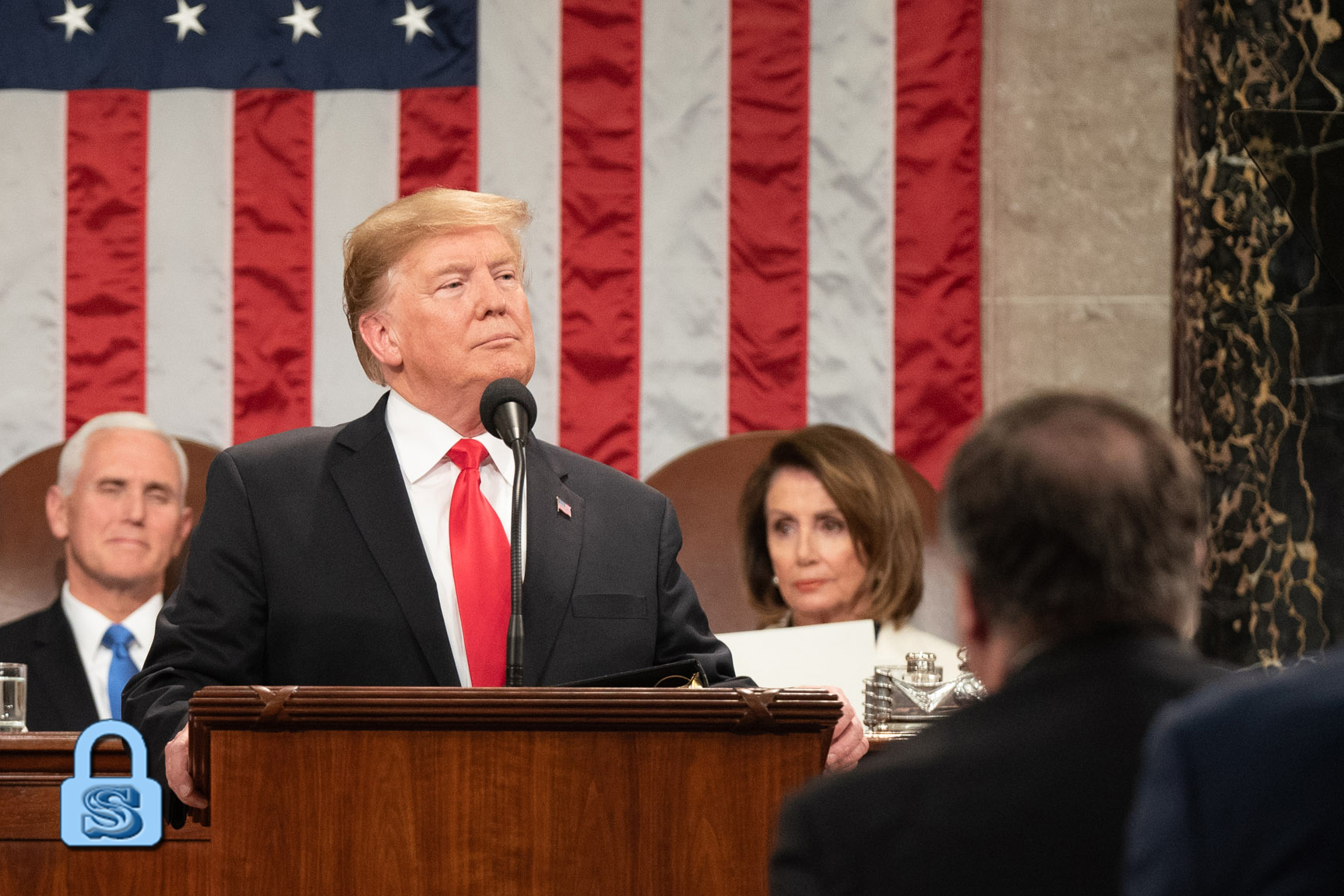
During his State of the Union address on Feb. 5, United States President Donald Trump announced that he would be meeting North Korean leader Kim Jong Un in Vietnam from Feb. 27 to Feb. 28.

Three days later, Trump tweeted that the second summit between him and Kim would be held in Hanoi. He also tweeted that North Korea will become a “great Economic Powerhouse” under Kim’s leadership.

The big picture:
The second Trump-Kim summit comes just before the March 1 deadline for China and the U.S. to reach a trade agreement. Trump has promised to increase tariff rates if a “complete deal” is not reached.

Our take:
1. There are some obvious reasons why Vietnam might seem like a good choice for President Trump and Kim Jong Un to hold their second summit.

  • Vietnam has good relations with both the U.S. and North Korea, and is a relatively “neutral” location.
  • Kim might feel more comfortable holding potentially momentous discussions in a fellow communist country that is closer geographically to North Korea.
  • The U.S. might wish to uphold the Vietnam model of economic and political reform as an example for the DPRK to emulate. Also, while Vietnam is still controlled by a communist party, the country traditionally has bad relations with China and the Chinese Communist Party. The CPV and CCP armies clashed in the Sino-Vietnamese War in 1979, and today, both countries are economic competitors. Vietnam even tried to join the Trans-Pacific Partnership during the Obama administration.
  • According to a Financial Times report on Feb. 7, after Trump proposed to meet Xi Jinping in Vietnam for trade talks, the Chinese regime balked at the idea because it does not “want to be seen doing a deal with the U.S. in Vietnam, for political and historical reasons.”

2. We wrote last year that the U.S. and the DPRK could issue a joint declaration to end the Korean War as a prelude to signing a formal peace treaty during the second Trump-Kim summit. If both parties have such an intention, then the selection of Vietnam as the second summit site has likely significant longer-term strategic implications aimed at countering the CCP regime.

The holding of the second Trump-Kim summit in Vietnam allows the U.S. to simultaneously establish closer ties with both North Korea and Vietnam while pushing them out of Beijing’s orbit. We explained the historical bad blood between the CPV and the CCP above, and the “hot-and-cold” DPRK-PRC relationship in earlier articles (see here and here).

By building closer ties with Vietnam and North Korea, the U.S. could seek to nudge both countries to open up their economies and move away from communism and towards democracy. Upon greater economic and political liberalization, both countries could end up working together with America on its Free and Open Indo-Pacific Strategy. A U.S.-friendly Vietnam and North Korea will greatly increase geopolitical pressures on the PRC because both countries are right on China’s doorstep.

The PRC faces an existential crisis if Vietnam and North Korea move into Washington’s orbit and if America is able to get its infrastructure building plan up and running in the Indo-Pacific region:

  • China’s explosive economic development was built on its ability to carry out low to middle-end manufacturing at a much lower cost. The CCP achieved this through the benefits of demographic dividends, sacrificing the environment and human rights (ignoring workers’ rights and interests, suppressed wages, “stability maintenance” work, etc.), and cheap land rental costs. With these advantages, the CCP was able to attract substantial foreign investment for many years.
  • In recent years, however, China’s advantages are vanishing. The country is seeing very low fertility rates, an aging population, soaring land prices, rising wages, environmental degradation, and rising production costs. The Sino-U.S. trade war has accelerated China’s economic woes, resulting in many enterprises failing, production moving overseas, and weakening upstream and downstream supply chain advantage on the mainland. Much of the outgoing production has moved to the Southeast Asian region.
  • Vietnam is a major beneficiary of foreign and Chinese manufacturing moving out of mainland China. The country could eventually catch up with China economically if U.S. tariffs on Chinese goods remain in place and U.S.-Vietnam ties grow stronger.
  • If North Korea moves decisively towards peace, full denuclearization, and economic liberalization, it is not inconceivable that companies moving production out of mainland China (such as Samsung, LG, etc.) could set up shop in North Korea. In fact, President Trump could be anticipating this scenario when he tweeted that “North Korea will become a different kind of Rocket – an Economic one!”
  • Presuming that production flows out of China and to Vietnam, North Korea, and the Southeast Asian region, then China would lose its status as the “world’s sweatshop” and its primary economic advantage. Without a booming economy, the CCP’s political legitimacy, which has been founded on delivering economic performance since Deng Xiaoping, becomes endangered.

Search past entries by date
“The breadth of SinoInsider’s insights—from economics through the military to governance, all underpinned by unparalleled reporting on the people in charge—is stunning. In my over fifty years of in-depth reading on the PRC, unclassified and classified, SinoInsider is in a class all by itself.”
James Newman, Former U.S. Navy cryptologist
“Unique insights are available frequently from the reports of Sinoinsider.”
Michael Pillsbury, Senior Fellow for China Strategy, The Heritage Foundation
“Thank you for your information and analysis. Very useful.”
Prof. Ravni Thakur, University of Delhi, India
“SinoInsider’s research has helped me with investing in or getting out of Chinese companies.”
Charles Nelson, Managing Director, Murdock Capital Partners
“I value SinoInsider because of its always brilliant articles touching on, to name just a few, CCP history, current trends, and factional politics. Its concise and incisive analysis — absent the cliches that dominate China policy discussions in DC and U.S. corporate boardrooms — also represents a major contribution to the history of our era by clearly defining the threat the CCP poses to American peace and prosperity and global stability. I am grateful to SinoInsider — long may it thrive!”
Lee Smith, Author and journalist
“Your publication insights tremendously help us complete our regular analysis on in-depth issues of major importance. ”
Ms. Nicoleta Buracinschi, Embassy of Romania to the People’s Republic of China
"I’m a very happy, satisfied subscriber to your service and all the deep information it provides to increase our understanding. SinoInsider is profoundly helping to alter the public landscape when it comes to the PRC."
James Newman, Former U.S. Navy cryptologist
“Prof. Ming’s information about the Sino-U.S. trade war is invaluable for us in Taiwan’s technology industry. Our company basically acted on Prof. Ming’s predictions and enlarged our scale and enriched our product lines. That allowed us to deal capably with larger orders from China in 2019. ”
Mr. Chiu, Realtek R&D Center
“I am following China’s growing involvement in the Middle East, seeking to gain a better understanding of China itself and the impact of domestic constraints on its foreign policy. I have found SinoInsider quite helpful in expanding my knowledge and enriching my understanding of the issues at stake.”
Ehud Yaari, Lafer International Fellow, The Washington Institute
“SinoInsider’s research on the CCP examines every detail in great depth and is a very valuable reference. Foreign researchers will find SinoInsider’s research helpful in understanding what is really going on with the CCP and China. ”
Baterdene, Researcher, The National Institute for Security Studies (Mongolian)
“The forecasts of Prof. Chu-cheng Ming and the SinoInsider team are an invaluable resource in guiding our news reporting direction and anticipating the next moves of the Chinese and Hong Kong governments.”
Chan Miu-ling, Radio Television Hong Kong China Team Deputy Leader
“SinoInsider always publishes interesting and provocative work on Chinese elite politics. It is very worthwhile to follow the work of SinoInsider to get their take on factional struggles in particular.”
Lee Jones, Reader in International Politics, Queen Mary University of London
“[SinoInsider has] been very useful in my class on American foreign policy because it contradicts the widely accepted argument that the U.S. should work cooperatively with China. And the whole point of the course is to expose students to conflicting approaches to contemporary major problems.”
Roy Licklider, Adjunct Professor of Political Science, Columbia University
“As a China-based journalist, SinoInsider is to me a very reliable source of information to understand deeply how the CCP works and learn more about the factional struggle and challenges that Xi Jinping may face. ”
Sebastien Ricci, AFP correspondent for China & Mongolia
“SinoInsider offers an interesting perspective on the Sino-U.S. trade war and North Korea. Their predictions are often accurate, which is definitely very helpful.”
Sebastien Ricci, AFP correspondent for China & Mongolia
“I have found SinoInsider to provide much greater depth and breadth of coverage with regard to developments in China. The subtlety of the descriptions of China's policy/political processes is absent from traditional media channels.”
John Lipsky, Peter G. Peterson Distinguished Scholar, Kissinger Center for Global Affairs
“My teaching at Cambridge and policy analysis for the UK audience have been informed by insights from your analyzes. ”
Dr Kun-Chin Lin, University Lecturer in Politics,
Deputy Director of the Centre for Geopolitics, Cambridge University
" SinoInsider's in-depth and nuanced analysis of Party dynamics is an excellent template to train future Sinologists with a clear understanding that what happens in the Party matters."
Stephen Nagy, Senior Associate Professor, International Christian University
“ I find Sinoinsider particularly helpful in instructing students about the complexities of Chinese politics and what elite competition means for the future of the US-China relationship.”
Howard Sanborn, Professor, Virginia Military Institute
“SinoInsider has been one of my most useful (and enjoyable) resources”
James Newman, Former U.S. Navy cryptologist
“Professor Ming and his team’s analyses of current affairs are very far-sighted and directionally accurate. In the present media environment where it is harder to distinguish between real and fake information, SinoInsider’s professional perspectives are much needed to make sense of a perilous and unpredictable world. ”
Liu Cheng-chuan, Professor Emeritus, National Chiayi University
“Since the 2019 Hong Kong anti-extradition movement, I have periodically engaged with articles from SinoInsider. SinoInsider’s insights have deepened my understanding of the Chinese Communist Party’s regime. These resources have been invaluable in navigating the opaque world of Chinese elite politics, significantly enhancing my commentary on my Hong Kong online radio program, HK Peanut.”
Andrew To Kwan-hang, former chairman of the League of Social Democrats and founder of HK Peanut



