
1 Weak economic data for H1 2024 casts a pall on CCP Third Plenum
Trade data
July 10
1. The PRC National Bureau of Statistics released China’s consumer price index and producer price index for June:
- The CPI rose by 0.2 percent from a year ago in June. During the January to June period, the CPI increased by 0.1 percent year-on-year on average.
- The PPI fell by 0.8 percent from the previous year in June, compared to a 1.4 percent decline in May. Month-on-month, the PPI shifted from a 0.2 percent increase in May to a 0.2 percent decrease in June. The PPI for industrial producers fell by 0.5 percent year-on-year and rose by 0.1 percent month-on-month. In the first six months of the year, the PPI decreased by 2.1 percent compared to the same period in 2023, while the PPI for industrial producers fell by 2.6 percent.
July 12
The PRC General Administration of Customs released China’s trade data for June and the first six months of the year (in dollar terms):
June
- Total imports and exports increased by 3.9 percent year-on-year to $516.66 billion (the growth rate was 3.3 percent when compared with official PRC data from 2023).
- Exports increased by 8.6 percent year-on-year to $307.85 billion (the growth rate was 7.9 percent when compared with official PRC data from 2023).
- Imports increased by 2.3 percent year-on-year to $208.81 billion (the growth rate was 2.7 percent when compared with official PRC data from 2023).
- The trade surplus reached $99.05 billion, the highest since 1990 (the growth rate was 40.3 percent compared with official PRC data from 2023).
January – June
- Total imports and exports increased by 2.9 percent year-on-year to $2.98 trillion (the growth rate was 2.1 percent compared with official PRC data from 2023).
- Exports increased by 3.6 percent year-on-year to $1.7 trillion (the growth rate was 2.7 percent compared with official PRC data from 2023).
- Imports increased by 2.0 percent to $1.27 trillion (the growth rate was 1.4 percent compared with official PRC data from 2023).
- The trade surplus increased by 8.6 percent year-on-year to reach $434.99 billion (the growth rate was 6.4 percent compared with official PRC data from 2023).
China’s exports to major trading partners
- European Union: Down 4.1 percent in June and down 3.0 percent during the January to June period.
- United States: Up 6.6 percent in June and up 0.8 percent during the January to June period.
- ASEAN: Up 15 percent in June and up 8.5 percent during the January to June period.
- Russia: Up 3.5 percent in June and down 1.2 percent during the January to June period.
- Latin America: Up 15.7 percent in June and up 10.8 percent during the January to June period.
Financial data
July 12
The People’s Bank of China released the following data:
- In June, the M2 broad money supply decreased by 6.2 percent year-on-year to reach 305.02 trillion yuan, marking a historic low. This was below the forecast of 6.8 percent in a Reuters poll and 7.0 percent in May.
- In June, the M1 narrow money supply decreased by 5 percent year-on-year to reach 66.06 trillion yuan. This marks the third consecutive month of decline and a historic low level.
- New loans in June reached 2.13 trillion yuan, lower than the 2.25 trillion in a Reuters poll and significantly below 3.05 trillion yuan in June 2023.
- Renminbi loans increased by 13.27 trillion yuan in the first half of 2024, compared to an increase of 15.73 trillion yuan during the same period in 2023.
- The cumulative increase in total social financing in the first half of 2024 was 18.1 trillion yuan, or 3.45 trillion yuan less compared to the same period in 2023. Meanwhile, the single-month increase in June was 3.3 trillion yuan. Both the June and January-June data for total social financing fell short of expectations.
Economic data
July 15
The NBS released economic data for the first half of 2024.
GDP
- China’s GDP for the January-June period increased by 5.0 percent year-on-year to 61.6836 trillion yuan.
- By quarter, China’s GDP grew by 5.3 percent year-on-year in Q1 2024 and by 4.7 percent in Q2 2024. China’s GDP growth in Q2 2024 was the lowest since Q1 2023 and below the 5.1 percent forecast by analysts in a Reuters poll.
National fixed asset investment
- National fixed asset investment during the January-June 2024 period (excluding rural households) increased by 3.9 percent year-on-year to 24.5 trillion yuan (calculated on a comparable caliber). Of the total:
- Private fixed asset investment increased by 0.1 percent year-on-year to 12.7 trillion yuan.
- Investment in electricity, heat, gas, and water production and supply industries increased by 24.2 percent from a year ago.
- Investment by foreign-invested enterprises decreased by 15.8 percent from the previous year.
National real estate market
- National real estate development investment during the January-June period decreased by 10.1 percent year-on-year to 5.25 trillion yuan (calculated on a comparable caliber). Of this, residential real estate investment decreased by 10.4 percent to 3.99 trillion yuan.
- The sales area of new commercial housing decreased by 19.0 percent year-on-year during the January-June period to 479.16 million square meters. Of this, residential sales area decreased by 21.9 percent to 401.14 million square meters.
- The sales value of new commercial housing decreased by 25.0 percent year-on-year during the January-June period to 4.71 trillion yuan. Of this, the sales value of residential housing decreased by 26.9 percent to 4.13 trillion yuan.
Changes in the sales price of commercial residential homes in 70 key cities
Sales price of new commercial housing in June
- According to a Reuters calculation based on NBS data, new home prices fell 4.5 percent year-on-year to the lowest level since June 2015 and was greater than the 3.9 percent drop in May.
- First-tier cities
- Prices were down 3.7 percent year-on-year (compared to a decrease of 3.2 percent in May) and down 0.5 percent month-on-month (compared to a decrease of 0.7 percent in May).
- Prices in Beijing, Guangzhou, and Shenzhen were down 2.4 percent, 9.3 percent, and 7.7 percent respectively year-on-year. Prices in Shanghai increased by 4.4 percent year-on-year.
- Prices in Beijing, Guangzhou, and Shenzhen were down 0.6 percent, 1.2 percent, and 0.7 percent respectively month-on-month. Prices in Shanghai increased by 0.4 percent month-on-month.
- Second-tier cities
- Prices were down 4.5 percent year-on-year (compared to a drop of 3.7 percent in May) and down 0.7 percent month-on-month (compared to a drop of 0.7 percent in May).
- Third-tier cities
- Prices were down 5.4 percent year-on-year (compared to a decline of 4.9 percent in May) and down 0.6 percent month-on-month (compared to a decline of 0.8 percent in May).
Sales price of second-hand housing in June
- First-tier cities
- Prices were down 9.0 percent year-on-year (compared to a 9.3 percent decrease in May) and down 3.7 percent month-on-month (compared to a 3.7 decrease in May).
- Prices in Beijing, Shanghai, Guangzhou, and Shenzhen were down 7.8 percent, 6.3 percent, 12.4 percent, and 9.5 percent respectively year-on-year.
- Prices in Beijing, Shanghai, Guangzhou, and Shenzhen were down 1.2 percent, 1.3 percent, 1.6 percent, and 1.0 percent respectively month-on-month.
- Second-tier cities
- Prices were down 7.9 percent year-on-year (compared to a 7.5 percent decrease in May) and down 0.9 percent month-on-month (compared to a decrease of 1 percent in May).
- Third-tier cities
- Prices were down 7.7 percent year-on-year (compared to a 7.3 percent decrease in May) and down 0.9 percent month-on-month (compared to a 0.9 percent decrease in May).
Total retail sales of consumer goods
- Retail sales increased by 2.0 percent year-on-year to 4.1 trillion yuan in June.
- Retail sales excluding automobiles increased by 3.0 percent year-on-year to 3.6 trillion yuan.
- Retail sales of goods by enterprises above designated size increased by 1.0 percent year-on-year to 1.6 trillion yuan.
- Retail sales increased by 3.7 percent year-on-year to 23.6 trillion yuan during the January-June 2024 period.
- Retail sales excluding automobiles increased by 4.1 percent year-on-year to 21.3 trillion yuan.
- Retail sales of goods by enterprises above designated size increased by 2.9 percent year-on-year to 8.4 trillion yuan.
Backdrop
1. The CCP held the Third Plenum of the 20th Central Committee from July 15 to July 18. The plenary session is receiving significant external attention as observers look to see what Beijing rolls out to rescue the economy.
2. The U.S., the European Union, and other countries have imposed or are planning to impose tariffs on Chinese products.
Meanwhile, former U.S. President Donald Trump has vowed to impose heavy tariffs on Chinese imports if re-elected. JD Vance, Trump’s vice presidential pick, is also in favor of imposing tariffs on goods from China. On July 15, Vance told Fox News that Trump would negotiate with Moscow and Kyiv to bring the war in Ukraine “to a rapid close so America can focus on the real issue, which is China. That’s the biggest threat to our country and we are completely distracted from it.”
Our take
1. The PRC’s official data for June and the first six months of the year reflects a continued worsening of the Chinese economy and suggests that China unlikely saw 5 percent GDP growth in the first half of 2024 contrary to the NBS’s claim.
We previously estimated using the CCP authorities’ method for calculating real GDP growth that China’s actual GDP growth rates for 2023 and the first quarter of 2024 were negative 4.7 percent and negative 1.1 percent respectively. Using the same method, we estimate that China’s actual GDP growth for the first half of 2024 was 2.4 percent, or much lower than the official rate of 5 percent.
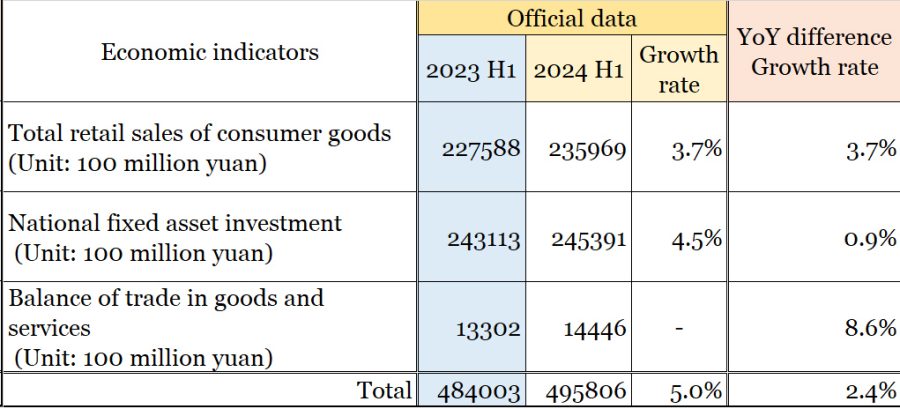
Table 1 (Sources: National Bureau of Statistics and State Administration of Foreign Exchange).
In coming up with the estimate, we assumed that the year-on-year growth rate of the balance of goods and services for the first six months of 2024 is the same as the year-on-year growth rate of the trade surplus for the same period, or 6.4 percent. At the time of writing, the State Administration of Foreign Exchange has only released data for the balance of goods and services for the first five months of the year.
We believe China’s actual growth rate is likely to be much lower than our estimate. For one, the U.S. Treasury Department noted in its semi-annual foreign exchange report that China’s trade surplus in 2023 was almost $230 billion bigger than the one claimed by the State Administration of Foreign Exchange. This difference equals more than 1 percent of China’s GDP, or 26.3 percent lower than the surplus value reported by the State Administration of Foreign Exchange compared to the data reported by the PRC customs authority.
2. Of China’s “troika” of growth drivers, exports saw a significant jump in June while investment and consumption were disappointing.
The official economic, monetary, and social financing data suggests that enterprises and individuals have a very low willingness to take out loans, reflecting a general reluctance in China to consume and invest. The CCP authorities are propping up financing, but the money printed by the central bank that is flowing to central and state-owned enterprises, local government financing vehicles, and local governments is mostly going towards debt repayment or idling in the financial system (including the snapping up of Chinese treasury bonds).
3. China’s exports increased noticeably in June and posted a record trade surplus. However, a deeper look suggests that those developments are not necessarily causes for optimism regarding China’s economic prospects.
Several factors contributed to the increase in exports and expansion of the trade surplus in June:
- Global demand is increasing as the global economy recovers and trade ticks up. The global trade volume increased by 1.4 percent year-on-year in the first quarter of 2024, higher than the level in the same period in 2023.
- The main products driving China’s export growth are capital-intensive products such as automobiles and integrated circuits. Auto exports reached 2.93 million units in the first half of 2024. However, maintaining this level of exports may prove difficult as countries begin to impose tariffs on Chinese EVs and take measures to safeguard their local economies from a “China Shock 2.0.”
- China’s export figures are high given the low base in 2023 and the first half of this year. Exports in June 2023 fell by 7.1 percent compared to the same period in 2022 and exports in the first half of 2024 fell by 1.4 percent.
- Part of the reason why the trade surplus is high is the decrease in imports. Falling imports in turn reflect weakness in China’s domestic economy and the relocation of supply chains away from China.
China’s record trade surplus and growing exports risk straining tensions with other countries. Some actions that countries have been taking in response to China’s export of overcapacity include:
- May 14: The Biden administration sharply hiked U.S. tariffs on various Chinese imports, including increasing tariffs on Chinese electric vehicles from 25 percent to 100 percent.
- May 14: Reuters reported that talks between China and the Gulf Cooperation Council have stalled over concerns by Saudi Arabia that cheap Chinese imports could undermine its domestic industrial agenda.
- June 8: Turkey raised tariffs on all cars imported from China by 40 percent.
- June 29: Reuters reported that India’s steel and trade ministries are in discussion over rising imports, and in particular, imports of cheap Chinese goods.
- June 29: Indonesian media reported that Indonesia would impose import tariffs of up to 200 percent on Chinese goods to mitigate the impact of the Sino-U.S. trade war.
- July 5: The EU imposed extra tariffs on Chinese EVs of between 17 percent to 38 percent depending on the manufacturer.
- July 15: Politico reported that the European Commission has been asking European semiconductor producers whether and how Chinese companies might be undermining them, according to a questionnaire. The survey also suggests that the EU is considering backing extra chip-making capacity in Europe.
4. China’s trade problems are likely to worsen should former President Donald Trump win reelection at the end of the year. The Washington Post reported earlier that Trump is proposing new tariffs of 60 percent on all Chinese exports to the United States (Trump has denied this in an interview with Bloomberg Businessweek). If so, the move would cut 2.5 percentage points from China’s GDP—half the official growth rate and a significant portion of the actual growth rate—in the following year as China’s exports, investment, and consumption are affected, according to UBS economists.
The UBS estimate assumes that the PRC does not retaliate, some trade is diverted through third countries, and other nations do not join the U.S. in imposing tariffs. “Over time, potentially more exports through and production in other economies can help reduce the impact of higher US tariffs, but there is also a risk of other countries raising tariffs on imports from China as well,” the UBS economists wrote.
Meanwhile, high U.S. inflation and relatively high Federal Reserve interest rates could hinder plans by the People’s Bank of China to cut rates, increasing pressure on the yuan to depreciate and facilitating capital outflows.
5. The escalation of global trade pressures on China and the likely weakening of exports in the second half of the year as tariffs kick in are likely to greatly offset the impact of measures issued by the CCP at the Third Plenum, exacerbate Xi Jinping’s governance challenges, and accelerate the transformation of various economic problems (corporate bankruptcies, rising unemployment, weak consumption, local fiscal shortages, local debt defaults, inadequate funds for “stability maintenance,” etc.) into political problems.
We maintain that China’s growth prospects for 2024 are very bleak and could yet worsen.
2 Political rumors circulating around Third Plenum hint at tensions at the top
The Third Plenum of the 20th Central Committee kicked off at the military-controlled Jingxi Hotel in Beijing on July 15 and ran till July 18.
Political rumors usually circulate around the period when sensitive CCP political conclaves take place, and this Third Plenum was no exception.
Political rumors and curious developments
July 11
A video circulating online showed over a hundred riot troopers surrounding and blocking No. 87 Xiangshan South Road, a military family compound, in Beijing.
The video showed what appeared to be residents of the compound arguing with shield-holding troopers clad in helmets, masks, camouflage uniforms, and bulletproof vests. Several residents accused the soldiers of excessively registering and checking the identity of vehicles and personnel entering and leaving the compound, including checking vehicles that left and re-entered within five minutes. The personnel who appeared to be enforcing the blockade around the compound replied that they were just performing their duties.
The video also showed a line of troopers stopping a car and an officer ordering the suppression of disobedient residents. Onlookers were heard exclaiming, “Oh no, the troopers are hitting people!”
July 15
An online rumor written in veiled language implied that Xi Jinping had suffered a stroke while hosting the Third Plenum and the senior leadership of the CCP was in chaos. The rumor added that those aware of the development were overjoyed and hastened to spread the news.
The rumor also suggested that more “enlightened” individuals were hoping for Xi’s early demise, while “fully awakened” individuals hoped that Xi would recover and continue staying in power because his governance would eventually lead to the downfall of the CCP regime.
July 16
An online rumor claimed that Song Zuying — a Chinese soprano singer, national first-grade actress (國家一級演員), and former head of the song and dance troupe of the People’s Liberation Army Navy Political Department — was being investigated by both the PLA and the CCP authorities for misappropriating funds from the military and related work units. The rumor added that some cadres involved in organizing Song’s personal concerts have also been summoned for questioning.
The rumor alleged that Song Zuying misused military and Ministry of Culture (now Ministry of Culture and Tourism) funds in 2002, 2003, and 2006 to hold personal concerts in Sydney, Vienna, and Washington D.C., respectively. Therefore, Song is currently subject to a “dual investigation” by the Central Commission for Discipline Inspection and an investigative unit in the PLA, and the probe is expected to turn out unfavorably for her.
The rumor added that Zeng Qinghuai, a former special inspector at the Ministry of Culture and alleged chief planner of Song Zuying’s concerts, as well as Xu Peidong, the former vice chairman of the China Federation of Literary and Art Circles and musical director of Song’s concerts, have been summoned by the CCDI. Separately, Song Zuying’s younger sister Song Zuyu is allegedly being investigated by the CCDI regarding her connection with a corruption case involving Shenzhen Airlines.
***
Song Zuying is widely regarded to be a mistress of Jiang Zemin. Zeng Qinghuai is the younger brother of Zeng Qinghong, the former political enabler of Jiang and the de facto head of the remnant Jiang faction.
Our take
1. We were unable to independently authenticate the video depicting riot troopers blocking No. 87 Xiangshan South Road. Assuming the video is reliable, however, there are certain observations that can be drawn from it.
While the video began circulating on July 11, it is unclear when exactly the incident took place. The clothes worn by the onlookers suggest that the video was filmed in the summer, which started in Beijing near the end of June.
Publicly available information shows that the second management office of the PLA’s Unit 32081 is located at No. 87 Xiangshan South Road. Unit 32081 is an information technology unit of the PLA Strategic Support Force. The conversations in the video suggest that the military family compound is adjacent to Unit 32081’s second management office.
The CCP authorities’ deployment of over a hundred riot troopers to cordon off a military family compound and tightly scrutinize those entering or exiting it is unusual during regular times. But the times are not particularly normal at present given the Xi leadership’s ongoing probe of the PLA in the wake of the downfall of Li Shangfu and senior commanders of the PLA Rocket Force. It is possible that the incident at No. 87 Xiangshan South Road that was caught on video is part of Beijing’s anti-corruption efforts targeting the PLA, including searching the homes and offices of corrupt officials or preventing suspects from fleeing.
2. Verifying whether Xi Jinping had suffered a stroke during the Third Plenum is nearly impossible given the extreme secrecy surrounding the health and condition of senior CCP officials. Xi had once appeared to walk with a slight limp during diplomatic trips to Italy, Monaco, and France in 2019, but has otherwise looked more or less healthy in recent public appearances.
We see several scenarios regarding the rumor about Xi’s health:
i) Xi could have indeed suffered a stroke and the upper ranks of the CCP elite could really be in turmoil. This information was then leaked out using veiled language to circumvent the CCP authorities’ tight blockade on information.
Influential CCP elders, the remnant Jiang faction, and other “anti-Xi” forces in the Party and the PLA would almost certainly seize control and take action of some sort in the event that Xi is incapacitated. Such a development would be reflected in some way in CCP propaganda. However, there are no notable changes in Party propaganda at the time of writing.
We believe that this scenario is highly unlikely based on the current publicly available information.
ii) Xi could be suffering from some health issues which are not severe. Dissatisfied officials and “anti-Xi” elements in the regime who learned of Xi’s health issues could have exaggerated it into a “stroke” to spread information that could undermine Xi’s “quan wei.”
iii) Xi could be more or less healthy, but was targeted by “anti-Xi” forces looking to exploit information opacity in the regime to spread rumors and hopefully create chaos.
Rumors about Xi Jinping’s health will be either confirmed or debunked by his public appearance or lack thereof after the conclusion of the Third Plenum on July 18.
3. We are unable to independently verify the rumor about the investigation of Song Zuying, Zeng Qinghuai, and Xu Peidong. However, this rumor is the most plausible out of the many that have emerged around the Third Plenum period.
Xi Jinping has been targeting the Jiang faction and purging its associates since taking office in 2012. Zhang Xiaoming’s early resignation from the 14th CPPCC National Committee and its Standing Committee in June 2024 is the most recent public indication yet that the Xi leadership has not stopped going after the Jiang faction even though the takedown of “tigers” belonging to the faction slowed after Xi’s first term and Jiang Zemin died in November 2022. Zhang’s premature stepping away from frontline politics also coincided with rumors that Jiang Mianheng and other members of the Jiang clan have been placed under strict control, as well as information from Party insiders that have been circulating since at least 2021 that Xi wants to denounce Jiang Zemin’s “incorrect political line” even though he appears to be conflicted on whether or not to proceed with such a drastic move. Given that Xi still has the Jiang faction in his crosshairs, it would not be unusual for the anti-corruption authorities to go after an ex-mistress of Jiang Zemin (Song Zuying) and the brother (Zeng Qinghuai) of the remnant Jiang faction’s figurehead leader (Zeng Qinghong).
The Xi leadership has long had the Zeng Qinghong clan in its crosshairs. The earliest public indication that the Zeng clan was being targeted was a People’s Daily front page commentary piece in 2015 about how “there are no ‘iron-cap princes’ [鐵帽子王] in corruption,” or a reference to the corrupt Manchu noble Prince Qing (慶親王) who shares a name character with Zeng Qinghong (曾慶紅). Meanwhile, there were signs that Zeng Qinghuai and the Zeng clan in general were losing influence over Hong Kong as the Xi leadership made quiet moves from 2016 onwards to wrest control over public discourse and the cultural scene in the territory.
Specific to the rumor about Song Zuying, it is reasonable to assume that Zeng Qinghuai had a hand (when he was in a position of influence) in misappropriating government and military funds to organize personal concerts for Song in the early 2000s to please Jiang Zemin. And if so, then the Xi leadership could be taking advantage of focused anti-corruption efforts in the military to build a case against the Zeng clan and work towards the final eradication of the remnant Jiang faction. Xi Jinping could move sooner rather than later to take out the Zeng clan and the last dregs of the Jiang faction as China’s domestic and external crises steadily worsen and Xi increasingly requires a scapegoat to escape political responsibility for the regime’s woes.




