
1 Outcome of 2024 Taiwan elections favorable to lowering of cross-strait tensions
Jan. 13
1. Presidential and legislative elections were held in Taiwan.
The results of the presidential election were:
- William Lai Ching-te (Democratic Progressive Party): 40.05 percent.
- Hou Yu-ih (Kuomintang): 33.49 percent.
- Ko Wen-je (Taiwan People’s Party): 26.46 percent.
The results of the legislative election were:
- KMT: 52 seats (gained 14 seats)
- DPP: 51 seats (loss 10 seats)
- TPP: 8 seats (gained 3 seats)
2. When asked by reporters for his reaction to the Taiwan elections, President Joe Biden said, “We do not support independence.”
Secretary of State Antony Blinken congratulated William Lai in a statement. Blinken also congratulated the people of Taiwan for “once again demonstrating the strength of their robust democratic system and electoral process.” He added that the U.S. looks forward to “working with Dr. Lai and Taiwan’s leaders of all parties to advance our shared interests and values, and to further our longstanding unofficial relationship, consistent with the U.S. one China policy.”
3. Chen Binhua, a spokesman for the PRC State Council Taiwan Affairs Office, said in a statement in response to Taiwan’s elections that “Taiwan is China’s Taiwan.”
Chen added that the elections “will not change the basic landscape and development trend of cross-Strait relations, will not alter the shared aspiration of compatriots across the Taiwan Strait to forge closer ties, and will not impede the inevitable trend of China’s reunification.”
Jan. 15
Qiushi, the CCP Central Committee ideological journal, published part of a speech by Xi Jinping to the Central United Front Work Conference on July 29, 2022.
Xi’s speech emphasized the importance of the united front to the CCP’s historical and current work. He then listed 12 areas that the united front apparatus must focus on, including “giving full play to the role of Hong Kong, Macau, Taiwan, and overseas united front work in winning the hearts and minds of people.” Xi also called for “developing and strengthening the patriotic unification forces in Taiwan, opposing ‘Taiwan independence’ separatist activities, and promoting the complete reunification of the motherland.”
Our take
Global concerns about a war over Taiwan have been growing steadily since Russia invaded Ukraine in February 2022. The Jan. 13, 2024 Taiwan elections were billed as a potential flashpoint, with observers expressing concern about whether the election of DPP’s William Lai, whom Beijing considered to be a “pro-independence” candidate, would prompt the PRC to lash out.
While not ideal for some, the outcome of the 2024 Taiwan elections is helpful for convincing all parties to maintain the status quo in the Taiwan Strait.
1. The results of the Taiwan presidential and legislative elections are testament to the robustness of democracy in the island (including its system of manual vote casting and counting of paper ballots) in the face of the CCP’s pressure and influence campaigns, as well as other external influences.
William Lai may have won the presidency, but he did so by securing just 40 percent of the vote, or nearly 18 percent lower than the 57.13 percent garnered by Tsai Ing-wen when she ran for re-election in 2020. Meanwhile, the DPP lost 10 seats in the legislature. The DPP’s performance tracks with the Taiwanese people’s growing dissatisfaction with the former ruling party over its handling of various domestic and foreign issues in recent years. Lai’s win margin also reflects the Taiwanese people’s unhappiness with the DPP, but wariness towards the more Beijing-friendly candidate (Hou Yu-ih of the KMT) and a candidate (TPP’s Ko Wen-je) who is perceived as being liable to manipulation by pro-Beijing elements.
The DPP’s inability to form the majority in the Legislative Yuan and William Lai’s not being able to win a strong mandate means that the ROC government will become more conservative in its policies and is less likely to make provocative moves as Lai and the DPP strive for consensus with the other parties. The DPP could look to improve its position in the legislature by working with the TPP to nominate a speaker and deputy speaker, as well as advance other agendas. But the KMT is also looking to work with the TPP to secure the speakership, with former presidential candidate Han Kuo-yu being a leading candidate for the position. Legislative deadlock means that controversial issues like “Taiwan independence” are moot even before they can be brought up, despite vital issues like the strengthening of Taiwan’s defenses to deter PLA aggression being likely to receive support from most parties.
2. The recent publication of the Qiushi article on united front work suggests that Xi Jinping is already attempting to claim credit for the outcome of the 2024 Taiwan elections. While the election of William Lai is not in Beijing’s favor, Lai’s relatively narrow margin of victory and the DPP falling out of the majority in Taiwan’s legislature would be “good enough” for the Xi leadership’s purposes of pursuing “peaceful reunification.”
We previously analyzed on numerous occasions that Xi has his hands full with domestic crises (most notably China’s rapidly deteriorating economy), and has been working to lower tensions abroad so that he can focus on defusing the crises at home. Therefore, we assess that it is less likely that Xi will invade Taiwan in the short term unless the PRC’s “red lines” have been crossed. In fact, we believe that China’s domestic troubles are so severe that Xi will attempt measures short of war (trading artillery fire across the straits without actually doing damage like during the Mao period, etc.) first until he has no options left even if there has been a crossing of the “red lines” on Taiwan.
Going forward, Beijing is likely to still order the buzzing of Taiwan’s air defense zone and other menacing military maneuvers, but will stop short of being truly provocative. Beijing will also likely step up its united front work in Taiwan and offer up more “carrots” to the Taiwanese people as it endeavors to pave the way for a future “peaceful reunification.” Finally, Beijing will likely seek to improve Sino-U.S. relations in a bid to dissuade Washington from playing the “Taiwan card” and heaping pressure on the Xi leadership.
3. President Joe Biden’s declaration that the U.S. does not support “Taiwan independence” suggests that the Biden administration is still keen on upholding the “consensus” of the Biden-Xi summit in California and sticking with détente in the “new cold war” with the PRC.
Biden’s refusal to back “Taiwan independence,” however, is not equivalent to him withdrawing U.S. support to Taiwan. The Biden administration could sustain or even increase its support for Taiwan in various areas as part of the broader U.S. plan to counter the PRC and safeguard U.S. national security.
2 Xi defines what it means to be a ‘financial superpower’ while warning of risks
Jan. 16
1. Xi Jinping delivered a speech at the opening session of a study session at the Central Party School for leading cadres at the provincial and ministerial levels. The meeting was also attended by senior officials in the CCP leadership, central and local Party and government organs, and the military.
Xi made the following noteworthy remarks:
- Xi said that the “road of financial development with Chinese characteristics” is fundamentally different from “Western financial models,” including the former’s “adherence to the central government’s centralized and unified leadership over financial work” and other factors.
- Xi said that a “financial superpower” should be based on a “strong economic foundation,” must have “world-leading economic, technological, and comprehensive national strength,” and must have “a series of key core financial elements.”
- Xi said that efforts should be made to prevent and defuse financial risks, especially systemic risks. Risk prevention and resolution entails:
- Financial supervision should have “teeth and thorns” (長牙帶刺, i.e. must be strict and have substance).
- The localities need to keep the overall situation in mind when implementing local risk disposal and stability maintenance responsibilities.
- Corruption should be resolutely punished in the process of risk disposal.
- Strictly crack down on financial crimes.
- Xi called for focusing on the promotion of high-level financial opening up while holding to the bottom line of financial security.
- Xi called for actively cultivating a “financial culture with Chinese characteristics,” including:
- Being honest and trustworthy, and not overstepping the bottom line.
- Taking benefits with righteousness, and not being profit-oriented.
- Showing soundness and prudence, and not being eager for quick success and profits.
- Innovate from a sound basis (i.e. not take shortcuts and other improper actions in pursuing financial innovation), and not veer from the “real” (economy) to the “fictitious” (economy).
- Comply with laws and regulations and not act arbitrarily.
- Xi requested that leading cadres at all levels enhance their financial thinking and financial work capabilities, consider economic and financial matters from the big picture, and conscientiously implement the various deployments of the Central Financial Work Conference.
Politburo Standing Committee member Cai Qi, who presided over the meeting, said later that Xi’s speech holds great significance for the Party, and especially for senior cadres, getting them to correctly understand the road of financial development with Chinese characteristics.
2. Bloomberg News reported that the PRC authorities are considering 1 trillion yuan of new debt issuance under a so-called special sovereign bond plan to shore up the economy. Bloomberg cited people familiar with the matter as saying that senior policymakers are discussing a proposal that would involve the sale of ultra-long sovereign bonds to fund projects related to food, energy, supply chains, and urbanization.
Bloomberg said that the 2024 proposal, which could still be changed, would use special debt, which is counted in addition to the normal budget and would not contribute to the headline deficit ratio. Also, the ultra-long bond design lowers pressure to make payments in the short term, and contrasts with the debt issued in late 2023 which included key tenor bonds that have to be paid back over a much smaller period of a few years to a decade.
People familiar with the matter said that local governments are working on project pitches and the sales would be planned for the second half of 2024.
Economists at Goldman Sachs wrote in a research note that ultra-long bonds still “may not be able to address all the fiscal challenges” faced by the PRC, but added that the issuance of such debt is a “likely toolkit” for fiscal easing in 2024. “We believe fiscal support should remain solid this year, but we do acknowledge the uncertainty around the exact combination of government bond issuance ahead,” they added.
Our take
1. The Central Party School study session for provincial and ministerial level leading cadres and other senior officials on “financial development with Chinese characteristics” hints at one of Xi Jinping’s main domestic focuses of 2024. The study session also serves as political mobilization to rally senior officials around the “centralized and unified leadership” of Party Central and inspire them to properly implement the central government’s policies.
Xi’s political mobilization is necessary to justify to senior officials why his leadership is pursuing policies that are thus far failing (to “prevent and defuse financial risks”) and to stick with those policies so that the regime can be preserved. Concurrently, Xi has set another “pie in the sky” (畫大餅) goal (“financial superpower”) for the CCP to work towards and position the regime for long-term competition with the United States.
Xi’s political mobilization is also likely intended to justify to senior officials why his leadership must step up the anti-corruption campaign and thoroughly rectify the financial sector and system (to defuse financial risks and transform the PRC into a “financial superpower”). In 2023, the anti-corruption authorities investigated at least 101 people in the financial sector, according to incomplete statistics compiled from the website of the Central Commission for Discipline Inspection. Of the 101 people, 74 were from the banking sector, and 40 of those 74 were from the five major national banks (Industrial and Commercial Bank of China, Agricultural Bank of China, Bank of China, China Construction Bank, and Bank of Communications).
Occasionally, what the CCP authorities focus on in propaganda and political mobilization is often what is most troubling the regime. We believe that the study session on “financial development with Chinese characteristics” in fact hints that Beijing is encountering great difficulties in this area, and the Chinese economy and financial sector and facing massive risks.
2. The CCP authorities and the central bank are struggling to turn around the economy with the current tools at hand.
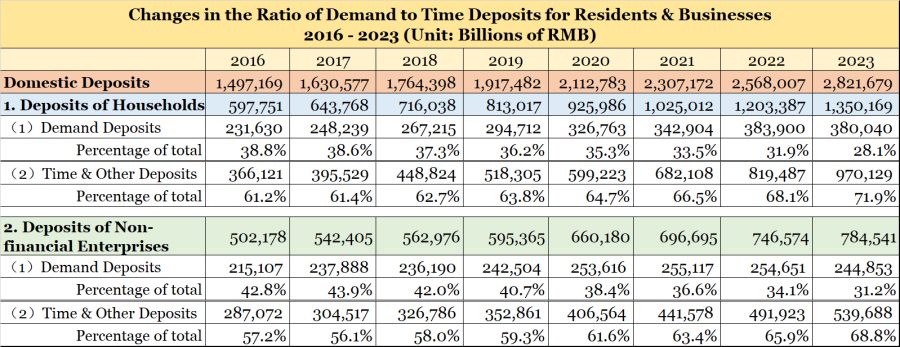
Table 1 (Source: People’s Bank of China)
Table 1 shows that the share of time deposits of residents and businesses has increased from 10.6 percent in 2016 to 11.6 percent in 2023. Resident demand deposits decreased by nearly 390 billion yuan as compared to a year ago, while time deposits went up by 1.51 trillion yuan. Meanwhile, business demand deposits fell by nearly 980 billion yuan in 2023 from the previous year while time deposits were up by 480 million yuan.
The above trends suggest that both residents and businesses are unwilling to spend and invest, and prefer instead to save their money or make low-risk investments. This hesitancy towards investment and consumption limits the effect of the central bank’s monetary easing in 2023 and increases the amount of idle funds in the financial system.
Concurrently, the contraction of economic activity would mean that the fiscal revenue of local governments has significantly decreased. This may be part of the reason why the CCP authorities are planning to issue 1 trillion yuan in special sovereign bonds as reported by Bloomberg.
3 Analyzing the promotion of Hu Jintao’s son to vice minister
On Jan. 16, Hu Haifeng, the only son of former CCP General Secretary Hu Jintao, was promoted to vice minister of the PRC’s Ministry of Civil Affairs.
The younger Hu, 51, had previously been Party secretary of Lishui City in Zhejiang Province since July 2018.
Our take
1. Hu Haifeng’s promotion shows that the Hu Jintao family is still in good standing with Xi Jinping and partly refutes speculation that the elder Hu’s early exit from the 20th Party Congress closing ceremony was due to his being purged by Xi as part of factional struggle. We analyzed at the time that Hu and his allies (including his son) “will continue to make public appearances and will not come to harm” if the incident had nothing to do with factional struggle.
Unlike Hu Jintao’s early exit, however, the younger Hu’s promotion might be connected to factional struggle in the CCP elite. Given the recent rumors about disgruntled “second generation reds” plotting against Xi and their fears that the latter could take a leaf out of Mao Zedong’s playbook and purge them (see here and here), Xi could be signaling with Hu Haifeng’s promotion that unlike Mao, he does not suffer from paranoia and that his political allies and the families of Party elites who are in good standing are safe from political persecution.
2. At a glance, Hu Haifeng’s promotion to a vice minister position seems to be “slow” given his pedigree. However, a closer look at Hu’s career and factional struggle factors suggests otherwise.
Hu Haifeng spent the early part of his career in state-owned companies (Tsinghua Holdings and Nutech) and a state-linked research institute (Zhejiang Tsinghua Yangtze River Delta Research Institute). Hu only entered politics in May 2013 when he became deputy Party secretary of Jiaxing City in Zhejiang Province, or about two months after Hu Jintao had retired. The six-plus years it took for Hu to rise from a bureau level official to a sub-ministerial level official is par for the course, and Hu might not have been able to reach this level had his father not been politically allied with Xi.
Both Xi and Hu Jintao would have wanted Hu Haifeng to gain experience in the provinces and rise gradually up the ranks instead of being “rocketed” up to high post both for the latter’s personal protection and to benefit regime governance. Inexperienced officials who lack capability are more likely to make mistakes or taken advantage of by various interest groups. Therefore, Xi and Hu Jintao would rather Hu Haifeng receive no preferential treatment in his formative years as a government official so that he can learn the ropes at lower levels of government and better protect himself as he goes up the ranks. Having experience at the regional level would also better equip Hu Haifeng for his policy making tasks in the central government, and technically allow the Xi leadership to govern more effectively.
3. Hu Haifeng is only 51 and is young enough as an official to eventually reach the ministerial level or higher. If Hu does not make serious mistakes, does not fall afoul of factional politics, and continues to perform satisfactorily, he is on track to become a national leader before retirement (assuming that the CCP regime endures for that long).




