
1 CCP highlights industrial output as other official data hint at continued economic trouble
PRC releases some Jan-Feb economic data
March 15
1. The PRC Ministry of Civil Affairs released data showing the number of newlywed couples rising to 7.68 million in 2023. This was an increase of 845,000 couples compared to 2022, but far below the peak of 13.47 million couples in 2013.
2. The PRC National Bureau of Statistics announced the changes in sales prices of commercial housing in 70 key cities for February 2024. The sales price of commercial housing continued to see year-on-year declines, with the drop in second-hand housing being noteworthy:
- First-tier cities: The price of second-hand homes fell 6.3 percent from a year ago, compared to 4.9 percent in February 2023. Beijing, Shanghai, Guangzhou, and Shenzhen saw price drops of 5.3 percent, 6 percent, 7.5 percent and 6.1 percent respectively.
- Second-tier cities: Second-hand home prices fell 5.1 percent year-on-year, compared with 5.03 percent in February 2023.
- Third-tier cities: Second-hand home prices fell 5.1 percent, compared with 5.02 percent in February 2023.
March 18
1. The NBS released some economic data for January and February 2024:
- Value-added industrial output increased by 7 percent year-on-year during the Jan-Feb period.
- National fixed asset investment (excluding rural households) increased by 4.2 percent from a year ago to 5.0847 trillion yuan, compared with 5.5 percent growth in Jan-Feb 2023.
- Investment in state-owned enterprises increased by 7.3 percent, compared with 10.5 percent growth in Jan-Feb 2023.
- Investment in the private sector increased by 0.4 percent, compared with 0.8 percent growth in Jan-Feb 2023.
- Investment from Hong Kong, Macau, and Taiwan enterprises increased by 6.4 percent, compared with a decrease of 5.1 percent in Jan-Feb 2023.
- Investments from foreign enterprises decreased by 14.1 percent, compared with a decrease of 1.2 percent in Jan-Feb 2023.
- Investments in manufacturing increased by 9.4 percent, compared with 8.1 percent growth in Jan-Feb 2023. Investments in auto manufacturing increased by 7 percent, compared with an increase of 23.8 percent in Jan-Feb 2023.
- Total retail sales of consumer goods increased 5.5 percent year-on-year to reach 8.1307 trillion yuan. The growth rate was lower than the 5.8 percent as expected by economists surveyed by The Wall Street Journal and lower than the 7.4 percent growth in Jan-Feb 2023.
- Real estate investment decreased 9 percent year-on-year to 1.1842 trillion yuan (calculated on a comparable caliber), compared with a decrease of 5.7 percent to 1.3669 trillion yuan in Jan-Feb 2023.
- Area of new housing decreased by 29.7 percent to 94.29 million square meters, compared with a decrease of 9.4 percent to 135.67 million square meters in Jan-Feb 2023.
- Sales area of new commercial housing decreased by 20.5 percent to 113.69 million square meters, compared with a decrease of 3.6 percent to 151.33 million square meters in Jan-Feb 2023.
- Sales area of residential housing decreased by 24.8 percent to 95.59 million square meters, compared with a decrease of 0.6 percent to 133.87 million square meters in Jan-Feb 2023.
- Sales of new commercial housing decreased by 29.3 percent to 1.0566 trillion yuan, compared with a decrease of 0.1 percent to 1.5449 trillion yuan in Jan-Feb 2023.
- Sales of residential housing decreased by 32.7 percent to 922.7 billion yuan, compared with an increase of 3.5 percent to 1.4134 trillion yuan in Jan-Feb 2023.
The NBS said that China’s economy “continued to recover and improve” in January and February 2024. The NBS also noted that the “complexity, severity, and uncertainty of the external environment” is increasing, and the problem of insufficient domestic effective demand still exists.
Anti-dumping investigations
March 12
The Office of the United States Trade Representative announced that five U.S. labor unions had filed a petition under Section 301 of the Trade Act of 1974 requesting a probe into China’s alleged unfair policies and practices in the maritime logistics and shipbuilding sectors.
The USTR office said, “We have seen the PRC create dependencies and vulnerabilities in multiple sectors, like steel, aluminum, solar, batteries, and critical minerals, harming American workers and businesses and creating real risks for our supply chains.”
March 17
The Financial Times reported that Brazil’s industry ministry, at the request of industry bodies, had in the past six months initiated at least half a dozen investigations into the alleged dumping of industrial products by China. The products being probed ranged from metal sheets and pre-painted steel to chemicals and tyres.
March 18
Taiwan’s finance ministry announced that the PRC was dumping printing plates and that the customs authorities would impose anti-dumping duties and provisional anti-dumping duties ranging from 11.46 percent to 76.89 percent starting from March 18.
Our take
1. The PRC’s official data for January and February suggests that China is showing signs of recovery and things are looking up. However, a closer look at the data and other factors indicates that optimism may be premature and China’s economic prospects have not improved much:
i) A number that the CCP authorities and Western media have focused on is China’s industrial output rising 7 percent during the Jan-Feb 2024 period. However, the figure is less impressive considering the growth was up just 0.2 percent from December 2023 and up 0.56 percent in February from January 2024.
The figure is also questionable given the NBS only provides growth rates without presenting the absolute values for comparison. Also, the PMI and PPI figures for the first two months of the year show contraction. The CCP authorities’ have a long history of data manipulation and not being transparent with its calculations.
ii) Retail sales growth for Jan-Feb 2024 is worse than expected and worse than in the same period in 2023. This is a worrisome sign considering that the Chinese New Year holiday was in February and it has been more than a year since the end of “zero-COVID” restrictions.
Meanwhile, data from the People’s Bank of China shows an increase in the proportion of time deposits and a decrease in demand deposits for both residents and enterprises in February 2024:
Residents
Demand deposits: 27.9 percent, compared to 28.1 percent at the end of 2023.
Time deposits: 72.1 percent, compared to 71.9 percent at the end of 2023.
Enterprises
Demand deposits: 30.8 percent, compared to 31.2 percent at the end of 2023.
Time deposits: 69.2 percent, compared to 68.8 percent at the end of 2023.
This points to a growing reluctance of residents and enterprises to consume and invest.
iii) Except for investment from Hong Kong, Macau, and Taiwan enterprises, China is seeing reduced investments from other areas in the first two months of the year as compared to the same period in 2023. The actual situation with China’s fixed asset investment is likely much worse than the official figures show given that the official data was calculated on a “comparable caliber” (i.e. subjected to manipulation) that “excludes” what the NBS claims to be “false and duplicate” data from previous years.
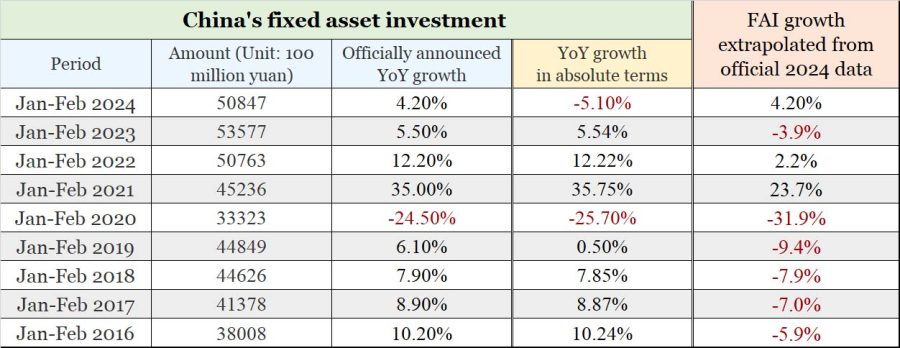
Table 1 (Source: National Bureau of Statistics)
Table 1 shows that China’s fixed asset investment fell 5.1 percent during the January-February period if calculated in absolute terms rather than increasing by 4.2 percent per the official data. But if we assume that the official figure is accurate, then fixed asset investment in China was mostly negative during the January to February period looking back on the past eight years.
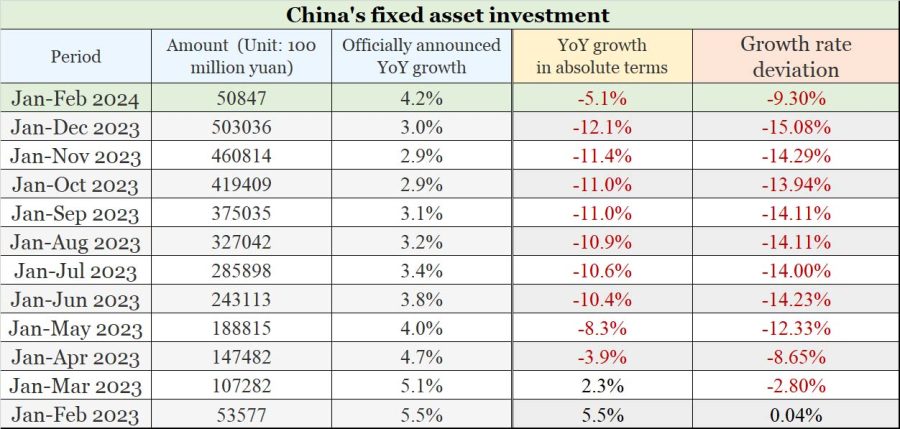
Table 2 (Source: National Bureau of Statistics)
The NBS began calculating fixed asset investment using a “comparable caliber” from April 2023. Table 2 shows a noticeable deviation in the year-on-year growth rate in absolute terms versus the official figure from the January-March 2023 period, with deviation growing wider thereafter. Possible reasons for the deviation could be a significant population decline due to the COVID-19 pandemic, and reduced foreign investment in China and countries shifting or outsourcing supply chains after weighing the PRC’s political and geopolitical risks. Another reason is that past official data was severely falsified, and the NBS has to keep correcting the current data using a “comparable caliber” to address earlier problems.
iv) China’s real estate sector continued to show signs of strain, with double-digit declines for the area of new housing, sales area of commercial housing, and sales of new commercial housing. Another concerning data point is the drop in the resale price of second-hand residential properties in first-tier cities.
With the exception of promoting an equipment upgrade and consumer products trade-in action plan (the feasibility of which we previously analyzed), the CCP authorities have yet to announce new growth areas that can compensate for the contraction in the real estate industry and its impact on the economy.
v) Marriages are up in China, likely due to more people deciding to tie the knot after the end of “zero-COVID.” However, marriage numbers are unlikely to return to levels near the 2013 peak as more young people put off marriage or choose not to marry upon feeling the impact of steady economic decline in China.
2. China’s economic prospects are also affected by an increasingly unfriendly international environment:
- The U.S., Europe, and several other countries are launching anti-dumping investigations into Chinese goods.
- The U.S. is threatening to tighten technology restrictions on China. On March 11, U.S. Commerce Secretary Gina Raimondo told reporters in Manila: “We cannot allow China to have access for their military advancement to our most sophisticated technology. So yes, we will do whatever it takes to protect our people including expanding our controls.” On March 20, Bloomberg reported that the Biden administration is weighing blacklisting Chinese semiconductor firms linked to Huawei, including Qingdao Si’En, SwaySure, and Shenzhen Pensun Technology Co. People familiar with the matter said that the Biden administration could also sanction Shenzhen Pengjin High-Tech Co. and SiCarrier, which make semiconductor manufacturing equipment, because those companies act as proxies to help Huawei obtain restricted gear.
- The U.S. is also pushing its allies to further restrict China’s access to advanced semiconductor technology. On March 6, Bloomberg reported that the U.S. is looking at the Netherlands, Germany, South Korea, and Japan to do more to curb the PRC’s access to chip tech. On March 18, Bloomberg reported that the EU is deciding whether to investigate how deeply mature or lower-end chips from China are embedded across industry networks. Bloomberg added that an EU survey could “mark a first step toward joint measures with the U.S., including restrictions or other curbs.”
- The EU is probing Chinese electric vehicle manufacturers and subsidies, and the UK is considering such an investigation. The threat of Chinese EVs flooding the markets and undercutting competition could eventually prompt the U.S. and other countries to launch similar investigations. This would set back one of the PRC’s potential new growth areas.
3. Businesses and investors should be wary of overestimating China’s recovery and to what extent that recovery has gained traction. The Chinese economy is losing momentum in many areas and even the official data cannot hide the steady economic deterioration. The CCP authorities are also likely to worsen the business environment and the economy as they tighten controls to shore up regime and Party security in the face of growing internal and external difficulties.
2 PRC issues plan to promote ‘high-level opening up’ as wealthy Chinese flee the country
PRC looking to attract foreigners and foreign investment
March 18
The Wall Street Journal reported that the PRC is attempting to attract foreigners back to China by making it simpler and cheaper for tourists and business travelers to get visas, including scrapping visa requirements for 15 countries. The PRC also extended tax incentives for foreign residents to make it more appealing for foreigners to live in China.
However, the PRC is still facing challenges in keeping foreigners:
- National Immigration Administration data showed that China issued 711,000 residence permits to foreigners in 2023, down 15 percent from before the COVID-19 pandemic in 2019. Short-term visitors, which include business travelers, fell over two-thirds over the same period.
- Official data showed that the number of new foreign worker permits in Shanghai fell to 50,000 in 2022, down from about 70,000 in 2020.
- Official data showed that the number of registered South Koreans, who are usually among the biggest foreign communities in China, fell 30 percent from 2019 to 216,000. Registered Japanese in China fell by 13 percent in the same period to 102,000.
- British nationals in China fell by more than half from before the pandemic to 16,000, according to British Chamber of Commerce in China estimates.
- A U.S. Embassy spokesperson told the Journal that it does not track citizen numbers in China, but demand for adult passport renewals has sharply decreased in China now as compared to pre-pandemic levels.
March 19
The office of the State Council announced a new action plan to “steadily promote high-level opening up and make greater efforts to attract and utilize foreign investment.”
The action plan proposes 24 measures across five aspects, including expanding market access, enhancing appeal to foreign investment, fostering a level playing field, facilitating the flow of innovation factors, and better aligning domestic rules with high-standard international economic and trade rules.
Noteworthy points in the action plan include:
- Completely lift restrictions on market access for foreign investment in the manufacturing sector, and continue to expand opening up in telecommunications, healthcare, and other areas.
- Relax a pilot program for foreign investment access in technological innovation.
- Expand access for foreign financial institutions in the banking and insurance sectors.
- Support qualified foreign institutions to engage in the bank card clearing business.
- Support qualified overseas professional insurance institutions to establish or invest in domestic insurance institutions.
- Expand the scope of foreign financial institutions’ participation in domestic bond market operations.
- Support qualified foreign financial institutions to participate in domestic bond underwriting.
- Study and steadily promote more qualified foreign banks to participate in the pilot trading of government bond futures.
- Implement a pilot program for qualified overseas limited partners to invest domestically.
- Encourage foreign investment in private equity funds.
- Expand the catalog of industries that encourage foreign investment and the list of foreign investment projects.
- Encourage foreign investment in advanced manufacturing, high-tech areas, energy conservation, and environmental protection.
- Actively support foreign investment projects in integrated circuits, biomedicine, high-end equipment, and other fields to be included in the list of major and key foreign investment projects.
- Implement tax and financial support policies.
- Comprehensively scrub policy measures that hinder the unified market and fair competition.
- Support the flow of data between foreign-invested enterprises and their headquarters.
- Establish mechanisms for cross-border data flow for companies from Hong Kong and Macau.
- Explore the establishment of a “white list” system for cross-border data flow.
- Make it convenient for foreign investors to obtain visas to China.
- Improve the rules for cross-border data flow.
China has fewer wealthy Chinese
March 10
Yonhap News Agency reported that the number of foreigners purchasing homes in South Korea and applying for property ownership transfer registration exceeded 15,000 cases in 2023, reaching a new high. Of the total registrations, 70 percent were Chinese buyers.
March 19
The Hurun Research Institute released its annual China wealth report for 2023.
According to the report, the private wealth of major countries worldwide was affected to varying degrees by the pandemic and the geopolitical landscape in 2022. China was also affected and saw a decrease in the number of high-net-worth families for the second time in the 15 years that the annual report was published. Total wealth of wealthy Chinese also declined by 3.6 percent compared to last year. The report cited a study by Knight Frank about the total wealth held by individuals in China with assets exceeding or equal to $30 million has shrunk by 10 percent, while the total wealth of such individuals in Europe and America decreased by over 10 percent.
The Hurun report noted:
- The top 30 most concentrated cities in China accounted for 67 percent of all wealthy families in the country in 2022, compared to 68 percent in 2021.
- China has 6 million “wealthy families” with total assets of 158 trillion yuan. The assets of “ultra-high-net-worth families” (assets of 100 million yuan and higher) reached 89 trillion yuan, accounting for 56 percent of the total.
- The number of high-net-worth families in mainland China doubled from 825,000 to 1.69 million over the past 15 years.
The report broke down the different categories of wealthy Chinese families (excluding Hong Kong, Macau, and Taiwan) as of Jan. 1, 2023 as follows:
- “Wealthy families” with assets of 6 million yuan reached 4.15 million households, a decrease of 12,000 households (down 0.3 percent) compared to 2021. Those with investable assets of 6 million yuan reached 1.5 million households.
- “High-net-worth families” with assets of 10 million yuan reached 1.69 million households, a decrease of 16,000 households (down 1 percent) compared to 2021. Those with investable assets of 10 million yuan reached 897,000 households.
- “Ultra-high-net-worth families” with assets of 100 million yuan reached 112,000 households, a decrease of 3,950 households (down 3.4 percent) compared to 2021. Those with investable assets of 100 million yuan reached 67,000 households.
- “International-ultra-high-net-worth” families with assets of $30 million (about 216 million yuan) reached 74,000 households, a decrease of 3,180 households (down 4.1 percent) compared to 2021. Those with investable assets of $30 million reached 47,000 households.
Backdrop
China’s economy is facing unprecedented domestic and external challenges, especially the worsening real estate sector crisis.
Our take
1. The State Council’s action plan to “steadily promote high-level opening up” and attract foreign investment, as well as the CCP authorities’ various policies to attract foreigners, indirectly signal a worsening of the political and business environment in China.
Beijing needs foreign investment to help the regime tide through its severe economic problems, including a real estate sector crisis and various debt issues. However, China is fast becoming an unattractive destination for businesses and investors due to the CCP authorities’ policies. Growing authoritarianism at home, the “zero-COVID” policy, and the prioritization of national security over other issues have stifled the business environment in China. Ironically, Hong Kong passed Article 23 of the Basic Law, which is likely to have a chilling effect on doing business in the territory and further underscores the CCP’s strengthening authoritarianism, on the same day that the State Council released its action plan to make China more appealing to foreigners. And as seen from Li Qiang’s government work report and the lack of information about whether there will be a Third Plenum of the 20th Central Committee, Beijing also does not appear to be keen on releasing massive stimulus or has other good options for rescuing China’s rapidly deteriorating economy.
Meanwhile, “wolf warrior diplomacy” and Beijing’s refusal to renounce its “no limits” partnership with Russia or the use of aggression to achieve “reunification” with Taiwan have turned the international community against the PRC and are heightening geopolitical risks for businesses and investors who are in China or thinking about getting into China.
Foreigner hesitancy in investing in China has driven the CCP authorities to intensify efforts to “open up” to a greater degree. The “opening up” of China’s financial and bond markets is likely intended to attract institutional investors in the U.S. and other major financial centers, and is likely partly intended to prevent a further worsening of relations between the PRC and the U.S. and its allies. By appealing to China’s “old friends” on Wall Street, Beijing is likely also hoping to curry favor with the U.S. political elite and avoid the latter strengthening measures to contain the PRC and lower “new cold war” tensions. However, we believe that the CCP authorities will unlikely be successful in appealing to the U.S. because there is a strong bipartisan consensus on America’s need to curb the CCP threat and safeguard U.S. technological superiority and national security.
2. The State Council’s “high-level opening up” action plan has provisions to allow foreign firms to freely transfer data between their mainland offices and headquarters abroad. This is likely an attempt by Beijing to mitigate the impact of the regime tightening control over national security (anti-espionage law, secrecy law, etc.) and data security on the business environment. Already, many large multinational companies are isolating their Chinese subsidiaries from their parent companies or relocating their China operations outside the mainland to avoid the risk of running afoul of the authorities over various security concerns.
We believe that the action plan’s data transfer provisions are unlikely to truly protect foreign firms if the CCP authorities are determined to find fault with the companies that it suspects of breaching national security. The Supreme People’s Procuratorate’s report to the National People’s Congress presented at the Two Sessions indirectly reveals the significant political risks of doing business in China. In 2023, over 2.4 million people were arrested or prosecuted for crimes pertaining to national security and “stability maintenance,” including 726,000 people arrested and 1.688 million people prosecuted.
3. Hurun’s 2023 China wealth report reflects some of the damage done to the Chinese economy by the Xi leadership’s “zero-COVID” policy and crack downs on certain industries. The worsening economic and political environment in the mainland is prompting the wealthy Chinese to “vote with their feet.” The exodus of wealthy Chinese is likely part of the reason why Beijing is courting foreign investment.
Hurun’s report captures a trend that is becoming more noticeable. The London-based investment migration consultancy Henley & Partners noted in its private wealth migration report for 2023 that more than 10,800 Chinese millionaires left the country in 2022, taking with them an average of about $6.6 million each (or $71.2 billion in total). The report also estimated that 13,500 millionaires will migrate from China in 2023, an increase of 25 percent from 2022; this means that Chinese millionaires would take away about $160 billion in wealth in 2022 and 2023.
Even more wealthy Chinese could be pushed into migrating in the wake of nationalistic attacks on private enterprise, tax investigations into high-net-worth individuals, local governments “criminalizing debt” of private entrepreneurs, and increasing financial risks in banks and other financial institutions.




