
1 Xi risks courting fresh geopolitical tensions with new military proposal
March 7
Xi Jinping attended a plenary session of the People’s Liberation Army and the People’s Armed Police at the second session of the 14th National People’s Congress.
In a speech to the meeting, Xi called for:
- Strengthening the construction of strategic capabilities in emerging fields and implementing relevant strategies and plans.
- Coordinating military preparations for maritime warfare, safeguarding maritime rights and interests and promoting the development of the maritime economy, and enhancing the capability to strategically manage the oceans.
- Optimizing the aerospace layout (航天佈局).
- Constructing a cyberspace defense system.
- Strengthening the coordination implementation of major intelligent science and technology projects.
- Promoting technological innovation and application in emerging fields.
- Making reform in emerging fields a key focus of further comprehensively deepening reforms.
- Constructing innovation chains, industrial chains, and value chains that match the development of emerging fields.
- Updating ideas and concepts, boldly innovating and exploring new models for the construction and utilization of new types of combat forces, and fully liberating and developing new combat capabilities.
Backdrop
1. The Xi leadership has stepped up probes into the PLA, and especially the Rocket Force, equipment department, and the defense industry, since mid-2023 and after the removal of former defense minister Li Shangfu.
2. During a press conference on March 7, PRC foreign minister Wang Yi announced that China would offer visa-free travel to nationals from Switzerland, Ireland, Hungary, Austria, Belgium, and Luxembourg. Wang also urged more countries to “provide visa facilitation for Chinese citizens.” The PRC began offering visa-free travel for the citizens of countries, of which the bulk were in Europe, beginning in 2023.
Wang Yi also pointed out that 2023 marked the 20th anniversary of the establishment of a comprehensive strategic partnership between China and Europe, with exchanges and dialogues being fully resumed at all levels. Wang added that visa-free travel for multiple European countries will facilitate personnel, economic, and trade exchanges between the countries.
Our take
1. The “construction of strategic capabilities in emerging fields” as introduced by Xi Jinping suggests that the CCP regime is looking to develop new technologies for military use in areas such as naval capabilities, aerospace, cyberspace, and artificial intelligence.
We see three likely push factors behind Beijing’s drive for military innovation.
First, the PRC is moving to actualize Xi’s vision of creating a fully modernized and “intelligentized” military by 2035. Beijing could also be focusing on developing new technologies to compensate for the losses caused by severe corruption in the PLA Rocket Force, equipment department, and defense industry, as well as allow the PLA to hit its 2035 modernization target on schedule.
Second, the PRC is looking to get its military readiness up to scratch as it contemplates waging a prolonged “new cold war” against the West. Beijing is also likely learning lessons from the Russia-Ukraine war and is looking to develop new warfare capabilities that can compete with or even surpass those of the United States and its allies
Third, the PRC is creating new military propaganda to give the PLA something to work towards, boost morale, and mitigate the negative impact left by the recent military corruption cases on Xi’s “quan wei.” Calling for the “construction of strategic capabilities in emerging fields” gives the military and the regime a new “pie in the sky” target to reach, and serves as a convenient distraction from ongoing problems.
We believe that Xi’s new military proposal will likely invite more scrutiny of the PRC from the international community and heighten the regime’s geopolitical risks. Already, Western media, think tanks, and commentators are viewing China’s military and paramilitary actions and developments chiefly through the lens of a potential Taiwan invasion and other regional PRC aggression.
The U.S. and its allies could also feel threatened enough by Xi’s proposal to more tightly restrict the export of technology to China. On March 6, Bloomberg News reported that the U.S. government is pushing allies like the Netherlands, Germany, South Korea, and Japan to further tighten restrictions on China’s access to semiconductor technology. For instance, the U.S. wants the Netherlands to stop ASML Holding NV from repairing and servicing sensitive chipmaking equipment that Chinese clients bought before limits on sales of those devices were put into place in 2024, wants Japanese companies to restrict exports to China of specialized chemicals crucial for chipmaking like photoresist, and wants Germany to get Carl Zeiss AG to stop shipping to China optical components necessary for advanced chip production.
Xi urging the “construction of strategic capabilities in emerging fields” will likely only deepen concerns in the international community about the CCP threat, PRC aggression, and growing authoritarianism in China under Xi, and could inspire the U.S. and its allies to take more actions in response that would be detrimental to Xi’s rule.
2. We believe that Beijing will find it very difficult to actualize the “construction of strategic capabilities in emerging fields” beyond the propaganda aspect thereof in the short term.
First, the PRC will be restricted in how much it can spend on implementing the scheme given the government’s financial shortfalls. For one, the PRC government’s fiscal budget shortfall in 2024 approaches the level of that in 2020; official data on central and local budgets (關於2023年中央和地方預算執行情況與2024年中央和地方預算草案的報告 [摘要]) released on March 5 shows that the national general public budget deficit for 2024 is 6.15 trillion yuan, or close to the 6.27 trillion yuan in 2020 when the COVID-19 pandemic was the most severe. With the PRC’s various growth drivers weakening, the PRC authorities will find it difficult to guarantee funding for the construction of “innovation chains, industrial chains, and value chains that match the development of emerging fields” from other budgets even though the defense budget has been set aside for the year.
Second, the PRC may not want to move too quickly in ramping up military innovation lest it disproportionately escalates geopolitical risks and makes the external environment even less conducive for the Chinese economy. Beijing’s expansion of the visa-free travel scheme is a sign that the CCP currently prioritizes attracting foreign investments over courting aggression.
Third, the Xi leadership has to overcome the systemic deficiencies of the CCP authoritarian system to make concrete breakthroughs in constructing “strategic capabilities in emerging fields.” As prominent Chinese sociologist Lv Dewen identified, local governments are rife with formalism and bureaucratism, leading to societal stagnation and “the most significant crisis of our time.” The failure of Beijing’s chip “great leap forward” also bodes ill for its latest venture in pushing military innovation. Finally, growing authoritarianism, ideological indoctrination, and the Party’s control over society under Xi Jinping will severely suppress free thinking and create an increasingly unfavorable environment for technological innovation in China.
3. It cannot be ruled out that the “construction of strategic capabilities in emerging fields” was a concept proposed by CCP officials to flatter Xi Jinping and cater to his preferences. As the economy and societal conditions deteriorate in China and Xi increasingly turns to authoritarianism as a solution to problems, the latter is at real risk of finding himself trapped in an information bubble and losing sight of the actual situation, akin to the last emperors of several dynasties in Chinese history.
What’s next
The PRC could face more sanctions and restrictions from the U.S. and its allies as the latter group looks to deny Xi Jinping the opportunity to use their technology to “construct strategic capabilities in emerging fields.”
2 China sees improved trade data for Jan-Feb 2024 as countries launch anti-dumping probes
March 7
The PRC General Administration of Customs released China’s trade data for the first two months of 2024.
In RMB terms:
- The total value of imports and exports increased by 8.7 percent year-on-year to 66.1 trillion yuan. (The growth rate was 7.1 percent when compared with official PRC data from 2023.)
- Exports increased by 10.3 percent year-on-year to 37.5 trillion yuan. (The growth rate was 7.4 percent when compared with official PRC data from 2023.)
- Imports increased by 6.7 percent year-on-year to 28.6 trillion yuan. (The growth rate was 6.6 percent when compared with official PRC data from 2023.)
- The trade surplus grew by 23.6 percent year-on-year to 890.87 billion yuan. (The growth rate was 9.9 percent when compared with official PRC data from 2023.)
In dollar terms:
- The total value of imports and exports increased by 5.5 percent year-on-year to $930.86 billion. (The growth rate was 3.9 percent when compared with official PRC data from 2023.)
- Exports increased by 7.1 percent year-on-year to $528.01 billion. (The growth rate was 4.3 percent when compared with official PRC data from 2023.)
- Imports increased by 3.5 percent year-on-year to $402.85 billion. (The growth rate was 3.4 percent when compared with official PRC data from 2023.)
- The trade surplus grew by 20.5 percent to $125.16 billion. (The growth rate was 7.1 percent when compared with official PRC data from 2023.)
Trade data for the first two months of 2024 compared to the same period in 2022 (when “zero-COVID” was still in effect):
- Total imports and exports fell by 4.4 percent.
- Exports fell by 3.1 percent.
- Imports fell by 6.0 percent.
- The trade surplus increased by 7.9 percent.
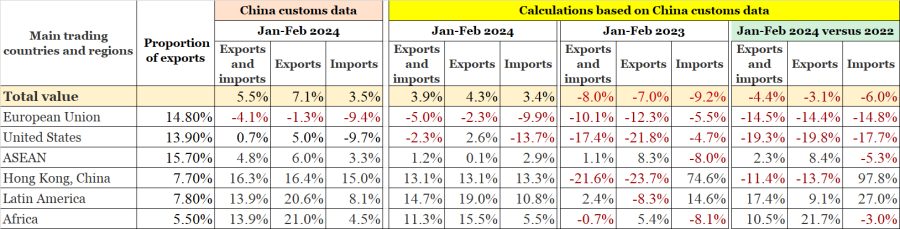
Table 1 (Source: General Administration of Customs)
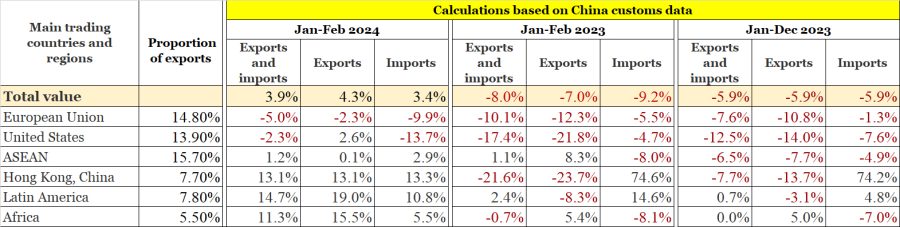
Table 2 (Source: General Administration of Customs)
China overcapacity concerns
Jan. 31
Sean Stein, chair of the American Chamber of Commerce in China, told The Financial Times that there would be overcapacity unless China’s domestic market absorbs the additional production in industry and manufacturing.
“It’s a problem that’s here to stay. And it’s one that businesses are going to have to adapt to and, frankly, so are countries,” Stein said.
Feb. 23
U.S. Deputy Treasury Secretary Wally Adeyemo told a Council on Foreign Relations event in New York that he is concerned about “excess capacity coming from China and hitting the global economy.”
Adeyemo added, “Fundamentally that overcapacity is going to go somewhere.” He also said that U.S. tariffs and tax credits for electric vehicles and their batteries will keep Chinese EVs out of the U.S. market and allow American companies to compete more fairly.
Anti-subsidy probes
Feb. 16
The European Union launched a probe into Chinese trainmaker CRRC Qingdao Sifang Locomotive for allegedly using subsidies to undercut European suppliers.
Feb. 27
Politico reported that the United Kingdom is considering whether to investigate PRC state subsidies for EV makers, citing two people familiar with such plans.
Our take
1. Official CCP data shows China’s trade rebounding in the first two months as compared to a year ago. However, calculating the trade data using the CCP’s own figures from 2023 shows that growth in exports was less impressive than the double-digit figures (in RMB terms) provided in the latest data. Exports during the January-February period in 2024 were also fewer as compared to 2022 when “zero-COVID” was still in force.
In looking at the growth data of China’s trade with major trading countries and regions (share of exports exceeding 5 percent) in January and February (see Table 2):
- China’s trade with the EU has noticeably improved as compared to 2023, but is still contracting.
- China’s exports to the U.S. shifted from negative (minus 21.8 percent) in 2023 to positive (up 2.6 percent) in 2024. The growth in Chinese exports to the U.S. follows an increase of 7.3 percent in November 2023 which snapped a 14-month streak of consecutive declines.
- China’s exports to ASEAN countries increased by just 0.1 percent in 2024 as compared to 8.3 percent over the same period last year.
- China’s exports to Hong Kong were up 13 percent in 2024 as compared to a 23.7 percent decrease in 2023.
- China’s exports to Latin America and Africa markedly improved in 2024 as compared to 2023.
2. We see several reasons why China’s trade is improving in general.
First, the improving U.S. economy and consumption is making companies more optimistic about their prospects and want to hold more inventory. Data from the U.S. Department of Commerce released in January 2024 showed retail sales in the U.S. increasing by 0.6 percent month-on-month and surging by 5.6 percent year-on-year in December 2023. Retail sales for the whole of 2023 was also up 3.2 percent from a year ago. Meanwhile, the U.S. stock market continues to trend upward. These factors have likely led businesses to import more Chinese goods as they anticipate an increase in demand following a possible improvement in the U.S. economy.
In contrast, there was likely less demand for Chinese goods in the U.S. in 2023 due to companies already having sufficient inventory on hand due to earlier preparations for “zero-COVID” disruptions. Businesses were likely also hesitant to import more due to worries about a recession and reduced demand.
Meanwhile, strong U.S. consumption also appears to be benefiting South Korea. South Korea, the global economy’s “canary in the coal mine,” saw its exports to the U.S. increase by 9 percent year-on-year to reach $9.8 billion in February 2024, marking two consecutive months of record highs. The U.S. also replaced China as South Korea’s largest export market in January 2024.
The improved situation in the U.S. also explains why Chinese exports have increased there but continue to see declines to the EU region.
Second, China’s improved trade figures could be due to the Chinese companies dumping excess capacity at reduced prices. PRC customs data showed that machinery and electronic products accounted for nearly 60 percent of China’s exports in the first two months of 2024, of which exports of automatic data processing equipment, integrated circuits, and automobiles were up.
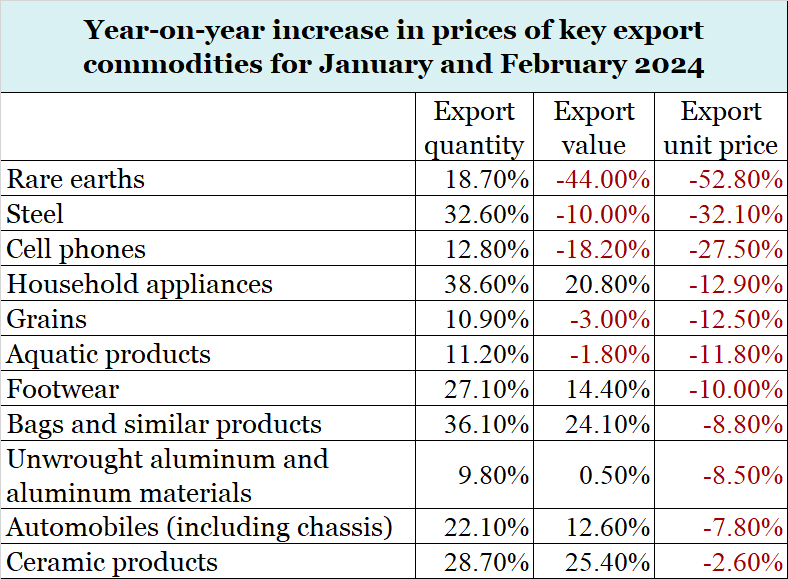
Table 3 (Source: General Administration of Customs)
Table 3 shows that the export volume of some key Chinese export commodities has increased while the export unit price has significantly dropped. In particular, household appliances saw a 38.6 percent increase in export volume and 20.8 percent increase in export value, but a 12.9 percent drop in the export unit price. Meanwhile, automobiles saw a 22.1 percent and 12.6 percent increase in the export volume and value respectively, but a price decrease of 7.8 percent.
Finally, the depreciation of the renminbi could have contributed to making Chinese goods more competitive. Data from the People’s Bank of China shows that the average exchange rate of the RMB in January 2023 was 6.7976 in January 2023 and 7.1060 in January 2024, or a depreciation of 4.54 percent.
3. China’s official trade data for the first two months of the year also shows rebounding imports:
- Iron ore imports increased by 8.1 percent to 209 million tons.
- Crude oil imports rose by 5.1 percent to 88.308 million tons.
- Coal imports surged by 22.9 percent to 74.515 million tons.
- Natural gas imports jumped by 23.6 percent to 22.1 million tons.
- Refined oil imports soared by 35.6 percent to 7.576 million tons.
- Imports of unwrought copper and copper materials increased by 2.6 percent to 902,000 tons.
- Imports of machinery and electronic products increased by 11 percent to 974.08 billion yuan.
The rise in imports suggests that Chinese manufacturers are receiving more orders. The impact of increased imports could potentially be reflected in the performance of some economic indicators in the next three to four months. However, this is not certain if more countries launch anti-dumping investigations into Chinese exports and proceed to levy sanctions or tariffs.




